


By Angela Atabo
The Minister of Housing and Urban Development, Muttaqha Darma, has reaffirmed the Federal Government’s commitment to transforming Nigeria’s informal settlements into dignified, liveable communities across the country.
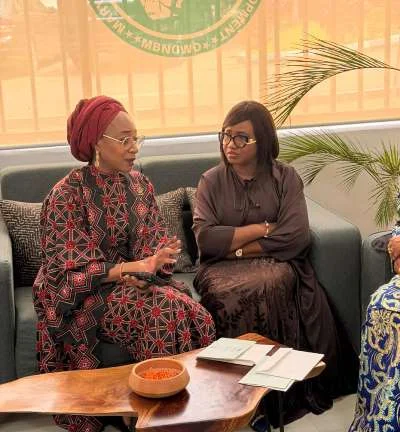
Darma made the commitment during a courtesy visit by the Nigerian Institute of Town Planners (NITP), led by its National President, Dr Ogbonna Chime, on Friday in Abuja.
He described the move as a priority of the present administration, identifying Makoko in Lagos, Gishiri in Abuja, and settlements in Kano and Port Harcourt as key areas requiring urgent upgrading from slum conditions.
“The ministry’s forthcoming urban development policy will prioritise upgrading these areas to make them habitable for the people living there,” he said.
He said that although the 1992 Urban and Regional Planning Law had not been fully implemented, the ministry was committed to reviewing it thoroughly in collaboration with relevant stakeholders.
Darma also invited the NITP to provide further professional guidance, emphasising the need to strengthen collaboration in achieving effective urban development and implementation of planning frameworks nationwide.
He encouraged the use of indigenous experts and reaffirmed the administration’s commitment to engaging local consultants exclusively to drive employment, skills transfer, and capacity development in the built environment sector.
“The ministry already trained about 2,000 individuals in built environment skills, and these young people are applying what they learnt across Nigeria,” he said.
Darma urged professionals and public servants to embrace innovation and Artificial Intelligence (AI), noting that technology would increasingly shape the future of work without replacing skilled professionals.
He encouraged continuous learning and urged stakeholders to think creatively to remain relevant in the evolving professional landscape of urban development.
Accordingly, he invited the NITP to submit further recommendations for consideration in the ministry’s forthcoming strategic development plan and accepted an invitation to its 60th anniversary in October.
Earlier, Dr Ogbonna Chime said the visit was to formally welcome the minister and strengthen collaboration between the ministry and professional bodies in the built environment sector.
Chime emphasised the importance of full implementation of the 1992 Urban and Regional Planning Law to address uncoordinated urbanisation, infrastructure deficits, and environmental degradation.
He also called for increased use of indigenous town planning consultants, improved funding for regulatory bodies, replacement of retired professionals, and stronger institutional support to enhance urban development nationwide.(NAN)
Edited by Abiemwensew Moru


Comments