


By Mark Longyen
Antalya (Türkiye) The Turkish Government has called for regional cooperation as the best way to tackle specific regional conflicts amid what it described as the current period of a “free fall” in global governance.
Turkish Foreign Minister Hakan Fidan made the appeal at the Fifth Antalya Diplomacy Forum (ADF2026) on Saturday in Antalya, Türkiye.
According to him, in the contemporary world order, multilateralism is fast weakening, and in a ‘free fall,’ requiring countries to reassess the present global governance system toward finding regional solutions to conflicts.
He said that the ADF aimed to create a platform focused on regional challenges, warning that weakening multilateralism and growing instability had made diplomacy “more relevant than ever.”
“Global diplomacy platforms often prioritise Western-centric issues while conflicts in the Middle East, North Africa, the Balkans, and the Mediterranean get limited attention.
“Regional issues, especially those very much related to our region, however, have not been discussed in depth.
“The ADF, therefore, offers a unique opportunity for our region to have regional discussions, and to bring some regional solutions and ideas,” Fidan said.
He further said: “In an era where we see a lapse of multilateralism and international order, we need much more dialogue.”
Fidan recalled that the post-Cold War international system began to weaken after 2010, warning that the breakdown of global rules forces countries to rely more on coordination to avoid conflict.
“If we wait for the usual system to run its course … (and) we need to see a war or destruction … then we start learning.
“This time, hopefully, instead of learning by mistake, we can start learning by wisdom,” he said.
Fidan stressed regional ownership as a cornerstone of Türkiye’s foreign policy, calling on countries in the Middle East, Caucasus, Balkans and Mediterranean to address their own challenges.
“When hegemons come to fix the problem, they create more problems than solutions,” he said, adding that regional cooperation among mature nation-states could reduce conflicts.
“Now they have become, most of them, mature. So it is time for all of us to come together in a very mature way and to own our problems,” he said.
The foreign minister also noted that regional conflicts remained highly interconnected and unstable, saying they are prone “to every kind of escalation, region-wise or otherwise.”
He said that Türkiye was working to address conflicts from Ukraine and Gaza to Iran and parts of Africa, to ensure stability and development.
According to him, Türkiye maintains dialogue with all sides in conflicts, emphasising diplomacy over alignment, prioritises preventing wars and ending ongoing conflicts to enable trade, stability, and development.
“Too much disruption, too much bloodshed and too much instability and too much spillover affect the rest of the world,” Fidan said.
“We are engaging in diplomacy, not war. In a war, you need to take sides but in diplomacy, you need to engage with every party,” he added.
The News Agency of Nigeria (NAN) reports that the three-day forum, themed: “Mapping Tomorrow, Managing Uncertainties,” kicked off on Friday amid globally sensitive issues, like the U.S.-Israel-Iran war, among others.
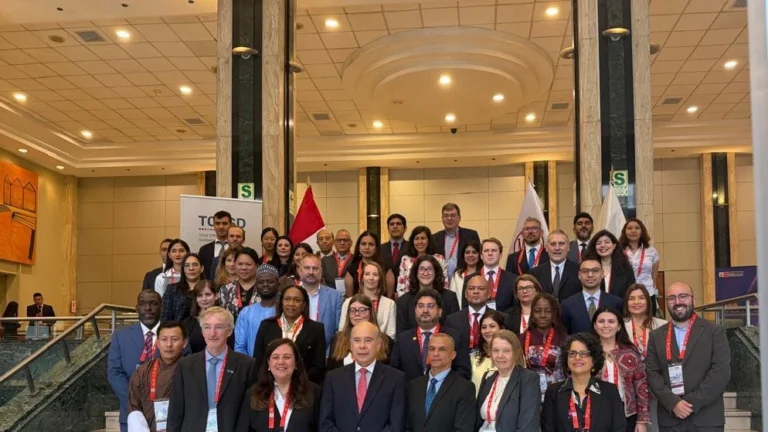
The event, attended by world leaders and senior officials, also features panels, discussions and sessions covering a wide range of topics shaped by contemporary political, economic, environmental, and technological dynamics.
Participants include 20 heads of state and government, 40 foreign ministers, 60 invited foreign media, over 5,000 decision-makers, academics, experts and diplomats, among others from about 150 countries.(NAN)(www.nannews.ng)
Edited by Isaac Aregbesola
Comments