















By Angela Atabo/Constance Athekame
Stakeholders have commended the impact of the Global Environment Facility and United Nations Industrial Development Organisation (GEF-UNIDO)Industrial Energy Efficiency (IEE) and Resource Efficient and Cleaner Production (RECP) Project in Nigeria.
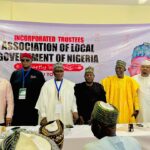
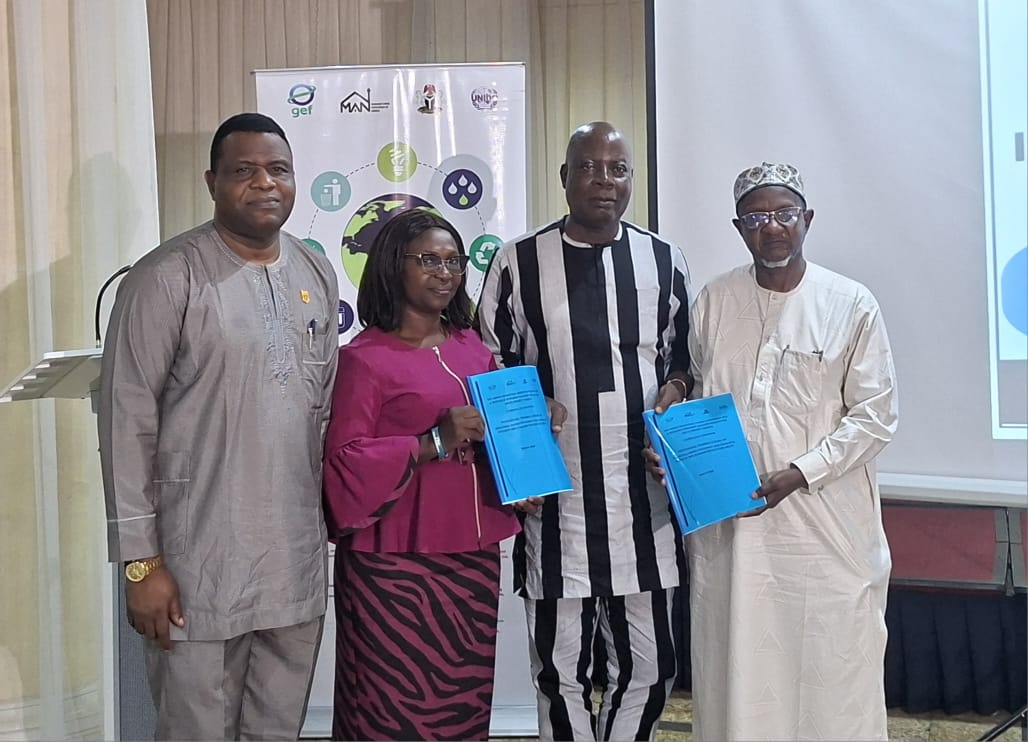
The stakeholders drawn from the academia, industry, organised private sector, NGOs and the media, gave the commendation at the GEF-UNIDO IEE and RECP Project Interactive Session on Monday, in Abuja.
The initiative focuses on IEE and RECP with selected Nigerian universities playing a central role in training and capacity development.
Speaking on behalf of Federal University of Petroleum Resources (FUPRE), Effurun, Prof. Laurelta Aherobo, explained that the institution was among four universities selected in 2021 after a rigorous resource verification exercise.
Aherobo said that selected lecturers had undergone intensive training across multiple phases over three years, culminating in the development of a curriculum in collaboration with UNIDO.
She added that the programme had since received approval from the National Universities Commission (NUC) and was set to be deployed as professional certification training for industries.
Aherobo said that FUPRE, as a petroleum-focused university, had been selected to provide training for the petrochemical industry.
She explained that petrochemical companies seeking to train their staff could take advantage of the university’s existing curriculum, which covered lower-, middle-, and high-level capacity development in RECP and IEE.
She added that the university was also among the institutions trained in ISO certification, specifically ISO 14001 for Environmental Management Systems (EMS) and ISO 50001 for Energy Management Systems.
Aherobo expressed appreciation to GEF-UNIDO for the opportunity.
She noted that the certifications had further strengthened the university’s expertise in environmental and energy management systems.
She added that the institution now had the capacity to train industries across the oil, gas, and petrochemical sectors, with the curriculum already in place.
Similarly, Prof. Nasir Isah of Bayero University Kano (BUK), described the programme as timely, transformative, and critical to Nigeria’s development agenda.
Isah said the university welcomed the opportunity in 2021 to participate in the IEE and RECP programme and had since been playing a key role in mobilising industries in Kano and surrounding areas to take part.
He added that the university was collaborating with international experts and developing training curricula for the programme.
He noted that the curriculum had received approval from NUC and was in the final stage of adoption across participating institutions.
Isah expressed optimism that universities would soon begin producing certified professionals in industrial energy efficiency and cleaner production.
He also stressed the environmental benefits of the initiative, citing the need to end unsustainable practices such as the use of firewood by local bakeries.
“We want to eliminate situations where entire trees are cut down daily for production. Promoting efficient energy use will help preserve our environment while supporting industrial growth,” he noted.
He thanked GEF-UNIDO for the privilege, describing BUK’s experience in the project as “very positive,” and reaffirmed the university’s commitment to advancing sustainable industrial practices in Kano and beyond.
A beneficiary and entrepreneur, Ibidunni Roberts, founder of Iby Roberts and Company Ltd., a food and cosmetics company, said the programme had helped her adopt environmentally friendly practices.
She noted that these included efficient resource use and waste reduction, while also improving her business reputation.
Another beneficiary, Mr Kingsley Izuoba, a quality assurance manager in a manufacturing firm, said the training had led to cost reductions, improved operational efficiency, and behavioural changes both at work and at home.
A media practitioner, Bito Bryan of ATBN TV, stressed the importance of equipping journalists with the knowledge to effectively report on sustainability issues.
Bryan noted that trained journalists could bridge the gap between technical experts and the general public, helping to promote energy-efficient practices nationwide.
In his remarks, Dr Jacob Oladipo, National Project Coordinator of the IEE and RECP initiative, lauded the implementing partners, GEF-UNIDO and the Manufacturers Association of Nigeria, for their support in driving the project forward.
Oladipo emphasised that the true measure of the programme’s success would be reflected in tangible outcomes from the industries and academic institutions involved.
According to him, stakeholders are expected to demonstrate measurable improvements in energy efficiency and cleaner production practices following the training.
He said the project currently covered five industrial sectors, adding that there was growing interest from other sectors and partners seeking inclusion in the initiative.
He added that they were looking
forward to more impact stories from industries and universities, noting that there was strong demand from other sectors and expressing hope to extend the opportunity further.
The News Agency of Nigeria (NAN) reports that the programme is expected to play a key role in advancing Nigeria’s transition towards sustainable industrial practices amid rising energy costs and environmental concerns.(NAN)(www.nannews.ng)
Edited by Kevin Okunzuwa