














By Ibironke Ariyo
The Country Representative, United Nations Office on Drugs and Crime, (UNODC) Mr Cheikh Toure, says organised crime, illicit financial flows and corruption are major drivers of violent extremism in Nigeria.
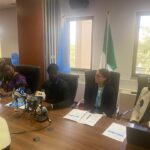
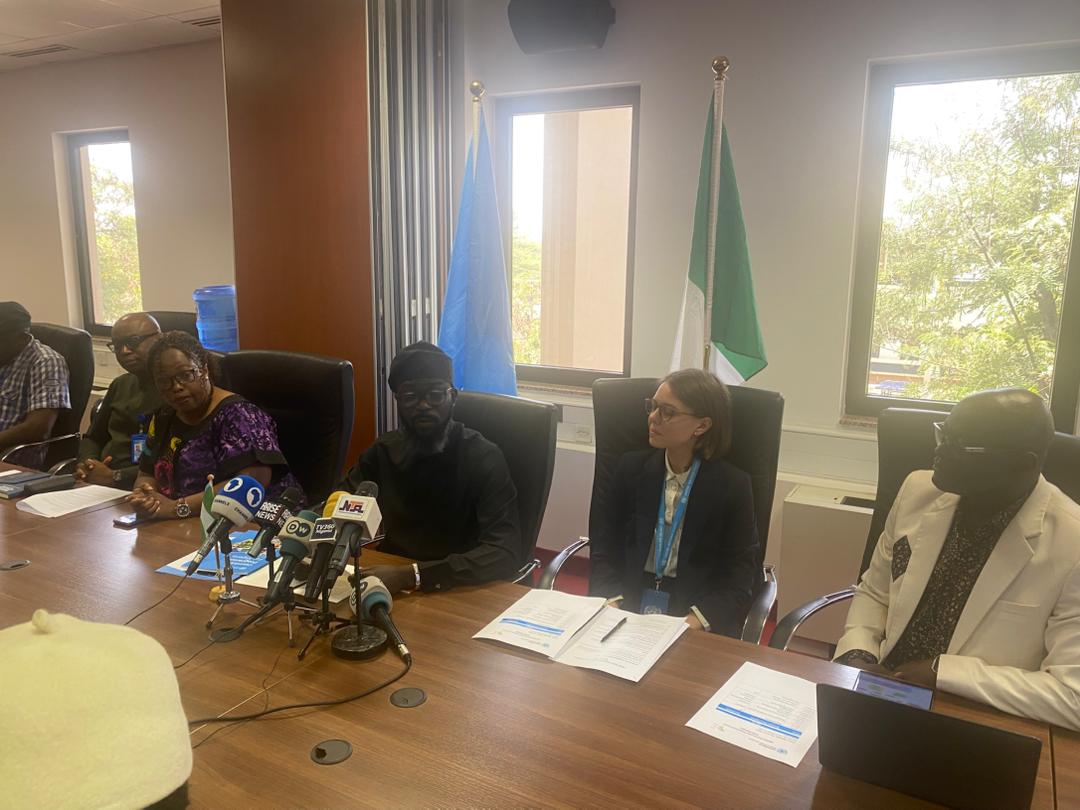
Toure said this while addressing newsmen in Abuja ahead of the launch of the UNODC Nigeria Country Programme 2026–2030.
He said that the growing nexus between drugs, crime and terrorism in the country underscored the need for more strategic, coordinated and adaptive responses, noting that such crimes were increasingly technology-enabled.
The UNODC representative expressed concern over the evolving nature of crime, driven by technological advancement, describing it as presenting both opportunities and challenges.
“Criminal networks are becoming more sophisticated. Technology is reshaping both opportunities and risks, and globally, we are witnessing shifts in how illicit activities are financed.
“While Nigeria remains a country of immense potential and regional influence, it continues to grapple with complex and interconnected challenges.
“This includes drug trafficking, organised crime, corruption, terrorism and emerging technology-driven threats,” he said.
Toure said the UNODC Country Programme 2026–2030 was designed to strengthen Nigeria’s criminal justice system to uphold the rule of law and improve access to justice.
He added that the programme would also support efforts to prevent and combat corruption and illicit financial flows, as well as enhance institutional integrity and economic stability.
He further said the initiative aimed at improving security, countering terrorism, and addressing conditions that foster violent extremism, while tackling organised crime to safeguard lives, livelihoods and the environment.
Toure noted that the programme would also promote evidence-based responses to drug production, trafficking and non-medical drug use, while addressing associated public health concerns, including drug dependence and HIV.
Meanwhile, Toure disclosed plans to establish a West Africa Knowledge Resource Centre to provide data and insights across UNODC thematic areas.
He said the centre would serve as a regional think tank, bringing together researchers, policymakers, security experts, civil society actors and journalists to strengthen knowledge-sharing and collaboration in tackling crime, drugs and terrorism.(NAN)(www.nannews.ng)
Edited by Sadiya Hamza