


By Grace Alegba
Achenyo Idachaba-Obaro, Founder and Chief Executive Officer of Mitimeth, has urged the Association of Professional Women Engineers of Nigeria (APWEN) to mentor coastal communities and young innovators on commercialising waste into sustainable businesses.
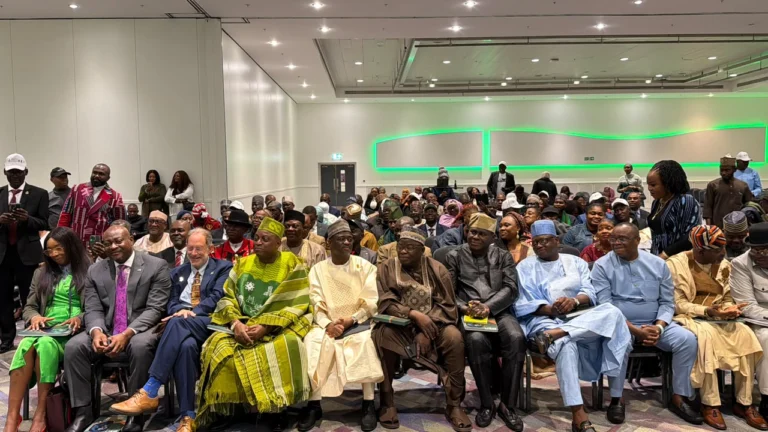
Idachaba-Obaro made the call in Lagos while delivering a lecture at the 2026 Olutumbi Maduka Annual Lecture (OMAL) and 85th birthday celebration of Olutumbi Maduka, founder and first president of APWEN.
The seventh edition of the lecture has the theme: “Waste to Wealth Revolution: Women Leading Africa’s Sustainable Enterprises”.
She said women engineers had a critical role in helping communities transform environmental challenges into scalable enterprises through technology, innovation and manufacturing systems.
According to her, African women-led businesses were already converting plastic waste, agricultural residue, textile waste and invasive species into products, jobs and sustainable manufacturing systems.
Idachaba-Obaro cited examples from Egypt, Kenya, South Africa and Nigeria where entrepreneurs were transforming waste into furniture, textiles, renewable energy products and home décor.
She explained that Mitimeth converts invasive water hyacinth harvested from waterways into furniture, lighting, home décor and specialty paper while engaging local communities in the value chain.
The environmental entrepreneur stressed the need for technological upgrades in Africa’s craft and waste transformation sectors, noting that outdated manual systems limited productivity, quality control and youth participation.
She urged APWEN members to support innovations in machinery adaptation, biomaterial processing and scalable production systems to help local enterprises compete globally.
Idachaba-Obaro also challenged engineers to support schoolchildren and coastal communities already developing solutions to environmental problems such as water hyacinth invasion.
“Mentorship and engineering support can help transform grassroots ideas into commercially viable solutions capable of driving economic growth and environmental restoration,” she said.
The President of the Nigerian Society of Engineers (NSE), Mr Ali Rabiu, described the OMAL lecture as a flagship platform promoting engineering discourse and national development.
Represented by Valerie Agberagba, Rabiu commended APWEN for advancing professional excellence, inclusion and knowledge development in engineering.
He celebrated Maduka as a trailblazer who became the first female Fellow and first female Vice-President of the NSE.
According to him, the lecture theme highlights the urgent need to transform waste into economic value amid rising environmental and economic challenges.
APWEN President, Chinyere Igwegbe, urged women engineers to drive Africa’s waste-to-wealth revolution through innovation, green manufacturing and sustainable enterprise.
She said APWEN had empowered more than 8,000 professional women engineers and thousands of female students across Nigeria and beyond.
Igwegbe cited projects converting plastics, cassava peels, landfill gas and water hyacinth into valuable products as models for climate-focused enterprise.
Speaking at the event, Maduka recalled placing a newspaper advertisement in 1982 calling on female engineers nationwide to unite and establish APWEN in what was then a male-dominated profession.
She said the association, which started with six members, had grown significantly and continued to make impacts across the engineering profession.
Chairman of the OMAL Planning Committee, Rose Madaki, said the annual lecture was instituted to honour Maduka’s contributions to engineering and women’s advancement in the profession.
She added that the lecture continued to promote thought leadership, mentorship and dialogue on science, education, energy, environmental sustainability and women’s role in national development.(NAN)(www.nannews.ng)
Edited by Josephine Obute/Olawunmi Ashafa
Comments