



















By Ibironke Ariyo
The United Nations Office on Drugs and Crime (UNODC) has warned that wildlife crime poses a significant threat to sustainable development, security and economic stability, calling for urgent and coordinated action to address the growing menace.
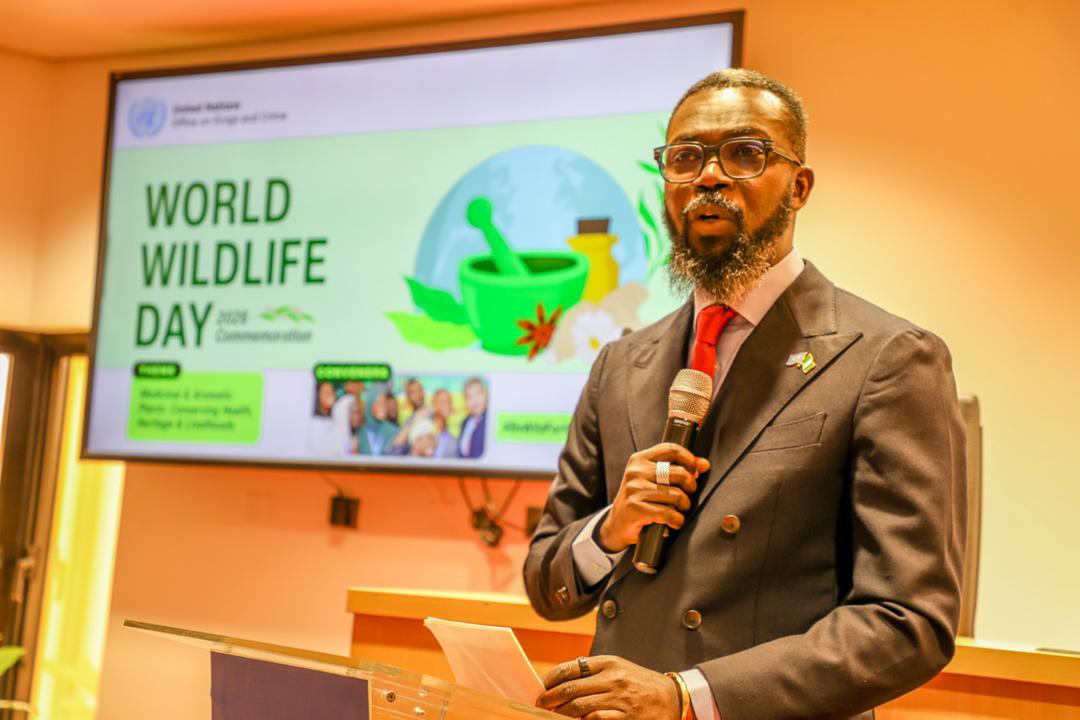
The UNODC Country Representative in Nigeria, Cheikh Toure, gave the warning at the #BeWildForNature Youth Network Event in commemoration of the World Wildlife Day 2026, on Wednesday in Abuja.
The News Agency of Nigeria (NAN) reports that the theme of the event is “Medicinal and Aromatic Plants: Conserving Health, Heritage and Livelihoods.
Toure highlighted the far-reaching implications of environmental crimes adding that wildlife protection must be prioritised not only as an environmental issue but also as a critical factor for human health, cultural preservation and national security.
He commended the #BeWildForNature Youth Network and its partners for convening the event, noting that the initiative had successfully positioned young people as key actors in conservation efforts.
The network which originated as a digital campaign in 2024, he said, is aimed at mobilising youth to leverage innovation in combating wildlife crime and promoting conservation awareness.
He explained that the initiative produced 10 finalists through a competitive process, with top performers receiving awards, alongside special recognition for female participants in celebration of Women’s Month.
Toure said the finalists were subsequently integrated into the network as UNODC Young Wildlife Influencers and engaged in a structured mentorship programme between August and October 2024.
He added that the programme featured expert-led virtual sessions on conservation, advocacy and digital engagement, while participants continue to benefit from sustained mentorship and institutional support.
The UNODC representative noted that the young influencers were now driving community-based initiatives and outreach activities, contributing to increased awareness and action on wildlife conservation.
Speaking on the 2026 theme of World Wildlife Day, Toure said it underscored the importance of medicinal and aromatic plants, which serve as vital resources for traditional medicine, cultural identity and livelihoods across Nigeria and Africa.
He warned that these resources were under increasing threat from overexploitation, habitat loss, climate change and illegal trade.
Toure described wildlife crime as a form of transnational organised crime that fuels illicit financial flows, weakens governance systems and deprives nations of valuable natural assets.
“Addressing the challenge requires robust institutions, effective enforcement mechanisms and strengthened partnerships, in line with the UNODC Country Programme for Nigeria 2026–2030,” he said.
The UNODC official also described the passage of the Endangered Species Conservation and Protection Bill as a major milestone in Nigeria’s efforts to safeguard biodiversity.
He, however, stressed that the success of the law would depend on effective implementation, improved institutional capacity, public awareness and multi-sectoral collaboration.
He emphasised that youth are not only beneficiaries but also critical partners in advancing conservation, crime prevention and sustainable development.
“UNODC recognises the importance of youth inclusion in decision-making processes, from policy design to monitoring and evaluation.
“Youth-led innovation and advocacy are essential in translating policies into tangible impact and strengthening environmental stewardship,” he said.
The UNODC Country Rep. reaffirmed UNODC’s commitment to supporting Nigeria through capacity building for law enforcement and judicial institutions, promoting inter-agency cooperation and empowering communities.
He added that the organisation’s country programme prioritises collaboration with youth networks on issues such as environmental crime, cyber-enabled crime and community resilience.
Toure stressed that protecting medicinal and aromatic plants was key to preserving health systems, cultural heritage and future livelihoods.
He called on stakeholders to move beyond dialogue to concrete action and sustained partnerships in tackling wildlife crime while commending Nigerian youth for their leadership and continued commitment to protecting the environment.
In his remarks, UN Resident and Humanitarian Coordinator, Mohammed Fall, represented by UNICEF Rep. Ms Wafaa Saeed, reaffirmed commitment saying the UN in Nigeria would continue to support national priorities.
This, he said, would be through policy dialogue, technical cooperation and partnerships that integrate environment, health and sustainable development.
The coordinator said the UN would also work with government and partners to advance initiatives that protect biodiversity while promoting human development outcomes.
The official urged participants to engage actively, share knowledge and focus on practical actions beyond the symposium.
The coordinator expressed hope that the gathering would strengthen partnerships and inspire collective responsibility toward safeguarding natural heritage for present and future generations.(NAN)(www.nannews.ng)
Edited by Sadiya Hamza