



















By Folasade Akpan
Dr Bunmi Ajala, the National Director, Centre for Artificial Intelligence (AI) and Robotics has underscored the critical role of women as co-developers and shapers of ethical, inclusive and context-driven AI systems in Nigeria.
Ajala, at a two-day training on AI for Women in Development and Public Service on Tuesday in Abuja, said that women must move beyond being passive users to active contributors in the technology space.
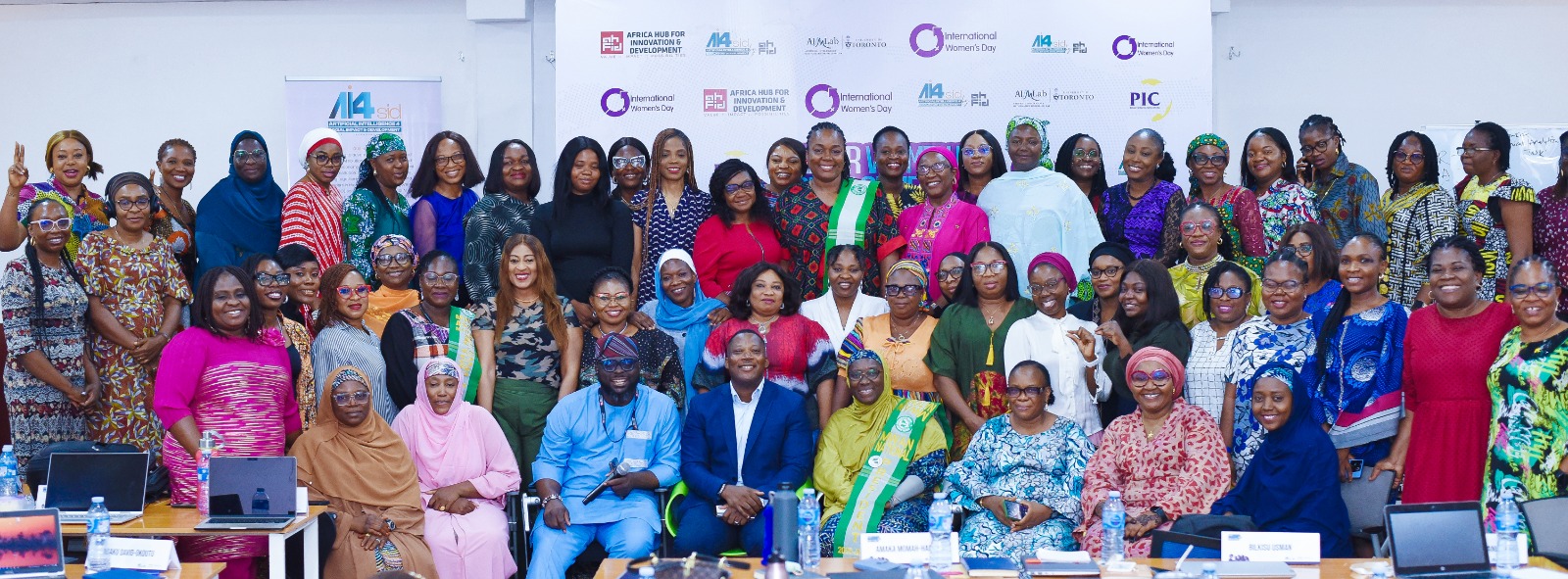
He explained that the initiative, organised to commemorate International Women’s Day with the theme “Give to Gain”, was designed to equip women with foundational AI skills and position them for relevance in a rapidly evolving digital economy.
According to him, women bring unique societal and cultural perspectives that are essential for building AI systems that reflect local realities and values.
“Many see AI only from the angle of technical skills, but women must realise they have a role in making this technology ethical and inclusive.
“They are not just users; they are contributors, co-developers and co-educators in the AI ecosystem,” he said.
Ajala said that AI had become ubiquitous across sectors, stressing that women in healthcare, agriculture, media, trade and other fields could leverage the technology to improve productivity and outcomes.
“If you are a journalist, a doctor, a trader or a farmer, there are AI tools that can enhance your work.
“The goal is for women to see AI as a tool for improving what they already do, not something distant or technical,” he said.
He further emphasised the importance of women’s input in developing AI models, particularly in areas such as context interpretation and ethical considerations.
Ajala explained that cultural nuances and lived experiences, often better understood by women, were crucial in training AI systems to produce accurate and meaningful outputs.
“Context matters a lot in AI development. Women understand social realities and can help build safer and more inclusive systems, especially for vulnerable groups,” he added.
Also speaking, Dr Kunle Kakanfo, Founder of Africa Health Co-Innovation and Development Initiative and convener of the training, said it was aimed at bridging the gender gap in AI access and usage.
Kakanfo said that only about 21 per cent of women currently had access to AI tools, describing the disparity as significant and requiring urgent intervention.
“We are building AI literacy and fluency among women so they can remain competitive and not be left behind.
“AI will not take jobs, but people who use AI will have an advantage. This training is to ensure women are not disadvantaged,” he said.
He added that participants were expected to cascade the knowledge to other women and girls within their communities and professional networks.
Kakanfo said that the programme had 200 participants across different sectors.
Meanwhile, Mrs Adekemi Omole, Gender and Inclusion Lead at the Policy Innovation Centre, highlighted the productivity gains associated with AI adoption.
Omole said studies had shown that individuals who effectively leveraged AI could improve their productivity by between 20 per cent and 60 per cent.
She stressed that knowledge remained the key barrier to adoption, adding that initiatives such as the training were essential in empowering women.
“AI is for everyone. It is not limited to STEM professionals. If you have a mobile phone, you can use AI.
“The real gap is knowledge and mindset, and programmes like this are helping to close that gap,” she said.
On her part, a participant, Dr Zainab Muhammad-Idris, National President of the Medical Women’s Association of Nigeria (MWAN) described the training as timely and impactful for healthcare delivery.
Idris said participants would cascade the knowledge to members across the 36 states and the Federal Capital Territory to improve service delivery.
She, however, cautioned against the misuse of AI in healthcare, warning that misinformation and unethical application could pose risks to patients.
“We must ensure proper training and regulation so that AI is used to disseminate accurate information and improve health outcomes, especially for vulnerable populations,” she said.
Another participant, Mrs Abosede Famuyiwa, said the training had enhanced her understanding of AI tools, including prompt engineering and applications for report writing and presentations.
Famuyiwa commended the organisers for offering the training free of charge, describing it as impactful and beneficial to women’s professional development.
The News Agency of Nigeria (NAN) reports that the training, which began on Monday, brought together women from health, media, public service and development sectors to build capacity in AI tools and applications.(NAN)(www.nannews.ng)
Edited by Abiemwense Moru