


By Lengnan Tobias
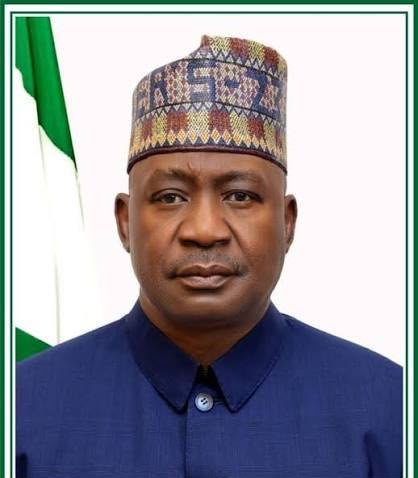
The Minister of Defence, Gen. Christopher Musa, says securing Nigeria’s 2027 general elections goes beyond protecting polling units as it includes defending public trust, cyber systems and democratic legitimacy.
Musa said this at the 2025 Blueprint Newspapers Impact Series and Awards Ceremony in Abuja on Tuesday.
He said that the character of security threats had changed, with misinformation, cyber interference and manipulated information now posing greater risks than conventional violence.
Represented by his Senior Special Assistant on Policy and Strategy, Maj.-Gen. Olufemi Akinjobi, the minister noted that while the deployment of personnel and protection of sensitive materials remained important, election security could no longer be viewed narrowly.
“Today’s threats rarely announce themselves with uniforms or conventional weapons.
“They emerge through cyberspace, spread through manipulated information, exploit economic hardship, inflame ethnic and religious divisions, and undermine confidence in public institutions,” he said.
He acknowledged that election security was fundamentally the protection of democratic legitimacy, adding that while elections may be won at polling units, democracies were sustained by public trust.
Musa noted that Artificial Intelligence had created new vulnerabilities with fabricated videos, cloned voices and manipulated images capable of misleading millions within minutes.
“The greatest threat to an election today may not necessarily be the individual carrying a weapon near a polling unit. It may well be the anonymous actor operating behind a computer screen,” he said.
He stressed that election security must now therefore extend beyond physical protection to include cyber resilience, strategic communication and the defence of truth itself.
To strengthen preparations for 2027, the minister proposed a secure framework built on six pillars.
According to him, the pillars include Strategic Intelligence Integration, Electoral Cyber Resilience, Civil-Military Coordination, Unified Strategic Communication, a Responsible Information Environment, and Engaged Citizens.
He emphasised that modern election security must be intelligence-led with real-time information sharing, while digital infrastructure must be safeguarded against cyber intrusion and sabotage.
Addressing the constitutional role of the military, Musa said the Armed Forces owe allegiance neither to political parties nor candidates.
“The armed forces of Nigeria are first and foremost defenders of the Constitution. Our allegiance is to the Constitution of the Federal Republic of Nigeria. Our loyalty is to the Nigerian people,” he said.
He assured that the Ministry of Defence would work closely with the NSA, Armed Forces, Police, DSS, DIA and INEC to ensure all constitutionally assigned responsibilities were discharged professionally and impartially.
According to him, securing democracy is a shared responsibility.
He urged political parties to place national interest above partisan advantage.
He added that the media must report with courage and accuracy, calling on citizens to reject violence and verify information before sharing.
“History teaches us that democracies are rarely destroyed in a single moment. They are strengthened or weakened by the choices made every day.
“Let our collective objective be greater than the conduct of another electoral exercise.
“Let it be the strengthening of democratic confidence. If we succeed, history will remember that together we strengthened the Republic,” the minister said.(NAN)(www.nannews.ng)
Edited by Deborah Coker



Comments