


By Deji Abdulwahab
The National Orientation Agency (NOA) has called on Nigerians to take the lead in promoting love, respect and positive disposition towards the country’s national symbols.
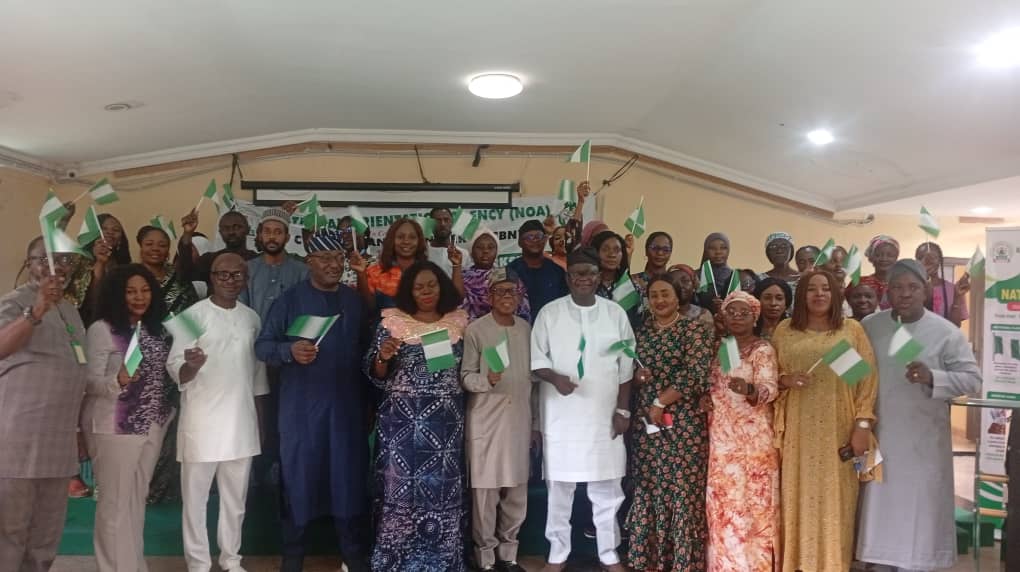
The Director-General of NOA, Malam Lanre Issa-Onilu, made the call on Thursday in Abuja at a one-day capacity building workshop for NOA Symbols Ambassadors.
Issa-Onilu, who was represented by the agency’s Director of Special Duties, State Operations, Mr David Akoji, described the ambassadors as important actors in promoting patriotism and national identity.
He urged the participants to become “the front line for promoting love for these national symbols” and encouraging Nigerians to respect them.
According to him, the responsibility of Symbols Ambassadors goes beyond knowledge of the national flag, anthem, pledge and other symbols.
He said the ambassadors should actively promote positive attitudes toward the symbols as expressions of Nigeria’s identity, history, sovereignty and aspirations.
Issa-Onilu said patriotism should be encouraged among citizens because Nigeria remained their country, irrespective of their place of origin or political differences.
“If anybody asks you why should I be patriotic? You should be patriotic because you are a Nigerian and Nigeria is your country,” he said.
He explained that citizens might have strong attachments to their communities, but those communities remained within Nigeria and formed part of the country’s collective identity.
“There will never come a time in this country when they will take your village to Senegal or Cameroon,” he said, stressing the enduring connection between citizens and their country.
The NOA director-general urged Nigerians to distinguish between dissatisfaction with government and love for the nation.
He said citizens had the legitimate right to disagree with or criticise any government but should not allow such dissatisfaction to translate into hatred for Nigeria.
“You can feel dissatisfied with the government of any time period. It is your legitimate right as a citizen,” he said.
He, however, cautioned Nigerians against cursing or despising the country because of their grievances with the government of the day.
“But do not ever curse or despise your country. You will be making a very huge mistake,” Issa-Onilu said.
He also expressed concern about negative narratives about Nigeria, particularly those promoted by Nigerians themselves through social media platforms.
According to him, citizens should be conscious that their online comments and publications contribute to how Nigeria is perceived by people outside the country.
Issa-Onilu said some negative perceptions about Nigeria were strengthened when citizens repeatedly portrayed their country negatively on social media.
He urged Nigerians to balance criticism of national challenges with positive narratives that accurately reflect the country’s achievements, diversity and potential.
The NOA boss said Nigeria should not automatically be regarded as the worst country in every negative global indicator simply because Nigerians frequently discuss the country’s challenges.
He cited corruption and cybercrime as areas where Nigeria is often negatively portrayed, urging citizens to examine international data before making sweeping claims about the country.
“Nigeria is not ranking top among the world’s most corrupt countries, he said, while encouraging participants to examine available international statistics.
He similarly referred to global discussions on cybercrime and said Nigerians should avoid creating a narrative that portrays the country as synonymous with cybercrime.
“Russia does not have a country narrative of being cyber criminals. Nigeria does,” he said, attributing part of the difference to how Nigerians discuss their country publicly.
Issa-Onilu said Nigerians should therefore recognise their responsibility in shaping the country’s image through their conversations and activities on social media.
He urged the Symbols Ambassadors to use strategic communication to promote more balanced, constructive and patriotic narratives about Nigeria.
He described national symbols as significant components of the life of every nation and important instruments through which countries are identified in the international community.
“In the community of nations, countries are recognised by symbols such as the flags, the anthem, the coat of arms and other paraphernalia,” he said.
He consequently urged Nigerians to give due recognition and respect to the national symbols as representations of the nation’s collective identity.
Issa-Onilu expressed concern that some Nigerians displayed flags and symbols of other countries in their homes while showing little interest in displaying the Nigerian flag.
He said such attitudes reflected a misunderstanding of patriotism, particularly when citizens equated love of country with support for a particular government.
According to him, Nigeria has experienced different systems of government, including military administrations and democratic governments, yet the country has remained Nigeria.
He noted that Nigeria had been under democratic rule since 1999 and had witnessed successive administrations during the period.
“Your country will outlast all the governments that you keep seeing currently,” he said, stressing the enduring nature of the Nigerian state.
He maintained that citizens should therefore separate their loyalty to Nigeria from their opinions about any administration in power.
“Patriotism is love of country, not love of government,” Issa-Onilu said.
Also speaking, Mr Bala Musa, Director of Communication and Media of NOA, said officers of the agency had responsibilities beyond communication.
Musa, who presented a paper titled “From Symbols to Citizenship: Strategic Communication and Public Engagement for Strengthening National Identity and Civic Responsibility in Nigeria,” described NOA officers as “custodians of the national values and ambassadors of civic responsibility.”
He explained that Nigeria’s national symbols, including the flag, coat of arms, national anthem, national pledge, Constitution and currency, represent aspects of the nation’s identity, history, sovereignty, aspirations and collective values.
In her address of welcome, the Director of Civic, Values and Democracy Education, Dr Oluremi Afolayan, described the workshop as “timely and necessary”.
She noted that it formed part of activities marking National Symbols Day observed annually on Sept. 16, while the 2026 celebration had been extended into a week-long national awareness campaign.
According to her, this features media engagements, road shows, school outreaches and other public enlightenment initiatives nationwide.(NAN) www.nannews.ng
ADA/FAK
Edited by Funmilayo Adeyemi


Comments