


By Folasade Akpan
The Federal Government says an estimated 80 million children in Nigeria are exposed to lead poisoning, calling for stronger measures to address the public health and environmental threat.
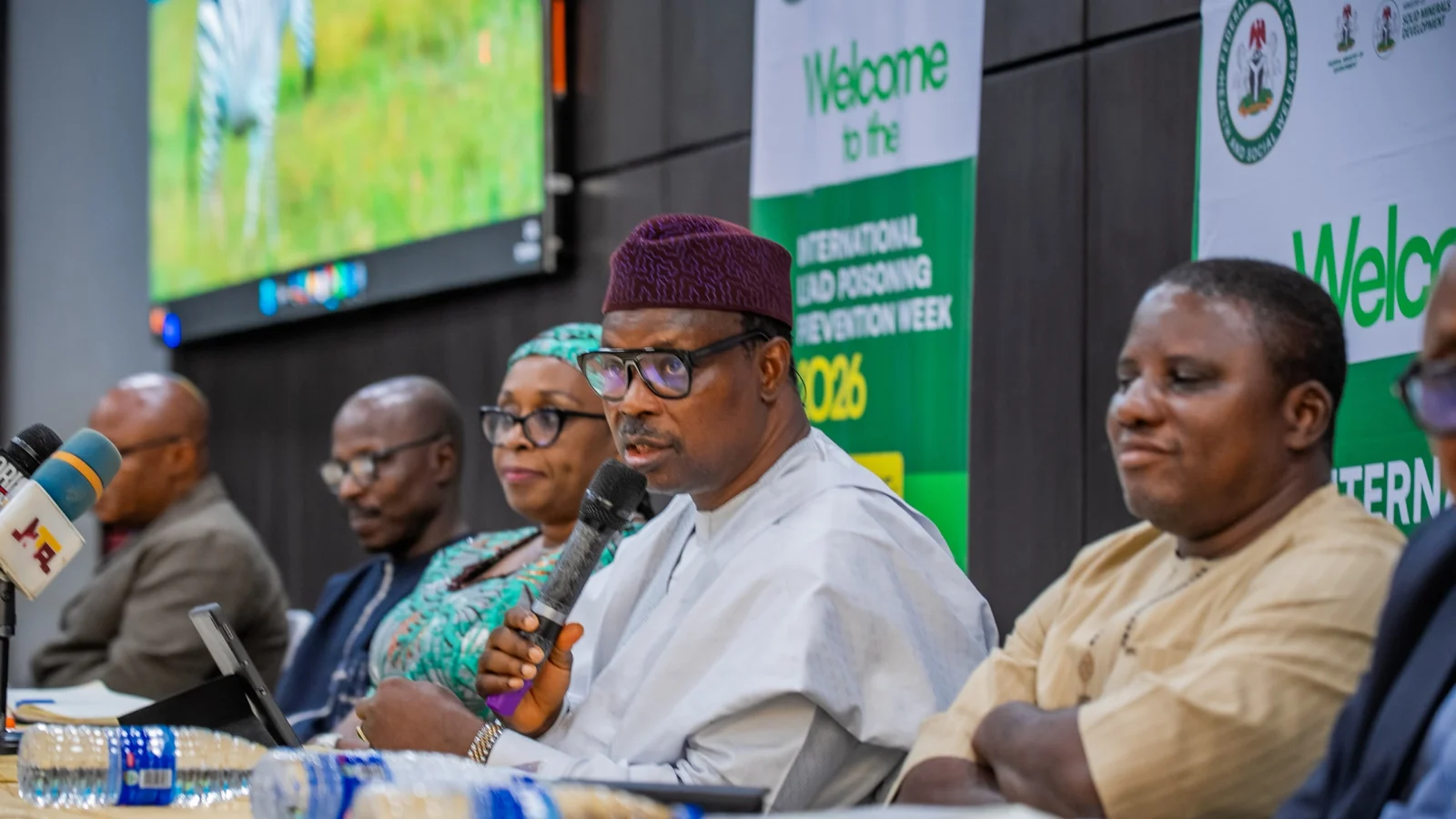
The Minister of State for Health and Social Welfare, Dr Iziaq Salako, said this on Wednesday in Abuja at the commemoration of the 2026 International Lead Poisoning Prevention Week, themed “From Detection to Prevention.”
Salako said children, women of childbearing age and pregnant women were particularly vulnerable to lead exposure, which could cause serious and lasting health consequences.
“It is a toxic substance capable of affecting multiple body systems, with children, women of childbearing age and pregnant women being particularly vulnerable.
“Exposure can have serious and lasting consequences, while individuals may be exposed without immediate obvious symptoms. This makes prevention, early identification and timely action essential components of any national response,” he added.
The minister said the government had established an Inter-Agency Working Group on Lead Poisoning Prevention and Elimination to coordinate efforts involving relevant Ministries, Departments and Agencies, development partners and other stakeholders.
Salako said experiences in Lagos, Ogun, Sokoto and Zamfara had highlighted different sources of exposure and the need for state-specific interventions.
He cited environmental investigations in Lagos and lead exposure concerns associated with battery recycling in Ogijo, Ogun, as evidence of the need for stronger environmental and occupational controls.
“We cannot treat our way out of lead poisoning; we must prevent exposure wherever possible,” the minister said.
While inaugurating the Five-Year Strategic Plan on Lead Poisoning Elimination in Nigeria (2026–2030), Salako added that a costed three-year national roadmap was being developed to translate the plan’s priorities into time-bound actions.
The News Agency of Nigeria (NAN) reports that the plan is aimed at guiding stakeholders on coordinated efforts to prevent exposure, strengthen surveillance and address environmental and occupational sources.
The minister identified stronger monitoring of soil, dust, water, industrial emissions and consumer products, alongside improved regulation, enforcement and laboratory capacity, as priorities.
He urged states, particularly Lagos, Ogun, Zamfara and Sokoto, to develop prevention and control action plans, and called for community involvement in identifying exposure risks.
He called on all stakeholders to eliminate exposure sources like lead-based paint dust, contaminated soil, unsafe work practices and unsafe water pipes.
He also cautioned against lead-glazed pottery, toys, cosmetics including traditional eyeliners (tiro) and some traditional remedies.
The minister listed preventive measures to include wearing protective clothing when handling items containing lead during construction, painting and recycling.
He said others included daily preventive habits like handwashing, washing children’s toys, and wet-wiping floors and play areas instead of dry sweeping.
“Keeping children and pregnant women away from areas where lead may be released, such as battery recycling, repair or painting areas.
“Eating nutrient-dense foods high in calcium, iron and Vitamin C, which block the body from absorbing lead,” he said.
Dr Sarah Ango, a UNICEF consultant, described lead poisoning as a preventable but often invisible threat to children’s health and development.
She said UNICEF was committed to ending childhood lead poisoning by 2040 and was supporting government efforts to strengthen surveillance, laboratory capacity, risk communication and policy implementation.
Ango emphasised that there was no safe level of lead exposure for children.
“This year’s commemoration, under the theme From Detection to Prevention, provides an opportunity to move beyond identifying the problem to accelerating practical solutions that address the root causes of lead exposure,” she said.
The Principal Adviser, Resolve to Save Lives, Mrs Okeoma Obasi, said the organisation had supported surveillance systems, laboratory testing capacity, evidence generation and public awareness.
She described prevention as the most effective and cost-effective strategy for protecting children from lead poisoning.
The News Agency of Nigeria (NAN) reports that the International Lead Poisoning Prevention Week, observed from Oct. 18 to Oct. 24, is aimed at raising awareness on lead exposure and promoting measures to eliminate it.(NAN)
Edited by Nabilu Balarabe/Abiemwense Moru
Comments