



















By Lucy Ogalue
Abuja, March 4, 2026 (NAN) The Federal government says the era of vulnerable groups begging for government contracts is over, declaring that affirmative procurement has now been institutionalised as a legal obligation for all federal entities.
The Director-General of the Bureau of Public Procurement (BPP), Dr Adebowale Adedokun, said this at the on-going awareness raising workshop on the National Policy on Affirmative Procurement (NPAP) on Wednesday in Abuja.
Adedokun said that the Federal Government had created a specific procurement framework to enable women, youth, persons with disabilities and veterans to compete for designated opportunities.
“All government agencies must pay particular attention to these groups of people. So, you will no longer beg.
“It is not a begging issue. It is that you are competing because you are competent,” he said.
According to him, under the leadership of President Bola Tinubu, affirmative procurement has come to stay, and ministries, departments and agencies must begin to create specific portfolios for the targeted groups.
He said that the policy aligned with the President’s “Nigeria First” policy, which sought to prioritise Nigerian businesses and products across different strata of society.
“What the President is saying is that we will create avenues and atmosphere for them to participate.
“Conditions that make it impossible for them to benefit are being gradually restructured and removed,” Adedokun said.
He, however, urged beneficiaries to be professional and prepared, adding that contracts will not be awarded without capacity.
“Nobody is going to give you a job that you do not have the means and capacity to carry out.
“You must grow. Partner with those already established. Learn and build competence,” he said.
He said that the broader objective was to stimulate economic growth, create jobs and contribute to the administration’s one trillion dollars economy target by ensuring that every critical stakeholder group participated in national development.
Similarly, the Team Lead, Affirmative Procurement, BPP, Ms Eugenia Ojeah, said that beyond the awareness, participants at the event would be guieded on how to register for contracts.
“We have a section that is going to guide them on how to register on the contractors, consultants, service providers platform.
“Our plan as BPP is to provide the enabling environment, provide information, give access to the networks that they will need to participate in public process,” she said.
Mr Mahesh Mishra, Economic Counsellor and Head of Growth, Trade and Investment at the British High Commission, described the policy as a significant step toward inclusive economic transformation.
Mishra said that the UK-Nigeria relationship was anchored on a strategic partnership signed in November 2024, with economic growth and job creation as one of its five pillars.
He said that meaningful economic transformation would not occur without active participation of women, who made up roughly 50 per cent of Nigeria’s population.
“Transparency and competition are supposed to be the core of any public procurement policy.
“Meanwhile, affirmative action, such as giving preference to women entrepreneurs in public procurement, is justifiable because it is a significant social and economic objective,” Mishra said.
He said that the UK-supported SheTrades initiative had helped Nigeria assess and strengthen policies promoting women’s economic participation.
Mishra further said that procurement reform must be supported by the wider ecosystem, including financial institutions and the private sector.
Ms Natasha Akioye, National Coordinating Officer, International Trade Centre (ITC) in Nigeria, said that the policy was designed to expand access to government contracts for women-led businesses and other historically excluded groups.
Akioye said that ITC, through the SheTrades initiative and with support from the UK Government, had worked closely with the BPP to advance an inclusive procurement system.
“Public procurement is a powerful economic tool. When made inclusive, it can expand opportunities for women, youth, persons with disabilities, veterans and elderly entrepreneurs who have historically faced barriers,” she said.
She said that as the policy advanced toward formal approval, intended beneficiaries must understand how to position themselves, including by registering on the BPP Contractor, Consultant and Service Provider platform.
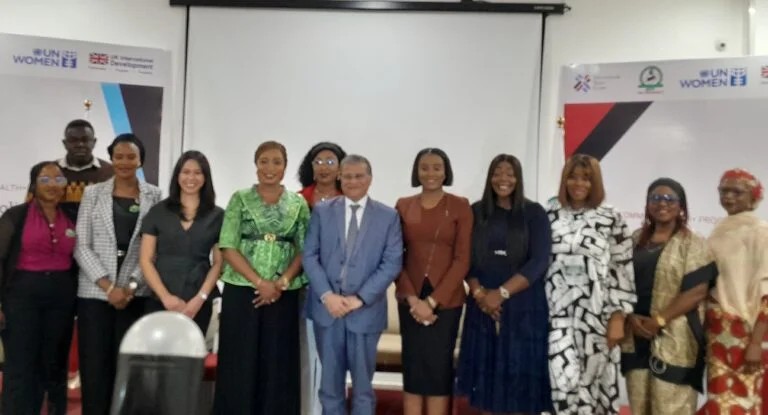
The workshop, attended by women entrepreneurs and other stakeholders, focused on raising awareness about the new procurement framework and practical steps for participation.(NAN)(www.nannews.ng)
Edited by Kadiri Abdulrahman