








Lagos, March 4, 2026 (NAN) The Central Bank of Nigeria (CBN) has taken delivery of responsibly sourced gold refined to London Bullion Market Association (LBMA) Good Delivery standards into its foreign reserves.
A statement by the apex bank on Wednesday said that this brings the CBN’s total gold holdings to 3.5 billion dollars, marking a significant step in its reserve diversification strategy.
The gold, sourced in Nigeria, was aggregated by the Solid Minerals Development Fund (SMDF) through the National Gold Purchase Programme (NGPP).
The programme involves local miners, and operates within a responsible sourcing framework aligned with the Organisation for Economic Co-operation and Development (OECD) Due Diligence Guidelines and the World Gold Council’s London Principles.
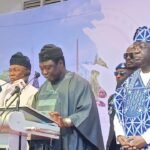
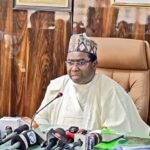
Speaking at a recent workshop on Strategies to Maximise the Economic Benefits of Minerals in Nigeria, CBN Governor, Mr Olayemi Cardoso, said that the CBN acquired the monetary-grade gold in Naira.
Cardoso the gold was acquired at pricing linked to LBMA benchmarks, a structure designed to preserve Nigeria’s foreign exchange holdings while strengthening the nation’s gold reserves.
He said that by purchasing domestically refined gold without deploying foreign currency, the transaction enhances reserve accretion and supports broader macroeconomic stability objectives.
He also highlighted major shifts in global reserve management strategies, noting their increasing importance amid rising global economic uncertainties.
Cardoso described the event as a reflection of Nigeria’s shared commitment to responsible and strategic management of its mineral resources.
He said that the workshop underscored the nation’s readiness to adapt to the realities of an evolving global economy, where resilience, diversification, and prudent governance have become increasingly vital.
He further said that the session was convened by the CBN’s Corporate Secretariat and Reserve Management Departments to create a platform for engagement with key players in the gold sector.
The CBN governor said that the session was aimed at deepening understanding of the industry’s current landscape, opportunities, and challenges across its value chain.
He said that central banks around the world were prioritising economic resilience amid persistent geopolitical and market uncertainties.
He said that gold had regained importance as a hedge against inflation and volatility, while other critical minerals were increasingly shaping global supply chains and advanced industrial development.
Cardoso said that Nigeria’s immense natural and human resource potential could only be fully realised through prudence, strategic coordination, and long-term planning.
He highlighted the need for strict adherence to internationally recognised standards, stressing that institutional credibility depends on strong governance frameworks.
The Executive Secretary, SMDF, Hajiya Fatima Shinkafi, said the successful delivery of LBMA standard gold demonstrated the strength of the organisation’s formalisation framework and supply chain due diligence processes.
The World Gold Council’s Director of Central Banks and Public Policy, Ms Kurtulus Diamondopoulos, commended both the CBN and SMDF for designing the Nigerian Gold Purchase Programme (NGPP).
Diamondopoulos acknowledged that the NGPP was designed in line with the twelve London Principles for responsible artisanal and small-scale gold sourcing.
She said that the partnership between the CBN as sole off-taker and the SMDF as fiscal and supply chain manager offered a strong model for other countries seeking to strengthen similar programmes.
The President/CEO, Africa Finance Corporation (AFC), Mr Samaila Zubairu, reaffirmed AFC’s commitment to financing and formalising Nigeria’s mineral sector.
He stressed the importance of accurate data and mineral processing infrastructure to attract investment, improve gold recovery, reduce environmental impact and support central bank purchases.
Also, the Executive Vice Chairman of Kian Smith Gold Company, Ms Nere Emiko, underscored the urgent need for Nigeria to build strategic gold reserves and leverage commodity exchanges.
Emiko noted the country’s low reserve levels relative to peers and called for greater investment in exploration and transparency.
The Domestic Gold Purchase Programme forms part of the CBN’s broader strategy to enhance reserve quality, reduce external vulnerabilities, and position Nigeria’s mineral wealth as a pillar of long-term economic stability. (NAN)
GA/KAE
=========
Edited by Kadiri Abdulrahman