


By Tosin Kolade
The Federal Ministry of Housing and Urban Development has reaffirmed its commitment to strengthening collaboration with civil society organisations to improve access to water, sanitation, and basic urban infrastructure across Nigeria.
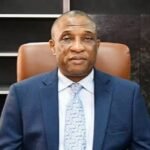
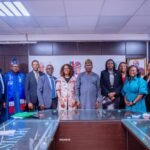
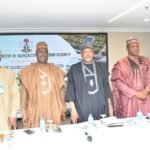
The Minister of Housing and Urban Development, Alhaji Ahmed Dangiwa, made the commitment while receiving members of the Society for Water and Sanitation (NEWSAN), a civil society network led by its National Coordinator, Mr Attah Benson, in Abuja on Wednesday.
He said the ministry remains committed to deepening partnerships aimed at enhancing service delivery in water, sanitation and urban development projects nationwide.
Dangiwa said the ministry’s interventions go beyond housing provision, stressing that urban development must be integrated with essential services such as water, sanitation, drainage, and other basic infrastructure to achieve sustainable communities.
He said NEWSAN’s activities align closely with the ministry’s mandate, especially in urban renewal, slum upgrading, and the provision of basic services.
The minister explained that the ministry is implementing a broader urban development agenda through the National Urban Renewal and Slum Upgrade Programme aimed at improving living conditions in underserved communities.
“Under the initiative, interventions are extended to both urban and semi-urban communities lacking basic amenities.
“These include solar-powered street lighting, drainage systems, access roads, water supply, sanitation facilities, and other essential infrastructure.
“In some communities, interventions also cover basic structural elements where they are absent, demonstrating the ministry’s comprehensive approach to development,” he said.
He highlighted the importance of data-driven planning, noting that collaboration with the network would enhance access to credible data, especially on open defecation trends and sanitation gaps across states.
Dangiwa emphasised that achieving Sustainable Development Goal (SDG) 11 on Sustainable Cities and Communities is closely linked to SDG 6 on Clean Water and Sanitation, stressing that both goals must be pursued simultaneously.
On institutional collaboration, the minister confirmed the ministry’s representation on the National Task Group on Sanitation and directed relevant departments to strengthen engagement with the network to facilitate coordination and data sharing.
While acknowledging budgetary constraints, he said significant progress has been made through targeted interventions and constituency projects facilitated by legislators.
“Over 60 per cent of such constituency-driven interventions are focused on water and sanitation, reflecting growing recognition of their importance to community wellbeing.
“It is worth noting that through its Special Projects Unit, more than 150 communities have benefited from interventions in water, sanitation, and other basic services within the past two years.
“Other departments, including Urban and Regional Development as well as Engineering Services, are also actively implementing similar interventions across the country,” he said.
Reaffirming the ministry’s commitment, Dangiwa assured the delegation of readiness to collaborate fully, share data, and jointly identify priority areas for intervention.
He added that all projects are monitored through before-and-after assessments to ensure transparency, accountability, and value for public expenditure.
Earlier, NEWSAN National Coordinator, Benson, said the network serves as a national platform for over 300 civil society organisations, NGOs and community-based organisations working to improve access to safe water, sanitation and hygiene services across Nigeria.
He explained that NEWSAN focuses on advocacy, community mobilisation, policy engagement, and monitoring of WASH interventions, with emphasis on eliminating open defecation and improving hygiene practices in both rural and urban communities.
Benson said the network also works closely with grassroots structures such as community associations and traditional institutions to drive behavioural change campaigns on sanitation and hygiene.
He noted that NEWSAN represents civil society stakeholders in national and international platforms, including the Sanitation and Water for All partnership, where it contributes to policy dialogue and sector coordination.
Benson expressed concern that only Jigawa and Katsina States have so far attained Open Defecation Free (ODF) status, while progress across other states remains slow.
He urged stronger government leadership in engaging state governors to accelerate ODF declarations nationwide, and called for the integration of WASH financing into housing and infrastructure contracts to ensure host communities benefit directly.
He also advocated stronger mainstreaming of WASH in national planning and greater attention to climate resilience in sanitation infrastructure, especially in flood-prone areas.
The News Agency of Nigeria (NAN) reports that Nigeria continues to face significant water, sanitation and hygiene (WASH) challenges across states, with wide disparities in access to safe drinking water and basic sanitation, particularly in rural and underserved communities.
Available data indicate that about 33 per cent of Nigerians lack access to safe drinking water, while 44 per cent do not have basic sanitation facilities.
Schools and health centres in many parts of the country also remain without adequate toilets and handwashing facilities.
The consequences of poor WASH services are severe, contributing to high levels of preventable diseases and mortality.
More than 100,000 deaths annually are linked to WASH-related illnesses, while diarrhoeal diseases remain a leading cause of under-five child mortality.
Beyond health impacts, inadequate WASH access affects productivity, education, and safety, with economic losses estimated at about 1.3 per cent of GDP annually. (NAN)
Edited by Ekemini Ladejobi