






By Justina Auta
The Federal Government says Nigeria has recorded measurable progress in the implementation of the National Women’s Economic Empowerment (WEE) Policy, with four states already domesticating the framework to drive grassroots impact.
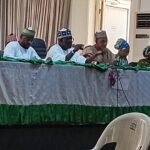
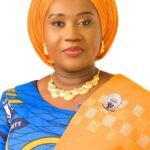
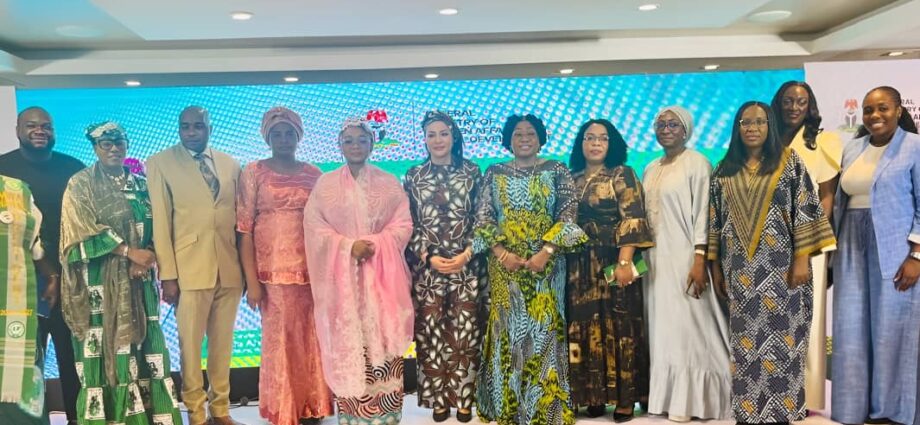
Hajiya Imaan Sulaiman-Ibrahim, Minister of Women Affairs and Social Development, disclosed this at a high-level WEE Mid-Point Review and Partnership Convening in collaboration with the Albright Stonebridge Group on Thursday in Abuja.
Sulaiman-Ibrahim said Kaduna, Kano, Lagos and Kwara states were leading efforts to translate the national policy into tangible outcomes for women, particularly at the grassroots.
She added that more than two-thirds of states across the federation had indicated commitment to adopting the policy, describing the development as a critical step toward expanding economic opportunities for Nigerian women.
According to her, the WEE Policy is designed to reposition women as key drivers of national growth, productivity and competitiveness, noting that women constitute a significant share of the agricultural labour force and small business ownership.
The minister also highlighted strengthened institutional coordination, including the establishment of a Presidential High-Level Advisory Council to align public, private and development financing toward impactful interventions for women and girls.
She said flagship programmes such as EmpowerHer, WAVE 774 and DigitalHer were already serving as implementation pathways to scale inclusion, productivity and resilience among women nationwide.
Sulaiman-Ibrahim further noted that the declaration of 2026 as the Year of Families and Social Development underscored government’s recognition of the link between women’s economic empowerment and broader national development outcomes.
She added that initiatives such as the Affirmative Procurement Policy were opening opportunities for women-owned businesses by leveraging government spending as a tool for inclusion.
Meanwhile, the Minister of Budget and Economic Planning, Sen. Atiku Bagudu, represented by the Minister of State, Dr Doris Uzoka-Anite, emphasised the need to fully embed the WEE Policy within Nigeria’s national planning and budgeting systems.
Bagudu said women’s economic empowerment was not only a social agenda but a core component of economic strategy, noting that gender gaps in access to finance, markets and productive assets continued to limit national productivity.
He said efforts were underway to integrate gender-responsive planning into budget processes to ensure Ministries, Departments and Agencies clearly demonstrated how allocations impacted women.
According to him, government was shifting toward outcome-driven budgeting, where public expenditure would be assessed based on measurable impact, including gender-disaggregated results.
He added that partnerships with institutions such as the Bank of Industry and international platforms were being strengthened to mobilise financing and expand access to capital for women-led enterprises.
Also, Beatrice Eyong, UN Women Country Representative to Nigeria and ECOWAS, said that in spite of recorded progress, structural barriers still hindered women’s full economic participation.
Eyong, represented by the Programme Manager, UN Women, Osalobo Osemhenjie, identified the challenges to include limited access to finance, unpaid care burdens and data gaps.
She reaffirmed the organisation’s commitment to supporting Nigeria through policy implementation, financing frameworks and partnerships to ensure that the WEE Policy translates into real improvements in the lives of women across the country.
News Agency of Nigeria (NAN) reports that the WEE Mid-Point Review is convened to assess progress, consolidate gains and drive coordinated, high-impact implementation of the policy.
The framework is aimed at expanding inclusive economic opportunities for women while positioning them as critical drivers of national growth, productivity and competitiveness.(NAN) (www.nannews.ng)
Edited by Folasade Akpan