








By Funmilayo Adeyemi
Rising insecurity, poverty and early marriage are major factors responsible for Nigeria’s growing number of out-of-school youths.
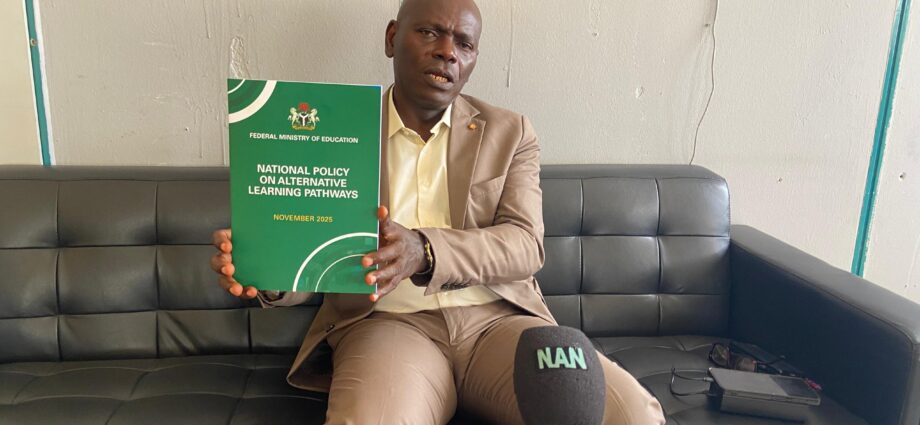
Dr John Edeh, the Director overseeing the National Commission for Mass Literacy, Adult and Non-Formal Education (NMEC) disclosed this in an interview with the News Agency of Nigeria (NAN) in Abuja.
He explained that many young people and adults were increasingly seeking survival skills rather than conventional classroom education due to prevailing socio-economic conditions.
“The issue of insecurity is a contributing factor. Early marriage is also a factor that is making this number to keep on increasing.
“Inadequate awareness about the importance of this sector is also a factor.
“What we are doing to address these challenges is to continue with aggressive mobilisation and sensitisation to bring more learners to the classrooms and address their needs,’ he said.
Edeh noted that NMEC had introduced aggressive mobilisation and sensitisation campaigns to encourage enrolment into literacy programmes.
He said the commission operates basic literacy, post-literacy, continuing education and vocational programmes aimed at reintegrating out-of-school youths into learning.
According to him, the programmes are flexible and allow learners to attend classes base on convenient schedules.
“We have four major programmes including the basic literacy programme for those people that have never seen the four walls of any school before.
“This programme will run for six to nine months, depending on the contact hours, because the non-formal exam is flexible.
“Learners have the choice to decide which day of the week they will be attending the classes, at least three times.
“We also take it further to what we call, post-literacy, which is equivalent of primary four to primary six, which last for about one and a half years.
” So, our programmes are accelerated in nature. Just like the Accelerated Basic Education Programme (ABEB),” he said.
Edeh listed other programmes available in the commission to address adult literacy to include vocational programmes and continued education programmes.
He added that integrating vocational training into literacy education is helping learners to acquire skills for economic survival.(NAN)(www.nannews.ng)
Edited by Rotimi Ijikanmi