






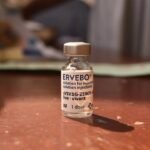


Tesamorelin and Ipamorelin Peptide Blend in Experimental Research
Peptides occupy a specific place in modern molecular science due to their structural precision and signaling versatility. Within biochemical research, small peptide sequences frequently function as regulators of communication between cells and tissues, guiding complex physiological processes through receptor-mediated pathways. Among these molecules, growth hormone–releasing peptides have drawn considerable attention because of their potential to influence endocrine signaling networks associated with metabolism, tissue remodeling, and cellular regulation.
Two peptides frequently discussed within this research context are Tesamorelin and Ipamorelin. Each peptide is believed to interact with various elements of the growth hormone regulatory axis, and investigations increasingly explore the theoretical implications of studying them together in controlled research environments. The Tesamorelin and Ipamorelin peptide blend has therefore emerged as a topic of interest in molecular endocrinology, metabolic signaling research, and peptide pharmacology.
Rather than acting through identical mechanisms, these peptides appear to influence complementary pathways within the growth hormone regulatory network. Because of this potential interplay, researchers have theorized that combining the two molecules within experimental frameworks might offer insights into how multiple signaling inputs coordinate endocrine regulation in the organism.
Structural Characteristics and Molecular Identity
Tesamorelin represents a synthetic analog of growth hormone–releasing hormone (GHRH). Structurally, it is composed of a modified chain derived from the endogenous GHRH peptide, with stabilization features incorporated to increase resistance to enzymatic degradation. This molecular architecture is thought to allow the peptide to maintain interaction with receptors associated with GHRH signaling pathways for longer durations within research frameworks.
In contrast, Ipamorelin belongs to the class of growth hormone secretagogues speculated to interact with the ghrelin receptor, also known as the growth hormone secretagogue receptor (GHSR). Its chain contains a pentapeptide structure designed to mimic the activity of naturally occurring ghrelin-related signaling fragments. Because of its selective affinity for GHSR, Ipamorelin is often described in research discussions as one of the more receptor-specific peptides among synthetic secretagogues.
When examined together, these peptides appear to represent two distinct molecular approaches to influencing the growth hormone regulatory axis. Data suggest that Tesamorelin may interact with receptors linked to hypothalamic signaling cascades, while Ipamorelin might engage ghrelin-linked receptors present in various tissues involved in endocrine communication.
Hypothalamic–Pituitary Signaling Dynamics
Growth hormone regulation involves a complex dialogue between hypothalamic compounds, pituitary signaling pathways, and peripheral metabolic signals. Within this system, endogenous GHRH stimulates growth hormone release, while somatostatin acts as a regulatory inhibitor. Ghrelin and ghrelin-like peptides represent another modulatory influence within this network.
Tesamorelin, as a GHRH analog, seems to interact with receptors in the pituitary axis that normally respond to endogenous GHRH. Research indicates that this interaction might promote signaling cascades associated with cyclic AMP pathways and downstream transcription factors involved in endocrine regulation.
Ipamorelin, by comparison, appears to interact with the ghrelin receptor family. Activation of these receptors appears to trigger intracellular signaling mechanisms involving phospholipase activity, calcium mobilization, and secondary messenger pathways associated with hormonal communication.
Metabolic Regulation and Lipid Signaling Research
Another area of scientific interest surrounding these peptides involves metabolic regulation. Growth hormone signaling has long been linked to lipid metabolism, glucose homeostasis, and nutrient partitioning across tissues.
Tesamorelin has attracted attention in metabolic research because its alleged interaction with GHRH pathways might influence signaling mechanisms associated with lipid metabolism. Investigations suggest that modulation of the growth hormone axis may alter regulatory processes governing adipose tissue activity and lipid mobilization.
Investigations purport that Ipamorelin, through its interaction with ghrelin-related receptors, might also intersect with metabolic signaling networks. Ghrelin receptor pathways are believed to participate in energy balance communication between tissues involved in metabolic coordination.
Cellular Communication and Peptide Signaling Networks
Beyond endocrine regulation, peptides such as Tesamorelin and Ipamorelin have also been hypothesized to hold relevance for investigations into cellular communication systems. Findings imply that peptide signaling molecules often serve as mediators between distant tissues, coordinating physiological responses through receptor binding and intracellular signaling cascades.
Tesamorelin has been theorized to influence transcriptional pathways associated with growth hormone–mediated gene expression. Through receptor activation, downstream signaling molecules could potentially alter transcription factors involved in cellular growth and metabolic regulation.
Scientists speculate that Ipamorelin may interact with ghrelin receptor signaling pathways that extend beyond classical endocrine tissues. Research indicates that ghrelin receptors may be present in multiple cellular environments, suggesting that ghrelin-mimicking peptides might influence broader signaling networks within the organism.
Peptide Synergy in Molecular Endocrinology Research
The concept of peptide synergy represents an emerging topic in molecular endocrinology. Biological signaling networks rarely work through isolated molecules; instead, they rely on multiple overlapping signals that collectively regulate physiological processes.
Tesamorelin and Ipamorelin appear to represent two complementary signaling molecules within the growth hormone regulatory axis. Because Tesamorelin seems to mimic GHRH signaling while Ipamorelin appears to interact with ghrelin-associated receptors, their simultaneous presence in research environments may provide a model for studying integrated endocrine regulation.
Hypotheses in Peptide Engineering and Molecular Profile
Peptide research frequently informs the design of new molecules with refined receptor selectivity or improved stability. Tesamorelin already represents an example of peptide engineering in which modifications were incorporated to enhance stability and receptor interaction.
Ipamorelin, with its compact pentapeptide structure and receptor selectivity, is believed to offer another interesting template for peptide design. Research into these molecules may therefore contribute to broader efforts within peptide chemistry aimed at developing molecules that interact with specific signaling pathways.
Future Research Directions
As peptide science continues to expand, interest in combinatorial peptide systems is likely to grow. Researchers increasingly recognize that physiological regulation involves networks of interacting signals rather than isolated molecular events.
Within this context, the Tesamorelin and Ipamorelin peptide blend may provide a valuable research framework for exploring how multiple receptor pathways interact within endocrine systems. Investigations suggest that studying this peptide combination might reveal insights regarding signal amplification, receptor cross-communication, and metabolic regulation.
Conclusion
Tesamorelin and Ipamorelin are two intriguing peptides within the broader landscape of growth hormone regulatory research. Each peptide seems to interact with distinct receptor systems, yet both appear to participate in signaling pathways linked to endocrine communication and metabolic regulation.
When explored together, the Tesamorelin & Ipamorelin blend has been hypothesized to provide researchers with a valuable model for examining how multiple peptide signals coordinate physiological regulation. Studies suggest that Tesamorelin might engage pathways linked to GHRH signaling, while Ipamorelin may interact with ghrelin receptor networks. The interplay between these mechanisms has become a topic of increasing interest within molecular endocrinology.
References
[i] Teichman, S. L., Neale, A., Lawrence, B., Gagnon, C., Castaigne, J. P., & Frohman, L. A. (2006). Prolonged stimulation of growth hormone secretion by CJC-1295, a long-acting analog of growth hormone–releasing hormone, in healthy adults. The Journal of Clinical Endocrinology & Metabolism, 91(3), 799–805. https://doi.org/10.1210/jc.2005-1537
[ii] Mayo, K. E., Miller, T. L., DeAlmeida, V., Zheng, J., Cunningham, M. J., & Scherer, P. E. (2000). Regulation of growth hormone secretion and growth hormone–releasing hormone receptor signaling. Endocrine Reviews, 21(5), 488–519. https://doi.org/10.1210/edrv.21.5.0408
[iii] Howard, A. D., Feighner, S. D., Cully, D. F., Arena, J. P., Liberator, P. A., Rosenblum, C. I., Hamelin, M., Hreniuk, D. L., Palyha, O. C., Anderson, J., Paress, P. S., Diaz, C., Chou, M., Liu, K. K., McKee, K. K., Pong, S. S., Chaung, L. Y., Elbrecht, A., Dashkevicz, M., & Van der Ploeg, L. H. T. (1996). A receptor in pituitary and hypothalamus that functions in growth hormone release. Science, 273(5277), 974–977. https://doi.org/10.1126/science.273.5277.974
[iv] Kojima, M., Hosoda, H., Date, Y., Nakazato, M., Matsuo, H., & Kangawa, K. (1999). Ghrelin is a growth-hormone-releasing acylated peptide from stomach. Nature, 402(6762), 656–660. https://doi.org/10.1038/45230
[v] Smith, R. G., Van der Ploeg, L. H. T., Howard, A. D., Feighner, S. D., Cheng, K., Hickey, G. J., Wyvratt, M. J., Fisher, M. H., Nargund, R. P., & Patchett, A. A. (1997). Peptidomimetic regulation of growth hormone secretion. Endocrine Reviews, 18(5), 621–645. https://doi.org/10.1210/edrv.18.5.0312