







By Millicent Ifeanyichukwu
The Lagos Studies Association (LSA) has urged scholars and students to adopt practical, field-based research methods.
The association said such approaches would deepen understanding of social realities and improve knowledge production.
Speaking at LSA’s 10th annual conference, Prof. Laurent Fourchard highlighted ethnographic and visual research methods.
Fourchard, from Sciences Po University, France, said these methods offered deeper insights beyond numerical data.
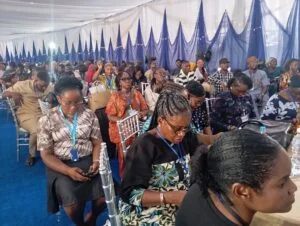
The conference, hosted by Trinity University, Yaba, was with the theme: ‘The State of African Studies in the 21st Century.’
The week-long event attracted scholars from Nigeria and other countries, reflecting its growing global relevance.
“Ethnographic and visual research methods allow scholars to move beyond statistics and engage lived experiences,” he said.
Fourchard added that the methods helped researchers understand institutions, communities and social realities more effectively.
He noted increased interest in social sciences, citing the conference’s growth from nine panels in 2016.
“The LSA conference has grown to more than 340 panels in 2026,” he said.
According to him, the growth showed stronger global scholarly engagement and commitment to research collaboration.
The keynote speaker, however, raised concerns over rising plagiarism cases affecting academic integrity.
He warned that artificial intelligence tools and online resources were creating new ethical challenges.
LSA Co-founder, Prof. Saheed Aderinto, said the association aimed to remove barriers in knowledge production.
He said LSA was strengthening intellectual exchange between African and global academic communities.
“We are building knowledge systems that place Africa at the centre of intellectual production,” he said.
Aderinto said the association was expanding access to funding, doctoral training and global collaborations.
He said these efforts would improve African scholars’ visibility and competitiveness internationally.
Earlier, Trinity University Vice-Chancellor, Prof. Clement Kolawole, praised LSA for promoting academic engagement.
He said the institution remained committed to connecting global scholars through interdisciplinary platforms.
Kolawole said the conference reflected Africa’s growing academic presence in global conversations.
“The conference brings scholars together to exchange ideas and strengthen collaboration,” he said.
He added that research networks would help advance Africa’s intellectual contributions globally.
Kolawole stressed the need to mentor emerging academics through research development and grant writing.
He warned that Africa must shape its own narrative in global knowledge systems. “If Africans do not tell their stories, no one will,” he said.
He urged Africans to project their values and strengthen intellectual sovereignty worldwide.
Kolawole also emphasised the humanities’ role in promoting societal progress and cooperation.
Prof. Graceful Ofodu, a panelist from Ekiti State University, praised Trinity University’s hosting.
She said the conference created opportunities for learning, knowledge sharing and global interaction.
“The conference provided opportunities to learn, relearn, unlearn and advance knowledge,” Ofodu said.
She added that applying the insights gained could improve economic prospects and global positioning.
The News Agency of Nigeria reports that the conference began on June 15. It attracted over 2,000 participants and is expected to end on June 23. (NAN)(www.nannews.ng)
=========
Edited by Kamal Tayo Oropo