


By Jessica Dogo
Dr Bosun Tijani, the Minister of Communications, Innovation and Digital Economy, says the Federal Government is investing in 90,000 kilometres of fibre-optic network to deepen connectivity across the country.
Tijani said the project, expected to be substantially advanced by December, will position Nigeria’s fibre network among the longest on the African continent.
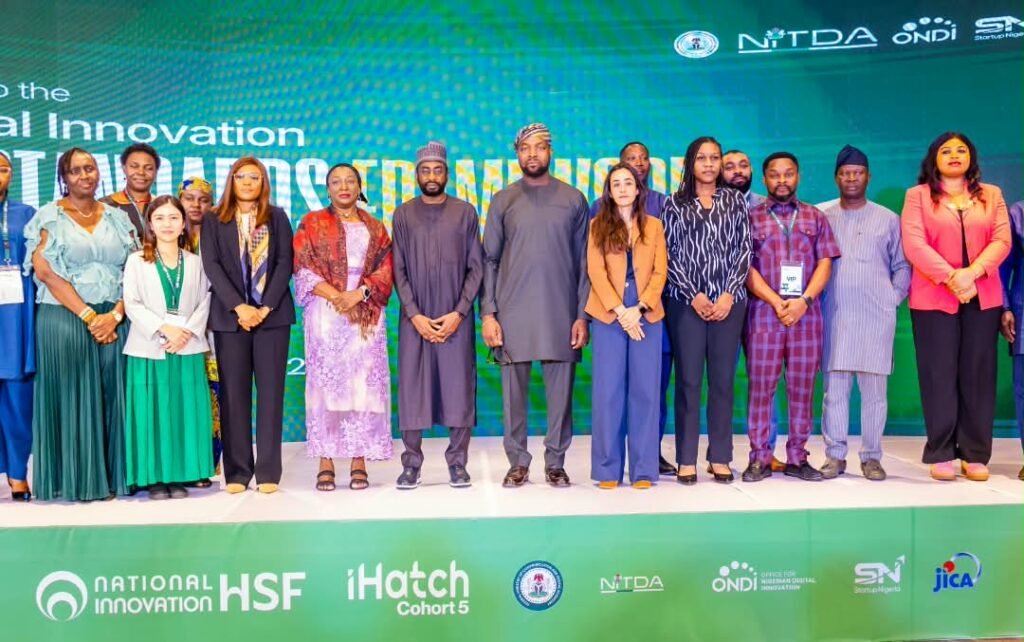
He said this at the National Innovation Hub Standards Framework Workshop on Thursday in Abuja.
Tijani said Nigeria had developed a clear understanding of how technology could transform society and accelerate growth across critical sectors.
Consequently, he said, the National Innovation Hub Standards Framework would strengthen the nation’s innovation ecosystem and create an enabling environment for startups to develop solutions to national challenges.
He said technology was central to the development of agriculture, education and healthcare, stressing that meaningful transformation in the sectors could not be achieved without effective deployment of technology.
The minister identified three layers through which technology supports societal growth: foundational digital infrastructure, the technology stack and applications developed by innovators.
He said the foundation layer included fibre-optic networks, satellites, telecommunications towers, data centres, power and connectivity, which provided the basis for digital transformation.
According to him, the second layer comprises technology systems and frameworks that enable people and businesses to build innovative solutions.
He cited digital identity, data exchange and interbank settlement systems as examples of technologies within the second layer.
Tijani said the third layer was where innovators operated, developing applications and services to improve businesses, public services and people’s lives.
He said Nigeria’s experience in telecommunications and financial technology demonstrated the importance of strengthening the first two layers to enable innovation.
The minister said the liberalisation of the telecommunications sector in 1999 attracted investments in towers and fibre-optic networks, creating a foundation for improved connectivity.
He also said the development of the interbank settlement system by the Central Bank of Nigeria contributed significantly to the growth of the country’s fintech ecosystem.
Tijani said strong foundational infrastructure and technology frameworks had contributed to Nigeria’s emergence as a leading fintech hub in Africa and its production of billion-dollar technology companies.
He further said that strengthening the innovation ecosystem through the new framework was equally important to ensure startups nationwide had access to the support required to grow.
Also speaking, Hilda Ayejimiwo, Senior Programme Manager, Embassy of Denmark, described the framework as a welcome development that would improve the quality and capacity of innovation hubs.
Ayejimiwo said a common national benchmark would provide government, development partners and other stakeholders with a basis for coordinated and evidence-based support for innovation hubs.
She said the success of the framework would depend on sustained collaboration among government, hubs, the private sector, development partners and entrepreneurs.
Ms Victoria Fabunmi, National Coordinator, Office for Nigerian Digital Innovation, said the framework would strengthen hubs that support and nurture startups while decentralising innovation across the country.
Fabumi likened startups to babies and innovation hubs to mothers, saying the framework would strengthen the hubs to provide startups with the support needed to grow and deliver impact at scale.
She expressed optimism that the framework would promote innovative solutions while contributing to the Renewed Hope Agenda and Nigeria’s digital economy. (NAN)(www.nannews.ng)
Edited by Uche Anunne


Comments