









By Justina Auta
Stakeholders have called for stronger collaboration, inclusive policies and rights-based approaches to improve access to sexual and reproductive health and rights (SRHR) services for migrants, refugees and displaced populations.
The call was made at the Safe Passage Project Summit themed, “Advancing Equitable SRHR Services for Migrants, Refugees, Asylum Seekers, and People on the Move,” on Wednesday in Abuja.
The summit, organised by the Planned Parenthood Federation of Nigeria (PPFN), sought to strengthen multi-sectoral collaboration and commitment toward improving access to inclusive, rights-based SRHR services in Abuja and Kano States.
It also aimed to align policies, frameworks and coordination mechanisms supporting SRHR service delivery for mobile and displaced populations while reinforcing commitments to non-discrimination, gender equality and human rights.
Mr Bitrus Kwamoti-Laori, President of PPFN, said millions displaced by conflict, economic hardship, climate change, persecution and humanitarian crises deserved dignity and equitable access to quality healthcare services.
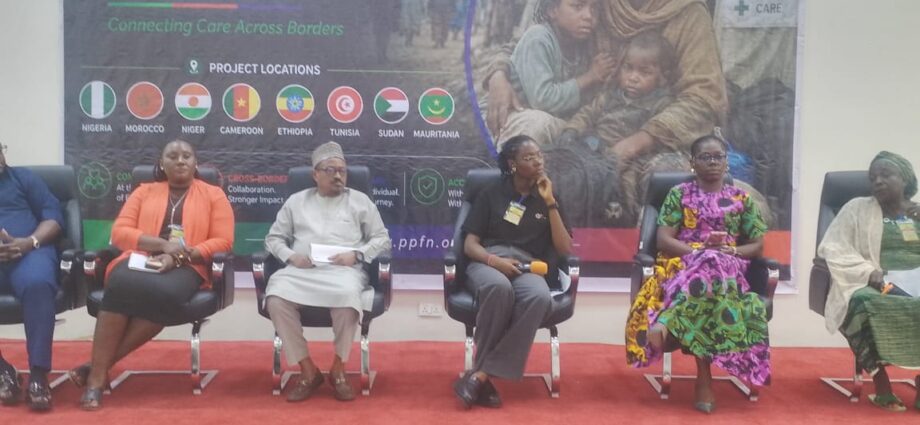
Kwamoti-Laori said the Safe Passage Project was being implemented in Nigeria, Morocco, Sudan, Cameroon, Tunisia, Mauritania, Ethiopia and parts of Asia to ensure access to comprehensive SRHR services.
“Migration pathways are often marked by significant vulnerabilities. Women and girls face heightened risks of sexual violence, unintended pregnancies, unsafe abortions and barriers to essential healthcare.
“Young people and other marginalised populations frequently encounter discrimination and exclusion. These challenges demand coordinated, innovative and compassionate responses,” he said.
He said PPFN was strengthening service delivery by expanding access to contraception, maternal healthcare, HIV prevention and treatment, psychosocial support and protection services for survivors of violence.
According to him, the organisation was also building stronger referral systems, fostering cross-border collaboration and advocating policies that protect the health and rights of people on the move.
“The summit provides an invaluable platform to reflect on our progress, strengthen partnerships and identify practical solutions to existing challenges.
“Let us move beyond discussions and embrace collective action to create systems that are inclusive, responsive and accessible, while reaffirming that access to sexual and reproductive healthcare is a fundamental human right,” he said.
Dr Okai Haruna-Aku, Executive Director of PPFN, said the project challenged stakeholders to move beyond fragmented programming toward integrated systems that placed dignity, equity and rights at the centre.
“Behind every statistic is a human being, a young woman seeking safety, a child born on the road and a family trying to rebuild.
“As we proceed, let us commit to practical steps that will strengthen service delivery for those who are often left behind,” he said.
Also speaking, Mr John Uruakpa, Director of Health Promotion at the Federal Ministry of Health and Social Welfare, described migration as a defining feature of the contemporary world.
He said migrants and displaced populations often faced barriers to accessing essential health services, including maternal healthcare, family planning, HIV prevention, psychosocial support and protection from violence.
“Access to healthcare is a fundamental right and should not be determined by an individual’s migration status or location.
“The Federal Ministry of Health and Social Welfare remains committed to achieving universal health coverage and ensuring no one is left behind, including migrants, refugees, asylum seekers, internally displaced persons and host communities,” he said.
Uruakpa said the Safe Passage Project was helping to bridge critical gaps through integrated SRHR services, strengthened referral systems, community engagement, advocacy and strategic partnerships nationwide.
Dr Mohammed Kassim, Senior Health and Nutrition Coordinator at the International Rescue Committee (IRC), said migrants, particularly women and girls, faced heightened protection risks, including exploitation and gender-based violence.
Kassim said the organisation provided clinical care, protection services, guidance and legal referrals at critical transit points, alongside sexual and reproductive health services for vulnerable populations.
Similarly, Ms Margaret Bolaji-Adegbola, Executive Director of Stand with a Girl (SWAG), identified the absence of a policy addressing migrants’ specific SRHR needs as a major gap.
According to her, existing policies on sexual and reproductive health and internally displaced persons often fail to adequately address the realities of people constantly on the move.
She noted that many mobile clinics established in displaced communities were short-lived, leaving beneficiaries without sustained access to healthcare and other essential support services.
“We need to be intentional in making sure migrants and refugees are considered in policy implementation and are part of the conversation when such policies are developed and executed,” she said.
The summit also featured panel discussions on humanitarian responses to SRHR needs of people on the move and strategies for strengthening SRHR service delivery for migrants and refugees.(NAN) (www.nannews.ng)
Edited by Abiemwense Moru