


By Justina Auta, News Agency of Nigeria (NAN)
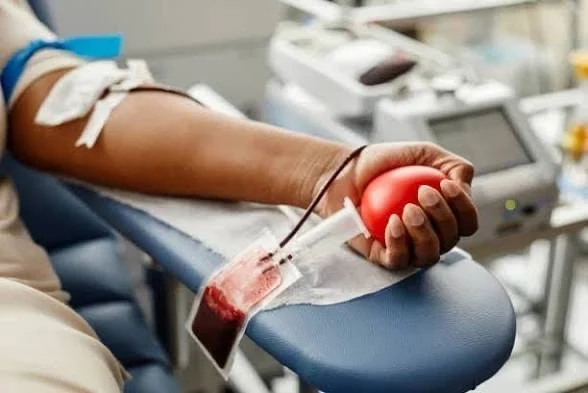
Nigeria requires an estimated 1.8 million to two million units of blood annually to meet its healthcare needs, but available supplies remain significantly below demand.
The World Health Organisation (WHO) says Nigeria collected 371,827 units of blood in 2024, highlighting the gap between the quantity required and available supplies.
The shortage affects access to blood for emergencies, surgeries, childbirth complications and treatment of life-threatening illnesses.
Consequently, patients and their families often resort to emergency appeals to relatives, friends and strangers to secure blood for transfusions.
For two-year-old Destiny Emmanuel, a desperate search for blood became a race against time as her family struggled to find a compatible donor during a medical emergency.
As doctors battled to stabilise her, her mother, Gift Emmanuel, watched helplessly, uncertain whether her daughter, who was undergoing chemotherapy for leukaemia, would survive.
Just as hope began to fade, an unlikely hero emerged.
A hospital security guard, who had watched the woman make frantic calls near the duty post seeking blood donors, offered to donate after being certified eligible.
For the mother, the stranger’s action transformed a moment of fear into a story of survival.
“My daughter is alive today because someone I did not know chose to donate blood. That person gave my family another chance to smile,” she said.
Similarly, Malam Usman Ali, a subsistence farmer, recalled how a neighbour came to his family’s rescue when his wife required an urgent blood transfusion following childbirth complications.
Ali said he almost lost his wife after she experienced prolonged labour and severe bleeding while delivering their fifth child.
“I almost lost my wife because she had a prolonged labour and lost a lot of blood while trying to deliver our fifth child.
“I couldn’t donate blood because of some health reasons, so my neighbour, who is not even from my tribe or religion, was the one who donated freely,” he said.
Beyond these experiences, families of children battling cancer also face difficulties accessing blood during treatment.
Gift recalled the challenges associated with securing blood when cancer treatment affects patients’ blood levels, making transfusions necessary to support their recovery and enable them to continue treatment.
These experiences underscore the challenges patients and their families face during medical emergencies, when access to safe blood can make the difference between life and death.
Against this backdrop, Dr Kemi Adekanye, Founder and Chief Volunteer, Okapi Children Cancer Foundation, urged Nigerians to embrace voluntary blood donation, saying the decision to give blood could help children fighting cancer complete their treatment.
“Blood donation is a critical part of childhood cancer care.
“Many children undergoing treatment, especially chemotherapy, experience low blood levels and require safe blood transfusion to continue their treatment and recover.
“For these children, every unit of blood donated is more than a medical resource; it is a lifeline that gives them strength, hope and another chance at survival,” she said.
Beyond cancer care, blood transfusion remains essential in managing several medical conditions, including maternal haemorrhage, severe anaemia, road traffic injuries, sickle cell complications and patients undergoing major surgeries.
The importance of adequate blood supplies is also evident in maternal healthcare.
According to WHO, postpartum haemorrhage accounts for approximately 23 to 30 per cent of maternal deaths in Nigeria, underscoring the need for timely access to safe blood during childbirth emergencies.
More broadly, WHO identifies safe blood as essential for emergency care, surgical procedures, pregnancy-related complications, trauma cases and the treatment of several medical conditions.
To ensure sustainable supplies, the organisation recommends that countries rely mainly on voluntary, unpaid blood donors, who generally constitute the safest source of blood.
WHO also recommends that countries collect at least 10 units of blood per 1,000 people annually to meet basic transfusion needs.
For Nigeria, with a population exceeding 200 million, meeting this benchmark requires sustained public enlightenment, stronger blood collection systems and increased participation in voluntary donation.
Meanwhile, health authorities and stakeholders have continued to express concern over the gap between blood demand and availability.
Prof. Saleh Yuguda, Director-General, National Blood Service Agency (NBSA), said Nigeria required about 1.8 million to two million units of blood annually to meet its healthcare needs.
Yuguda, represented by Dr Aliyu Waziri, Head of NBSA Abuja Operations Centre, spoke at a recent media roundtable on voluntary blood donation and safe blood advocacy in Abuja.
He said the agency’s collection figures remained extremely low, with its centres recording only about 24,000 to 25,000 units in the preceding year.
“As of last year, if we only take the census in the National Blood Service, we will only be talking about 24,000 or 25,000 units of blood generally.
“But when having a population of more than 200 million people, we should be talking about at least two per cent of our population giving blood. So there is a huge gap that we need to fill,” he said.
The NBSA official called for increased regular voluntary blood donation to bridge the supply gap and reduce dependence on emergency appeals.
However, misconceptions, fear and misinformation remain major barriers to voluntary blood donation in the country.
Dr Kefas Jibir-Gurama, Head of the Department of Paediatrics, Federal Medical Centre (FMC), Abuja, said some people wrongly believed that donating blood made them weak or exposed them to illness.
“Some people wrongly believe that donating blood makes them weak or exposes them to illness, despite assurances from health professionals that safe blood donation is harmless when conducted in approved facilities,” he said.
Health professionals say eligible individuals can donate blood safely when proper screening, sterile equipment and established medical procedures are followed.
In addition to addressing these misconceptions, stakeholders say the media has an important role in encouraging Nigerians to make blood donation a regular humanitarian practice rather than an activity undertaken only during emergencies.
Mrs Moji Makanjuola, Executive Director, International Society of Media in Public Health (ISMPH), said the media remained critical in promoting safe blood donation through public education, awareness creation, advocacy and community mobilisation.
“The media plays a vital role in promoting safe blood and voluntary blood donation through public education, awareness creation, advocacy, and community mobilisation,” she said.
Makanjuola added that media advocacy would help correct misconceptions, reduce fear, encourage regular voluntary donation and build confidence in blood transfusion services.
“Effective collaboration between the media, healthcare professionals, government, and the general public is essential to ensure an adequate and safe blood supply, and ultimately save lives,” she said.
Similarly, Mrs Bassey Ita-Ikpang, Chairperson, Nigeria Association of Women Journalists (NAWOJ), FCT Chapter, called on journalists to use human-interest stories to promote a culture of voluntary blood donation.
“Beyond reporting events, we must tell human-interest stories, amplify accurate health information, challenge harmful misconceptions and encourage a culture of voluntary, regular and unpaid blood donation,” she said.
Mr Joseph Kadiri, President, Association of Nigeria Health Journalists (ANHeJ), also reaffirmed journalists’ commitment to providing accurate information on blood donation.
For families of survivors, however, blood donation is more than a medical procedure; it is a lifeline that transforms fear into hope and despair into a new beginning.
As Nigeria works to strengthen its blood transfusion system, health authorities and survivors continue to urge citizens to embrace voluntary blood donation.
They believe becoming a regular blood donor is not only a medical responsibility but also an act of humanity, capable of turning moments of tragedy into stories of hope.
For the security guard who donated blood to save Destiny, the act may have lasted only a few minutes, but its impact on the child and her family will last a lifetime.
Ultimately, every donation represents an opportunity to restore a life, reunite a family and give someone another chance. (NANFeatures)
Edited by Tosin Kolade
***If used, credit the writer and the News Agency of Nigeria.
(NAN)

Comments