






By Emmanuella Anokam
The Federal Government has commissioned PricewaterhouseCoopers (PwC) to undertake a global benchmarking of taxes, fees and levies in Nigeria’s oil and gas industry to enhance investment competitiveness and attract investors.
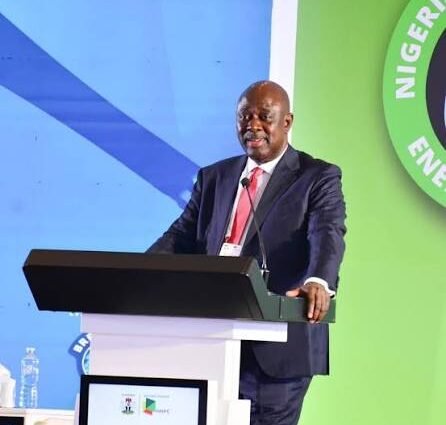
The Minister of State for Petroleum Resources (Oil), Sen. Heineken Lokpobiri, said this on Tuesday in Abuja at the 25th Nigeria Oil and Gas (NOG) Energy Week conference and exhibition.
Lokpobiri said the initiative followed concerns raised by industry stakeholders over the multiplicity of statutory charges imposed on operators across the petroleum value chain, affecting efficiency, competitiveness and investor confidence.
According to him, the benchmarking study is being conducted by PwC in collaboration with the Nigerian Upstream Petroleum Regulatory Commission (NUPRC) to identify globally competitive fiscal practices and standards.
“We have commissioned PwC to carry out a global benchmarking exercise. Nigeria must be globally competitive,” Lokpobiri said while outlining the government’s commitment to improving the business environment for investors.
“When people say there are more than 270 fees and levies, some of them may be very small, but the real issue is the administrative burden of processing numerous invoices and payments.
“I have directed that PwC should benchmark Nigeria against other petroleum-producing jurisdictions to determine what fees and rates are applicable elsewhere.
“That report will soon be ready, and I believe it will solve this problem once and for all,” he said, expressing optimism about the outcome and implementation.
Lokpobiri said the Tinubu administration had consistently engaged stakeholders to address genuine concerns affecting the oil and gas industry and strengthen investor confidence through regulatory reforms nationwide.
He said the government remained committed to creating a predictable regulatory environment capable of attracting investment, encouraging exploration activities and supporting increased crude oil production across Nigeria.
The minister said Nigeria’s crude oil production had risen to more than 1.8 million barrels per day, according to the latest weekly report from NUPRC authorities.
He attributed the increase to sustained investment, improved security and ongoing drilling campaigns across the sector, while emphasising that Nigeria still possessed capacity for higher output.
Lokpobiri added that active oil rigs had increased from about 40 in 2023 to more than 60, creating a stronger foundation for future production growth.
He also said approval of international oil companies’ onshore asset divestments had strengthened indigenous participation, with Nigerian independent producers now accounting for more than 60 per cent output.
According to him, the divestments have enabled international oil companies to focus on deep offshore operations while indigenous firms expand production from acquired onshore assets.
Lokpobiri said the government would continue supporting policies that encouraged exploration, increased reserves and sustained production growth to strengthen Nigeria’s position in the global energy industry.
He also congratulated Renaissance Africa Energy and its partners on the success of their drilling campaign, urging operators to intensify exploration activities and boost reserves.(NAN)(www.nannews.ng)
========
Edited by Abiemwense Moru