


By Talatu Maiwada
Government officials, development partners and health experts on Tuesday pledged stronger collaboration to improve reproductive, maternal, newborn, child and adolescent health outcomes in Nigeria.
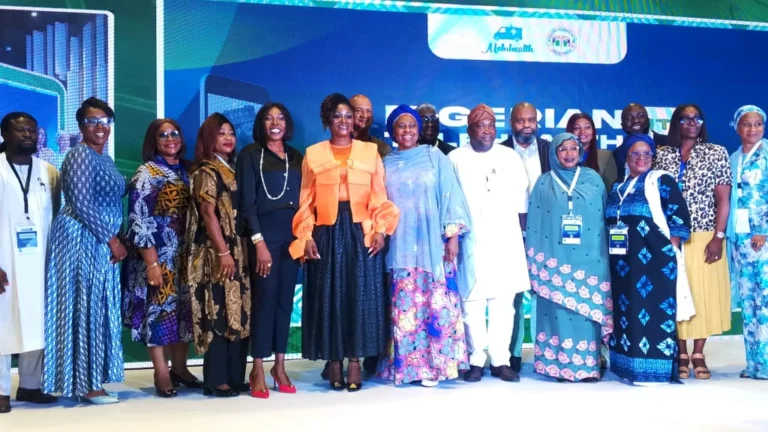
The commitment was made on Tuesday in Yola at the fourth National Governance and Coordination Committee (GCC) meeting of the European Union-funded Strengthening Access to Reproductive, Maternal and Adolescent Health (EU-SARAH) Programme.
The News Agency of Nigeria (NAN) reports that the two-day meeting was organised by UNICEF, with support from the Federal Government, Adamawa Government, UNFPA and funding from the European Union.
The Coordinating Minister of Health and Social Welfare, Prof. Ali Pate, reaffirmed the Federal Government’s commitment to providing strategic leadership for reproductive, maternal, newborn, child and adolescent health services.
Pate, represented by Dr Ahmed Uzzi, Director of Family Health, and delivered by Amina Mohammed, said the government remained committed to building an equitable health system.
“We reaffirm our commitment to building a stronger health system that leaves no woman, child or adolescent behind.
“Renewed commitments and strengthened partnerships must translate into reduced maternal and newborn mortality and improved quality of life for Nigerians,” he said.
He said the ministry would continue to collaborate with states and development partners to ensure measurable outcomes under the EU-SARAH initiative.
According to him, the programme would strengthen institutional capacity and support the attainment of Universal Health Coverage under President Bola Tinubu’s Renewed Hope Agenda.
Gov. Ahmadu Fintiri of Adamawa, represented by Mrs Neido Kofulto, Commissioner for Women Affairs and Social Development, said the meeting was timely.
Fintiri said efforts were being intensified to address the burden of maternal, newborn and child mortality in the country.
He listed achievements under the programme to include investments in human resources, infrastructure development, community nursing and capacity building for health workers.
The governor said the intervention would help address persistent challenges affecting women and children.
He commended the European Union, UNICEF and UNFPA for their support and assured stakeholders of the state’s commitment to sustaining the gains beyond the project’s lifespan.
Mr Mahara Muthy, UNICEF Chief of Health, urged the Federal Government and states to increase domestic financing for health programmes.
Muthy said additional investments were needed to sustain progress beyond the support provided under the EU-SARAH initiative.
He noted that Nigeria remained among countries with high maternal and child mortality rates globally, but expressed optimism that ongoing interventions could reverse the trend.
“I can see the capacity within the Federal Government and states; with these interventions, Nigeria can change the narrative with remarkable results,” he said.
The Kwara Commissioner for Health, Dr Amina El-Imam, described adolescent health as a critical area that required greater attention in Nigeria’s health programming.
She said the EU-SARAH initiative had addressed an important gap by integrating adolescent health into maternal and reproductive health services.
El-Imam said Kwara had integrated the programme into its development plans and expanded health insurance coverage for vulnerable residents.
She added that the state had recorded improvements in family planning uptake, child survival and reduction in maternal mortality.
The commissioner pledged continued counterpart funding to sustain the programme after its completion.
NAN reports that participants included representatives of the Federal Ministry of Health and Social Welfare, National Primary Health Care Development Agency (NPHCDA), European Union, UNICEF, UNFPA and beneficiary states of Adamawa, Kwara and Sokoto. (NAN)
Edited by Tosin Kolade
Comments