









By Abigael Joshua
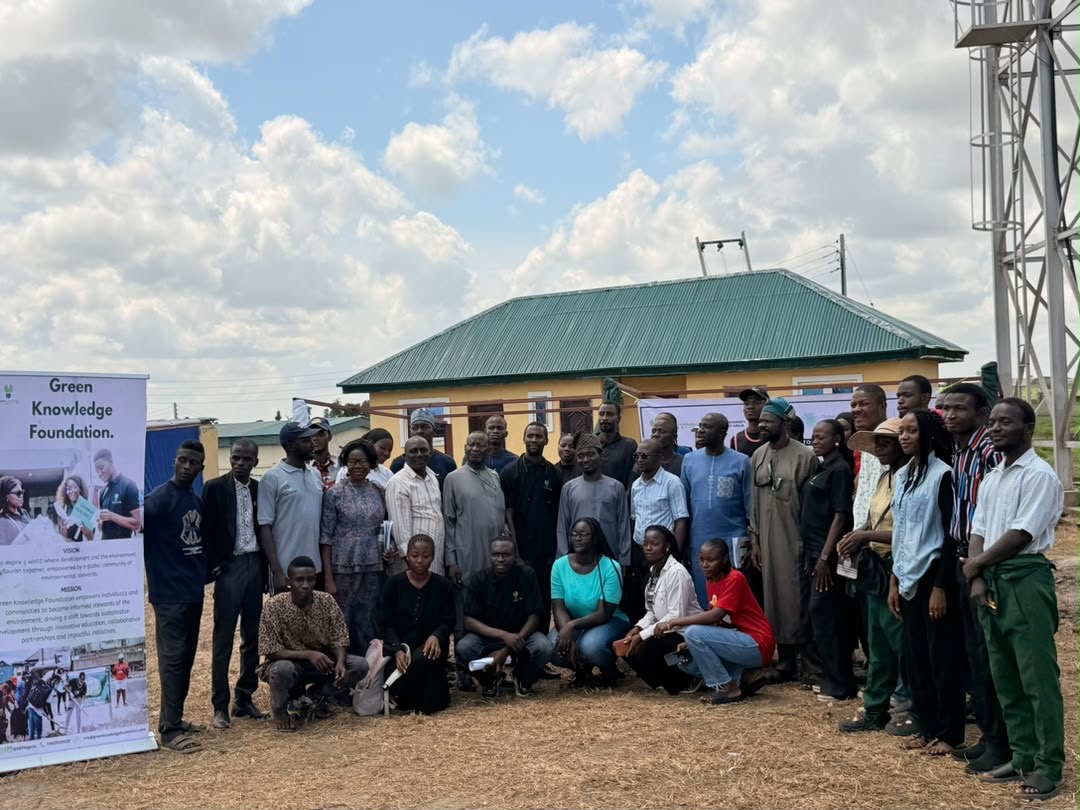
The Green Knowledge Foundation (GKF), in partnership with the University of Abuja (UniAbuja) on Wednesday unveiled an Organic Material Recovery Facility (MRF) to reduce methane emissions from organic waste.
The facility, unveiled at the university’s Teaching and Research Farm, is designed to convert organic waste into valuable products while addressing environmental degradation, food insecurity and unemployment through climate-smart agriculture.
Speaking at the inauguration, the Executive Director of GKF, Mr Weyinmi Okotie, described the project as a scalable model for transforming waste into wealth and positioning Nigeria as a leader in climate-smart agriculture and sustainable waste management.
Okotie said the facility integrates circular economy principles with climate-smart agriculture to reduce methane emissions, recover resources and create green jobs.
According to him, the project will divert organic waste from landfills, mitigate climate change, support agricultural research and innovation, enhance student learning, build farmers’ capacity and strengthen community engagement.
He thanked the institution for partnering with the foundation, noting that the initiative would help change public perception of waste from an environmental burden to a valuable economic resource.
Also speaking, Prof. Hakeem Fawehinmi, the Vice-Chancellor of UniAbuja described the project as a milestone in the university’s commitment to research, innovation and community development.
Fawehinmi, who was represented by Prof. Muhammad Ndagi, the Deputy Vice-Chancellor Administration, said that the initiative demonstrated that scientific innovation could transform waste into wealth while addressing environmental challenges.
He said the project is among the first Memoranda of Understanding (MoUs) signed after he assumed office.
He reaffirmed the university’s commitment to supporting partnerships that promote sustainable waste-to-wealth initiatives.
The vice-chancellor encouraged students to take advantage of the training opportunities provided through the facility to acquire entrepreneurial skills and become employers of labour in the emerging green economy.
Also speaking, Prof. Akeem Oyerinde, the Dean of the Faculty of Agriculture said the project showcases the role of research and innovation in providing practical solutions to environmental and agricultural challenges.
Oyerinde said initial scepticism over the use of insects to convert waste into valuable products had been dispelled by the success of the project.
He said that the facility demonstrated that organic waste could be transformed into commercially viable resources while protecting the environment and promoting sustainable agriculture.
Mr Jawad Ahmed, a representative of informal waste workers, commended GKF for involving waste collectors in the project, saying it had improved their knowledge of proper waste management and enhanced their participation in the circular economy.
Ahmed said the initiative had equipped waste workers with more sustainable methods of handling waste and created better opportunities for their livelihoods.
The News Agency of Nigeria reports that the facility comprises of a composting plant, a black soldier fly farm, a training and knowledge hub, and a zero-waste education centre aimed at promoting environmental sustainability and behavioural change.
The project is supported by the Global Methane Hub and the Global Alliance for Incinerator Alternatives as a demonstration of how integrated waste management can enhance economic resilience, food security and climate action in Nigeria. (NAN)(www.nannews.ng)
Edited by Sadiya Hamza