









By Lengnan Tobias, News Agency of Nigeria (NAN)
Terrorism and banditry have displaced thousands of Nigerians, emptied communities, and turned Internally Displaced Persons (IDP) camps and uncompleted buildings into homes.
What began as rumour in northern Nigeria and whispers in the South has snowballed into a nationwide crisis engulfing the entire country.
Today, only few families have not lost loved ones to the carnage.
The mourning continues like musical stanzas chanted with respondents across the country. The sound is the same from North to South, East to West.
To defeat it, experts say the answer lies not only in more aircraft, but also in community intelligence, joint operations, and sustained funding.
A retired senior officer of the Nigerian Air Force (NAF), Air Vice Marshal Olatokunbo Adesanya, former NAF Director of Public Relations and ex-Defence Attache to Moscow, said modern asymmetric warfare was fought within communities, not on open battlefields.
“Members of the armed forces and other security services therefore require actionable and timely intelligence from local citizens.
“Security is a shared national responsibility. I therefore call on fellow Nigerians to give adequate moral support to the military and other government agencies involved in counterinsurgency.’’
“When the fighting forces understand that they have the total support of the populace, it gives them additional impetus and the needed morale.
“They are evolving and operating with limited resources but yet continue to sacrifice for the security of the land.”
Adesanya said airpower only acted as a force multiplier.
“What is needed is real-time joint air-ground integration, with the delay between contact and air support reduced to minutes.
“All air interdiction missions must be followed up immediately by ground troops mopping up. This requires close inter-service coordination and secure communication between ground forces and pilots.”
He urged the NAF to enhance night-fighting and all-weather capabilities, and to sustain Civilian Harm Mitigation and Response, CHMR, initiatives which he said build trust and generate credible local intelligence.
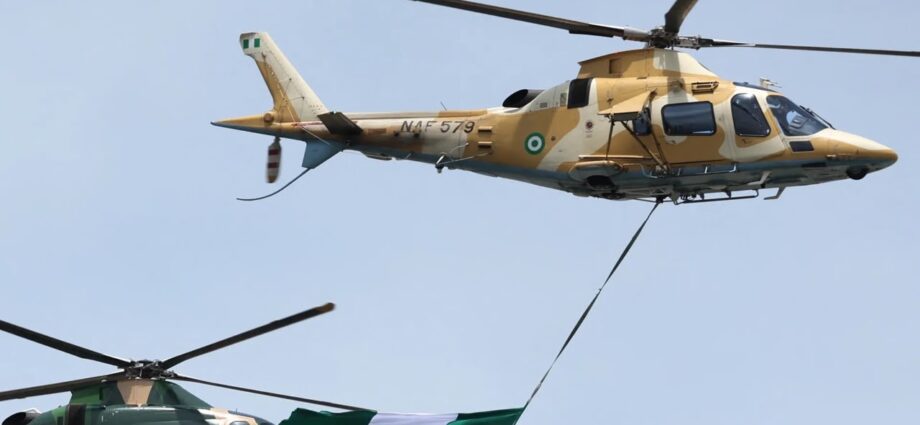
On platforms, Adesanya noted the NAF currently operated a mix of legacy and modern assets, including Mi-series helicopters, T129 ATAK helicopters, AW109s, Super Tucano aircraft, and ISR platforms such as Diamond aircraft, King Air 360, and ATR-42 Maritime Patrol Aircraft.
“Unmanned Aerial Vehicles, UAVs, complement manned ISR missions, while Unmanned Combat Aerial Vehicles, UCAVs, have added value in theatres of operation.”
Nonetheless, he said quantity remained a challenge.
“Buying aircraft is the easier part; keeping them flying is the hard part, given the capital intensive nature of aviation,” he said.
He added that long-term operational viability depended on secure reserves of aviation fuel and ammunition, robust maintenance facilities, a dependable spare parts supply chain, and the well-being of personnel.
Another retired air force officer, Air Commodore AA Balogun, said the NAF needed technology-driven concepts for early warning and preemption.
“We must be able to search for the enemies, identify their locations and prevent or preempt them before they unleash terror on the nation,” he said.
He called for long-endurance drones for continuous monitoring, plus fighter-ground attack aircraft and combat helicopters for rapid troop insertion and extraction.
Balogun said that all air assets must be integrated into ground troops’ fire and movement plans.
“Airpower alone without the required ground operations will amount to nothing as airpower alone can’t hold the ground.”
On synergy, Balogun proposed a Multi-Agency Coordination and Control Centre, MACC, to integrate all elements of national power.
“With an effective MACC in place, all the security agencies will operate under one umbrella body that coordinates and integrates for efficiency and effectiveness of kinetic operations.
“It will enhance cooperation, reduce inter-agency rivalry, and boost the ability to deploy resources rapidly to wherever it is needed.
“We cannot expect them to become magicians to continuously produce something out of nothing.”
He urged NAF leadership to adapt quickly as threats mutate.
“The battlefield is no longer the same. They can’t afford to give up, rather evolve new tactics and strategies to counter the threats as they occur,” he said.
Speaking recently at the first NAF Safety Review Board, SRB, meeting for 2026, the Chief of the Air Staff(CAS), Air Marshal Sunday Aneke, said professionalism and mission readiness were critical to defeating terrorism.
He said SRB was not just about statistics but about analysing trends, identifying systemic deficiencies, and preventing future mishaps.
“Operational success depends fundamentally on safety being an integral component of planning, decision-making, and execution.
“Safety must be regarded not merely as an obligation but as a critical enabler of operational effectiveness,” he said.
The CAS also cited the recent rescue of abducted students of Government Day Secondary School, Lassa, in Borno, as proof of intelligence-driven operations.
According to a statement by NAF spokesman, Air Commodore Ehimen Ejodame, ISR assets and timely air support disrupted the terrorists’ movement and enabled ground troops to rescue the victims.
Ejodame, in another statement issued at the weekend, said the NAF had also recorded another milestone in its fleet modernisation drive with the successful completion of a Factory Acceptance Test, FAT, on an additional batch of three AW109 Trekker Type B helicopters at the Leonardo Helicopters facility in Vergiate, Italy.
He said the exercise allowed the Nigerian delegation to conduct comprehensive inspections and flight evaluations to ensure the helicopters met contractual specifications and operational requirements ahead of delivery.
“Upon induction into the NAF inventory, the AW109 Trekker Type B helicopters will significantly enhance the Service’s capabilities in intelligence, surveillance and reconnaissance missions, close air support, armed escort, combat search and rescue, as well as other joint air operations in support of surface forces,” Ejodame.
He added that their addition was expected to improve responsiveness, operational reach and mission effectiveness in ongoing counter-terrorism, counter-insurgency and anti-banditry campaigns nationwide.
Commenting on the milestone, Aneke said the dynamic nature of contemporary security threats demanded agile, technologically advanced and mission-ready air capabilities.
“The successful acceptance of these additional helicopters marks another important step in strengthening the Nigerian Air Force’s capacity to deliver decisive air power effects in synergy with surface forces, deny criminal elements freedom of action and enhance security across our nation,” he said.
He reiterated that the NAF remains committed to building a highly motivated, professional and mission-ready force capable of effectively supporting national security objectives.
For Adesanya, however, military action only treats the symptoms.
“Long-term peace requires immediate and sustained investments in governance, economic re-engineering, and local justice frameworks in liberated zones,” he said.
Amidst ongoing community displacements, the message from the retired air chiefs is clear: air dominance will remain incomplete without intelligence from the people, synergy among forces, and resources to sustain the fight.(NANFeatures)
Edited by Chijioke Okoronkwo