



By Ismail Abdulaziz, News Agency of Nigeria (NAN)
As dawn breaks over Owerri, the familiar hum of commerce begins to gather pace.
Commercial buses jostle for passengers, traders arrange their wares, and artisans prepare for another day’s work.
Along the reconstructed Douglas Road, traffic now moves with a steadiness that would have seemed unlikely only a few years ago.
For many residents, this is more than a newly paved road.
It is a daily reminder that infrastructure, when thoughtfully planned and effectively executed, can reshape the rhythm of life.
Beyond Douglas Road, the physical landscape across Imo State is changing.
Roads are being rebuilt, drainage systems expanded, bridges rehabilitated, public buildings modernised and new housing estates developed.
Collectively, these projects are altering the state’s physical landscape and are expected to support economic growth and improve public services.
Mr Declan Emelumba, Imo State Commissioner for Information, Orientation and Strategy, said the state government had continued to prioritise people-oriented projects under Gov. Hope Uzodimma.
According to him, the state’s development plans are aligned with the Federal Government’s broader reform agenda.
Emelumba, who spoke during the Renewed Hope Media Tour team’s visit to the state, said the projects reflected the benefits of collaboration between the Federal Government and the Imo State Government.
He said the expansion of the Sam Mbakwe International Cargo Airport was designed to transform the facility into a major logistics and export hub.
He added that eight modern warehouses for storage and cargo handling are expected to boost agricultural exports, commerce and investment across the South-East.
According to the commissioner, several landmark projects were financed by the Imo State Government through the expanded fiscal space available to sub-national governments following the Federal Government’s economic reforms.
To appreciate the significance of these investments, it is important to consider the state’s previous infrastructure challenges.
For many years, several federal and state roads in Imo deteriorated due to inadequate maintenance, while poor drainage systems contributed to flooding and gully erosion in many communities.
The poor condition of the roads increased travel time, raised vehicle maintenance costs and constrained the movement of agricultural produce and other goods.
The Nigerian Bureau of Statistics (NBS) has consistently identified transport as one of the major cost drivers for businesses, while the World Bank has repeatedly highlighted inadequate infrastructure as a major constraint to productivity, investment and economic growth in Nigeria.
Against this backdrop, sustained investment in roads, power, housing and public facilities has become increasingly important to improving economic competitiveness.
More broadly, infrastructure has long been recognised as the backbone of development.
It connects farmers to markets, workers to jobs, students to schools and patients to hospitals.
In a state where commerce, agriculture and entrepreneurship drive the economy, quality roads and public infrastructure remain essential for business growth.
Against this backdrop, road construction has become one of the state’s most visible public investments.
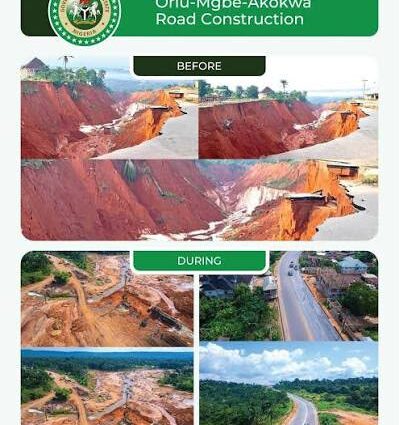
From the reconstruction of Douglas Road in the heart of Owerri to improvements along the Owerri-Umuahia corridor and the rehabilitation of strategic rural roads, government investment has steadily focused on restoring mobility.
Indeed, before the current wave of reconstruction, motorists and residents frequently complained about failed road sections, traffic bottlenecks and erosion that disrupted movement within Owerri and neighbouring communities.
During the rainy season, several roads became difficult to navigate, affecting commercial activities and access to essential services.
For commuters, shorter travel times mean lower transport costs. For traders, smoother roads reduce vehicle damage and make it easier to move goods.
Farmers in rural communities can transport produce more quickly, reducing post-harvest losses and improving household incomes.
At the same time, improving drainage has become equally important.
For decades, many roads in Imo deteriorated not simply because of poor asphalt, but because heavy seasonal rainfall overwhelmed inadequate drainage systems.
Water carved deep gullies through communities, washed away road shoulders and isolated entire villages.
The renewed attention to drainage reflects a growing recognition that infrastructure must be designed not only to meet present needs but also to withstand future climate challenges.
In addition to the state’s interventions, the Federal Government has also contributed to the changing landscape.
Rehabilitation of strategic highways linking Imo to neighbouring states is expected to strengthen regional trade across the South-East, while the delivery of a Renewed Hope Housing Estate in Owerri is expected to expand access to affordable housing.
The Senior Special Assistant to the President on Media and Special Duties, Mr Tunde Rahman, said the successful execution of projects in Imo, including the university upgrade and improvements to a federal teaching hospital, demonstrated the benefits of cooperation between the state and Federal Government.
Rahman also commended the state government’s educational initiatives, including support for the Nigerian Education Loan Fund (NELFUND), saying they were helping indigent students continue their education.
Beyond transport infrastructure, work on electricity transmission infrastructure is expected to improve power supply across the region.
For manufacturers and small businesses that rely heavily on generators, more reliable electricity could translate into lower operating costs and higher productivity.
Similarly, ongoing upgrades at the Sam Mbakwe International Cargo Airport are expected to enhance operational capacity and reinforce the airport’s role in connecting Imo with domestic and international markets.
Speaking during the media tour, the Special Adviser to the President on Media and Public Communications, Mr Sunday Dare, said Imo State was implementing projects that aligned with the objectives of the Federal Government’s development agenda.
“When you talk about the micro of the Renewed Hope Agenda, such features are like this infrastructure and the human capital development we just saw in Orlu Local Government, now a 2,000-bed infectious disease centre at almost 85 per cent completion.
“We saw the oxygen plant, we saw the revitalisation of the healthcare centre that had been abandoned for several years and I think these are the kind of projects that are impactful to the people and that is what Renewed Hope is all about,” he said.
Dare also commended the state government’s intervention in resolving accreditation and certification challenges that had prevented graduates of Imo State medical schools from obtaining specialist recognition.
He said the achievement would strengthen healthcare delivery and medical education.
He also commended the ongoing construction of a Heart Transplant Centre at the Imo State University Teaching Hospital, Orlu, which is expected to expand access to specialised cardiovascular care and reduce the need for Nigerians to seek advanced medical treatment abroad.
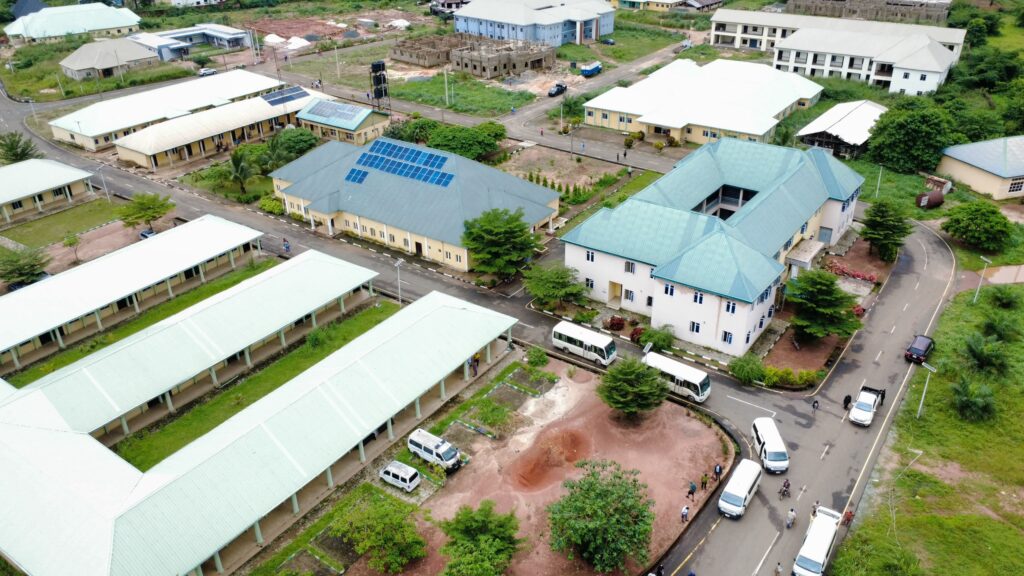
The establishment of the Imo State University of Innovation, Science and Technology in Imuma also received commendation for its focus on science, technology, engineering and innovation.
“This wouldn’t have been possible without the increased FAAC allocation that comes monthly from the Federal Government to the state government, providing extra funds for development projects.
“We have seen in a couple of other states in the North how APC governors have been utilising these additional FAAC allocations for infrastructure development, and we have seen how state and federal governments are working together in project delivery,” Dare said.
Beyond individual projects, many economists view these investments as interconnected. Roads without reliable electricity may attract fewer industries, while housing without access roads can remain underutilised.
Likewise, airports require efficient transport networks to realise their full economic potential.
For residents, however, the debate is less about politics than about everyday experience.
A taxi driver measures progress by how many trips can be completed in a day.
A farmer measures it by whether produce reaches the market before it spoils. A trader sees it in reduced vehicle repair costs, while a student notices it in shorter journeys to school.
Ultimately, roads, bridges, housing estates and public buildings are not ends in themselves.
Rather, they are public assets intended to create opportunities, stimulate investment and improve quality of life.
As both the Federal Government and the Imo State Government continue to invest in infrastructure, the greater test will not simply be the number of kilometres of road constructed or the volume of concrete poured.
It will be whether these investments generate jobs, strengthen local businesses, attract private capital and improve the lives of ordinary citizens.
For now, as traffic moves more smoothly through Owerri and surrounding communities reconnect through improved roads, residents will be watching to see whether the investments translate into sustained economic growth, job creation and improved living standards. (NANfeatures)
Edited by Tosin Kolade
**If used, please credit the writer and the News Agency of Nigeria (NAN).