





By Michael Ajayi/Jessica Dogo
The Minister of Communications, Innovation and Digital Economy, Dr Bosun Tijani has announced the inauguration of the Atlas Network, a continental artificial intelligence (AI) initiative.
The initiative is designed to accelerate the development of locally relevant large language models across Africa.
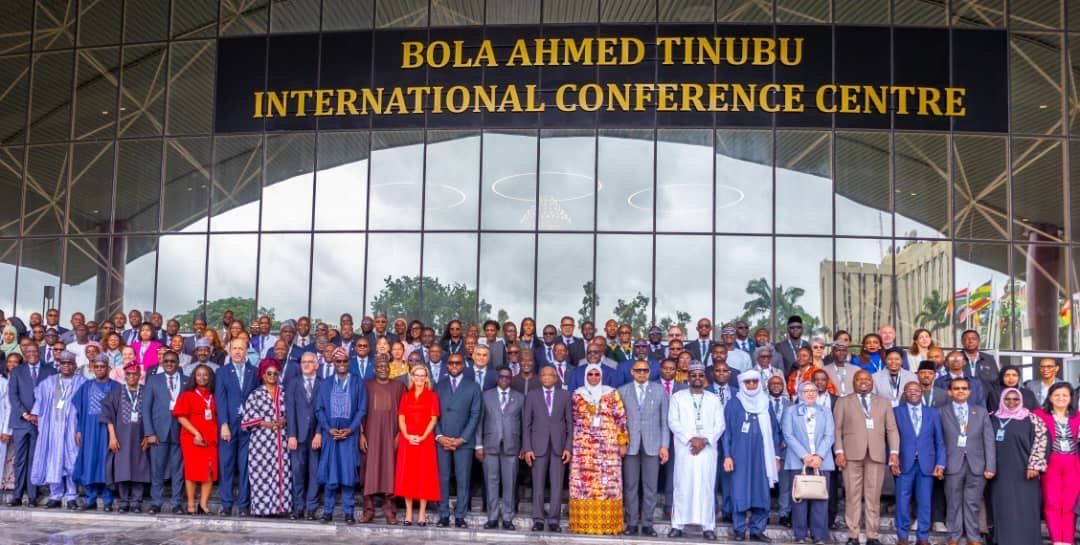
Tijani made the announcement on Wednesday in Abuja at the opening of the Ordinary Session of the Conference of Plenipotentiaries organised by the African Telecommunications Union (ATU).
He said the initiative would build on Nigeria’s Atlas project, described as Africa’s first government-led open-source large language model unveiled during the United Nations General Assembly.
He said the Atlas Network would bring together governments, researchers, academia, innovators and ecosystem partners.
That, the minister said, was to ensure Africa’s languages, cultures and indigenous knowledge systems were adequately represented in emerging AI technologies.
He noted with concern that, less than two per cent of African languages were currently supported by modern AI systems, in spite of the continent being home to nearly one-tenth of the world’s languages.
“This is our opportunity, not simply to adopt artificial intelligence, but to help shape its future for Africa and from Africa,” he said.
Tijani acknowledged the contributions of Global Systems for Mobile Association (GSMA) and Awari to the initiative and invited all ATU member states to join the Atlas Network to collectively build Africa’s AI future.
Speaking, the Co-founder and Chief Executive Officer of Awari, Mr Sailas Adekunle, said Atlas Mojo evolved from N-Atlas.
Adekunle explained that Atlas Mojo was an AI language model developed in Nigeria to demonstrate Africa’s capability to build globally competitive AI technologies.
He said the project had grown from a Nigerian initiative into a continental platform through collaboration with the GSMA and other partners.
“The name “Atlas” represents African Tongues and Languages at Scale, while “Mojo”, derived from a Swahili word, symbolises unity.
“What started in Nigeria showed that an African startup can build technology with global significance.
“Today, developers are already using N-Atlas to create digital tools that solve local problems, and Atlas Mojo takes that vision to the continental level,” he said.
Adekunle said the initiative would enable African developers to build AI applications using indigenous technologies rather than relying solely on foreign AI platforms.
He noted that dependence on external AI systems often resulted in African data being exported to train foreign models, limiting value creation within the continent.
“This initiative is about building an African AI ecosystem where value stays in Africa, our developers have the right tools and our technologies reflect the realities of African communities,” he said.
He disclosed that more than 5,000 developers had already built solutions using the N-Atlas platform.
Earlier, Ms Caroline Mbugwa, described Atlas Mojo as a strategic platform that would enable Africa to shape the future of AI instead of merely consuming it.
Mbugwa is the Senior Director of Public Policy and Communications at GSMA.
She said the initiative aligned with the vision outlined by the minister, who called for a pan-African approach to AI development.
She said the open platform was being developed through collaboration among GSMA, Awari, Zindi, Power AI and Mozisha.
According to her, Nigeria, Kenya, Namibia and Togo are the founding member countries supporting the initiative, with more African nations expected to join.
“The call to action is for more countries to embrace Atlas Mojo and work together to build a truly pan-African AI platform that reflects Africa’s diversity,” she said.
Nbugwa said that research by the GSMA showed digital literacy remained one of the biggest barriers to mobile and digital adoption across Africa.
She said supporting AI systems in local languages would improve digital inclusion and make technology more accessible to millions of Africans.
“When people can interact with AI using their own languages, we remove barriers to digital participation and accelerate economic opportunities across the continent,” she said.
She urged governments, research institutions, technology firms and innovators to support the initiative, adding that further information was available through the Atlas Mojo platform.
The News Agency of Nigeria (NAN) reports that the initiative is expected to accelerate the development of locally relevant AI models.
‘’It is also expected to strengthen Africa’s digital economy and preserve the continent’s linguistic and cultural heritage. (NAN)(www.nannews.ng)
Edited by Esenvosa Izah