




FCT residents call for improved waste management, cleaner communities
Sanitation
By Precious Clement-Idowu and Titilayo Adesina
Residents of the Federal Capital Territory (FCT) have called on relevant authorities to strengthen waste management systems and improve community sanitation to safeguard public health and the environment.
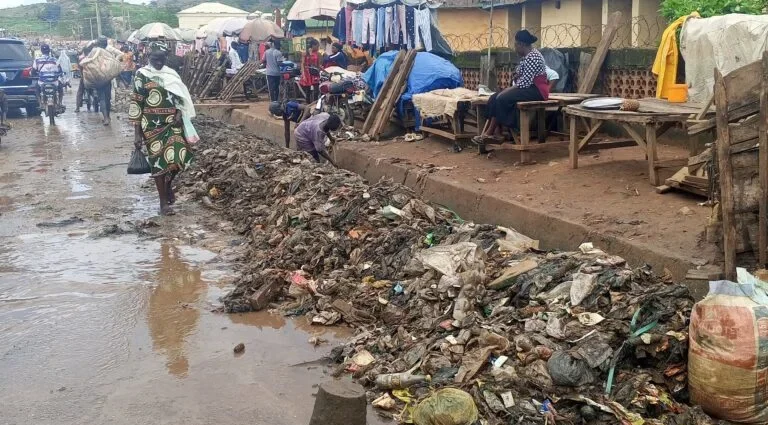
The residents, who spoke in separate interviews with the News Agency of Nigeria (NAN), in Abuja, said heaps of refuse and blocked drainages in many neighborhoods posed serious health risks.
They noted that poor waste collection and indiscriminate refuse dump had continued to degrade the environment and attract rodents and disease vectors.
They urged the FCT Administration, area councils, and the Abuja Environmental Protection Board to deploy more waste bins, increase evacuation frequency, and enforce sanitation laws.
The residents also called on community leaders to mobilise citizens for monthly clean-up exercises and public awareness campaigns.
“We pay for waste collection, yet trucks come late or skip our streets entirely. Government must monitor these contractors and sanction defaulters,” said Musa Bello, a resident of Kubwa.
Another resident, Mrs Aisha Danladi of Gwarimpa, said: “We cannot continue to live with this stench and mosquitoes. Authorities should partner with community groups to ensure every street has access to proper disposal points.”
Mrs Faith Paul, who also resides in Gwarimpa, observed that sanitation standards varied across the district, with some communities a little cleaner than others.
According to her, parts of Gwarimpa, such as the 5th and 6th Avenues, were generally cleaner than the 1st and 3rd Avenues. This, I attribute to better waste management practices.
Paul also identified indiscriminate littering and poor disposal of market waste as major causes of environmental pollution in her area.
Another resident, Mr Uche Davidson, blamed littering, motor parks, and construction debris for the deteriorating environmental condition in the city.
“The entire city is dirty. Every part of Abuja you go to has waste dumped by the roadside. It is an eyesore. This is the capital city of Nigeria and it should be cleaner than any other state,” he said.
According to Davidson, improving sanitation requires both government intervention and active community participation.
He appealed to the FCT Administration to prioritise environmental health alongside other social and basic infrastructure development projects for a better FCT.
In a similar development, residents of Gwagwalada Area Council decried the accumulation of refuse behind the popular Radio House, describing the situation as an environmental nuisance.
Miss Eniayetori Toyin, a resident of Gwagwalada, said: “The smell is always overwhelming and it gives me headaches.
“Sometimes people do not dispose of waste properly because there are no accessible collection points.
“ I think more public bins should be provided along the roads and within our communities, and people should be charged to dispose of their waste.”
She urged residents to stop the indiscriminate dumping of waste and called for public awareness campaigns against the menace to encourage proper waste disposal.
Another resident, Mrs Omolola Adeosun, alleged that some waste collectors dump waste from other households at the site instead of transporting it to approved disposal sites.
She described the area around the burial ground as untidy and poorly managed, and appealed to relevant authorities to intervene and stop defaulters from making the area uninhabitable.
Adeosun also urged relevant authorities to enforce existing environmental laws in communities and sanction offenders in order to discourage illegal waste disposal at unauthorised locations.
She said that adequate waste disposal infrastructure, regular evacuation of refuse, and strict enforcement of sanitation regulations were essential to achieving a cleaner and healthier FCT.
NAN reports that stakeholders have linked the rise in malaria and cholera cases in parts of the FCT to poor sanitation and inadequate waste disposal. (NAN) (www.nannews.ng)
Edited by Dorcas Jonah/