


By Mark Longyen
The Economic Community of West African States (ECOWAS) says greater inclusion of women in political leadership is critical to accelerating economic growth, regional integration and sustainable development across West Africa.
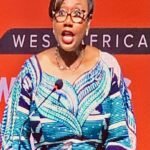
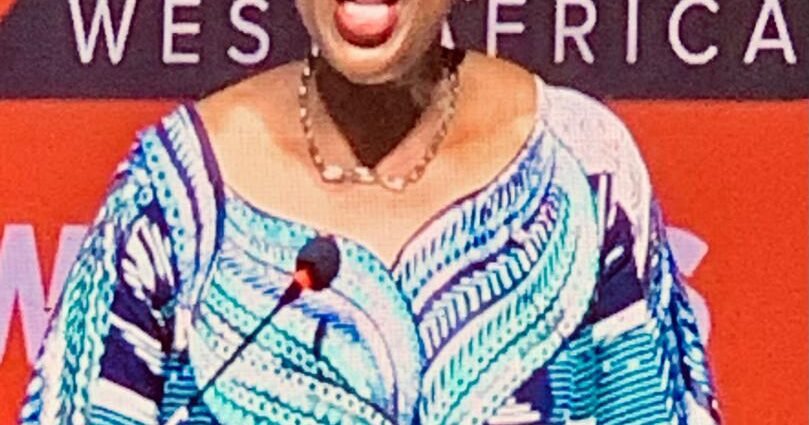
ECOWAS Commission Vice-President, Mrs Damtien Tchintchibidja, said this on Thursday in Abuja at a high-level forum on strengthening women’s representation in political leadership.
The News Agency of Nigeria (NAN) reports that the two-day forum is themed “Accelerating Gender Parity in Political Leadership in West Africa: From Commitments to Action”.
It was organised by ECOWAS in collaboration with the UN Development Programme (UNDP) and the African Women Leaders Network (AWLN).
The forum seeks practical solutions, stronger political accountability and scalable interventions to increase women’s participation in politics.
Tchintchibidja recalled that the ECOWAS Authority of Heads of State and Government recently adopted a Presidential Declaration on Strengthening the Representation of Women in Political Leadership in the ECOWAS Region.
She said the declaration provides a regional framework for action and called on member states, institutions and all sectors of society to sustain efforts toward achieving gender equality in political leadership.
“One significant challenge continues to prevent our democracies from fully reflecting the people they serve: the persistent underrepresentation of women in political leadership,” she said.
She said the declaration also urges member states to strengthen constitutional, legal and policy frameworks that create an enabling environment for women’s political participation and leadership.
According to her, it also calls on political parties to reform their nomination processes, internal structures and leadership practices to give women genuine opportunities to contest elections and participate in decision-making.
Tchintchibidja said the declaration further advocates greater investment in leadership development, mentorship, capacity building and support networks for women seeking public office.
She identified inadequate political financing as a major obstacle and called for measures to improve women’s access to campaign resources and other forms of political support.
She also advocated sustained efforts to address restrictive social norms through education, advocacy and engagement with civil society organisations, academia and the media.
Tchintchibidja noted that although women account for more than half of West Africa’s population and contribute greatly to business, peacebuilding, innovation and community development, they remain underrepresented in decision-making institutions.
According to her, women occupy only 18.5 per cent of parliamentary seats across West Africa, below the African average of 25 per cent and the global average of 26.5 per cent.
Citing International Monetary Fund estimates, she said closing the gender gap could increase West Africa’s economic output by between 10 and 35 per cent, depending on national circumstances.
She added that the World Bank estimates countries lose about 14 per cent of their human capital wealth when women are unable to participate fully in economic and public life.
Tchintchibidja urged participants to move beyond commitments and develop a coordinated implementation agenda capable of delivering measurable results.
Nigeria’s Minister of Women Affairs and Social Development, Hajia Imaan Sulaiman-Ibrahim, reaffirmed the country’s commitment to the 35 per cent affirmative action target for women’s participation in governance and political party structures.
She said women currently account for about 17 to 20 per cent of the Federal Executive Council and more than 30 per cent of senior management positions in the federal civil service.
Sulaiman-Ibrahim added that women make up about one-third of judges in Nigeria’s superior courts of record and continuously occupy leadership positions across the judiciary and other professional institutions.
She noted that women currently hold key offices, including the Chief Justice of Nigeria, President of the Court of Appeal, Solicitor-General of the Federation, Director-General of the Nigerian Law School and President of the Nigerian Bar Association.
President of the ECOWAS Female Parliamentarians Association (ECOFEPA), Sen. Chantal Fanny, pledged the association’s commitment to advancing legislative and institutional reforms that would guarantee women full, effective and lasting participation in political life.
UN Assistant Secretary-General and Director of the UNDP Regional Bureau for Africa, Ms Ahunna Eziakonwa, said the UNDP, in partnership with the African Union Commission and AWLN, had established the Africa Facility for Women in Political Leadership.
She said the initiative had attracted an investment of two million dollars to support women’s political leadership across the continent.
Represented by Ms Marie-Louise Mwange, AWLN Co-Convener, Ms Bineta Diop said the network would continue supporting women leaders, strengthening political ecosystems and expanding opportunities for women and youth participation in politics.
She urged stakeholders to ensure the Abuja meeting marked a turning point from commitments to concrete action for women across West Africa.(NAN)(www.nannews.ng)
Edited by Tosin Kolade