










By Ibironke Ariyo
The United Nations Office on Drugs and Crime (UNODC) has warned Nigerians, particularly young people, against falling prey to human traffickers.
UNODC stated that human traffickers increasingly exploit social media messaging applications and fake recruitment offers to lure victims with false promises of jobs, education, love and a better life.
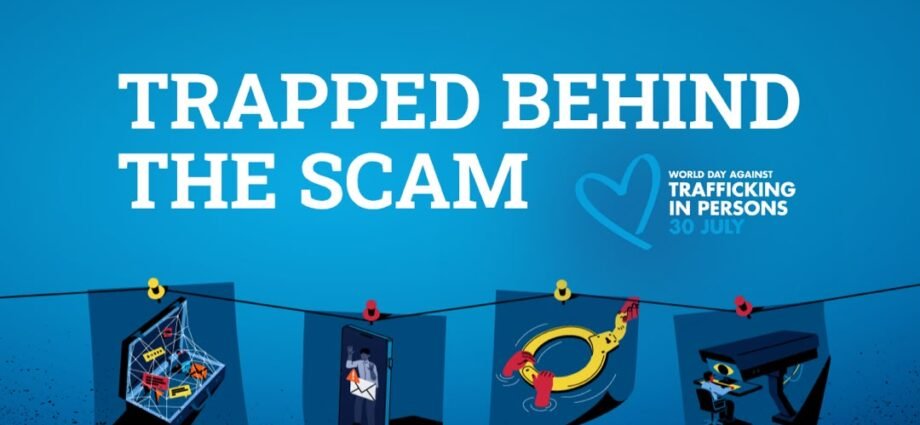
The warning was issued by the UNODC Country Office in Nigeria via its website to commemorate the 2026 World Day Against Trafficking in Persons with the theme, “Trapped Behind the Scam”.
UNODC said thousands of people, including young Nigerians, were trafficked every year through deceptive promises deliberately crafted to exploit their hopes, ambitions and vulnerabilities.
It noted that cyber-enabled trafficking was rarely an isolated crime but often formed part of a wider network of organised criminal activity, with traffickers embedded in larger criminal groups that profit from the exploitation of victims.
According to the organisation, recognising the warning signs of trafficking remains one of the most effective ways to protect oneself and others.
It identified seven common tactics used by traffickers to lure victims.
The first, it stated, was the promise of lucrative jobs abroad with attractive benefits such as free accommodation, visas and flights, often requiring little or no experience.
UNODC cautioned that any offer that appeared too good to be true and pressures individuals to travel quickly without proper documentation or contracts should be treated with suspicion.
It advised Nigerians to verify all employment offers through official employers or licensed recruitment agencies before making commitments.
The organisation also warned against offers in which traffickers promise to cover all travel and processing expenses.
It noted that victims were frequently trapped in debt bondage after being told they must “work off” inflated costs incurred on their behalf.
It urged prospective travellers to understand all financial arrangements before agreeing to relocate.
UNODC further identified secrecy as a major red flag, noting that traffickers often discourage victims from informing family members or trusted friends of their travel plans under various pretexts.
It advised individuals to share their plans with trusted relatives and seek independent advice whenever they were in doubt.
The organisation warned against surrendering passports or other identity documents to unauthorised persons, stressing that traffickers frequently confiscate victims’ documents to restrict their movement once exploitation begins.
It also highlighted fake opportunities in sports, entertainment and social media influencing as another common tactic used to exploit talented young people seeking international careers.
According to UNODC, offers involving football trials, modelling opportunities, music auditions, scholarships or influencer opportunities should always be independently verified through official organisations before any commitment is made.
It further warned against promises of quick wealth without clear explanations of job responsibilities, salaries or working conditions.
It encouraged Nigerians to ask questions, carefully read contracts and seek guidance from knowledgeable persons before accepting opportunities.
UNODC added that traffickers often manipulate victims by first gaining their trust, noting that perpetrators may be strangers, acquaintances or persons known through religious settings, neighbourhoods or social groups.
It explained that grooming may occur over weeks or months before victims were subjected to exploitation, stressing that trust should never replace verification.
“Human trafficking does not always begin with force. It often begins with promises that seem too good to be true and ends in deception and exploitation.
“Traffickers prey on hope, ambition and vulnerability. They promise opportunity but deliver exploitation,” it stated.
The organisation urged Nigerians to remain vigilant and report suspected cases of human trafficking through the toll-free hotline of the National Agency for the Prohibition of Trafficking in Persons (NAPTIP), 627.
It reiterated that while people’s dreams and aspirations are valid, they should never become tools for exploitation by human traffickers.(NAN)(www.nannews.ng)
Edited by Yakubu Uba