


By Chidinma Ewunonu-Aluko
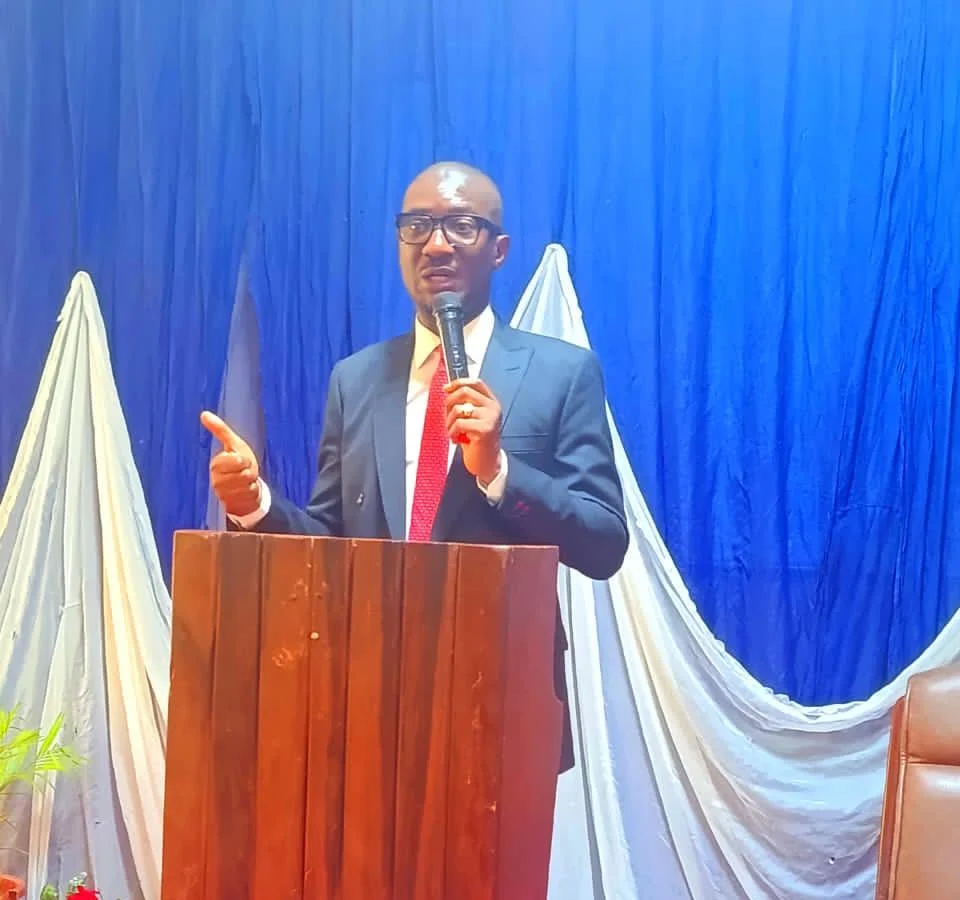
Mr Adedoyin Afun, a Partner at Bloomfield LP, says inland states such as Oyo, can become active players in Nigeria’s maritime industry, in spite of having no coastline.
Afun stated this while delivering a keynote address at the First Annual Maritime Conference of The Maritime Society, University of Ibadan on Friday.
He spoke on the topic: “The Sea Does Not Begin at the Shoreline; Maritime Law, the Blue Economy and the Pursuit of a Maritime Career beyond the Littoral States.”
The conference was organised by The Maritime Society, of the university, with support from the Bloomfield LP.
According to him, it is a myth that maritime law belongs only to coastal cities such as Lagos, Port Harcourt, Warri and Calabar.
Afun described maritime commerce as a chain of commercial and legal relationships that was running from the shipyard and the financier through the shipowner, charterer, terminal operator, customs broker, hauler and inland depot, to the buyer.
“Every manufacturer in Oyo State who imports machinery and every exporter of produce from this region, is a shipper,” he said.
He noted that the Federal Government approved the development of an inland dry port at Moniya in Oyo in January 2025, explaining that cargo could be consigned directly to Moniya as a port of origin and destination.
Afun added that with the dry port and the standard gauge railway already carrying freight between the Lagos port complex and Ibadan, Oyo , it was growing into a promising maritime hub.
He listed seven principal sectors of the industry which included ship owning and ship finance, offshore and oil servicing, as well as ports.
Afun also identified others such as terminals and logistics trade, cargo and commodities; marine insurance and protection and indemnity.
He however added that regulation, safety and security, as well as the blue economy were also critical.
“Maritime law is not a narrow speciality sitting beside commercial practice. It is indeed commercial practice itself,” he said.
He called on the institution’s Faculty of Law, to urgently activate the teaching of the Maritime Law as a course, which had been approved as an elective, but not yet taught.
Afun observed that there was currently no Admiralty Division of the Federal High Court sitting in the state.
He noted that this could, in the future, raise costs for litigants who must travel to Lagos and limit opportunities to build maritime legal competence in the state.
He urged students to learn to read bills of lading, charterparties and marine insurance policies.
Afun also urged them to follow the trade press, join professional bodies, take part in maritime moot competitions and write on live issues in the sector.
“The sea does not begin at the shoreline. It begins wherever somebody understands how it works and from today, that includes Ibadan,” Afun said.
The News Agency of Nigeria (NAN) reports that the event featured three panelists.
Mr Yinka Ayeni, Founder of Nanofins, said a career in maritime law goes beyond litigation to include chartering, ship brokerage and ship management.
“People think maritime law is just courtroom litigation, but career is beyond that. You can be a chartering/ship broker, ship manager, crewing manageror even a maritime consultant,” Ayeni said.
Another panelist, Mr Taiwo Sanuade, an Associate at the Bloomfield LP, said traditional legal practice was saturated, noting however that the maritime market was still open.
Sanuade advised the state government to leverage dry ports and inland ports to facilitate maritime transactions through connection with the Apapa ports in Lagos, in spite of being a non-littoral state.
Also, speaking, Mr Ifedapo Ajayi, Senior Legal Manager, Sterling Oil Exploration and Energy Production Company Ltd, said maritime law and oil and gas were interconnected.
“When you do offshore/onshore drilling, it involves maritime law because of transportation. How do you transport oil, LNG? You have to understand charter party,” Ajayi said.
In his goodwill message, the Dean, Faculty of Law, Prof. Kunle Aina, said the faculty would soon introduce maritime law into its curriculum.
Aina described maritime law as one of the best areas of law to practise, adding that one good brief to arrest a ship, could sustain a lawyer for a year.
Earlier, Miss Deborah Ekoja, President of The Maritime Society, of the university, said the conference was to bring the maritime industry closer to students of an inland institution.
Ekoja said the vision was to provide a platform for students to move beyond textbook knowledge, engage directly with industry practitioners and understand where their skills fit into the larger maritime ecosystem.(NAN)(www.nannews.ng)
=======
Edited by Chinyere Nwachukwu



Comments