


By Chinasa Nwankwo
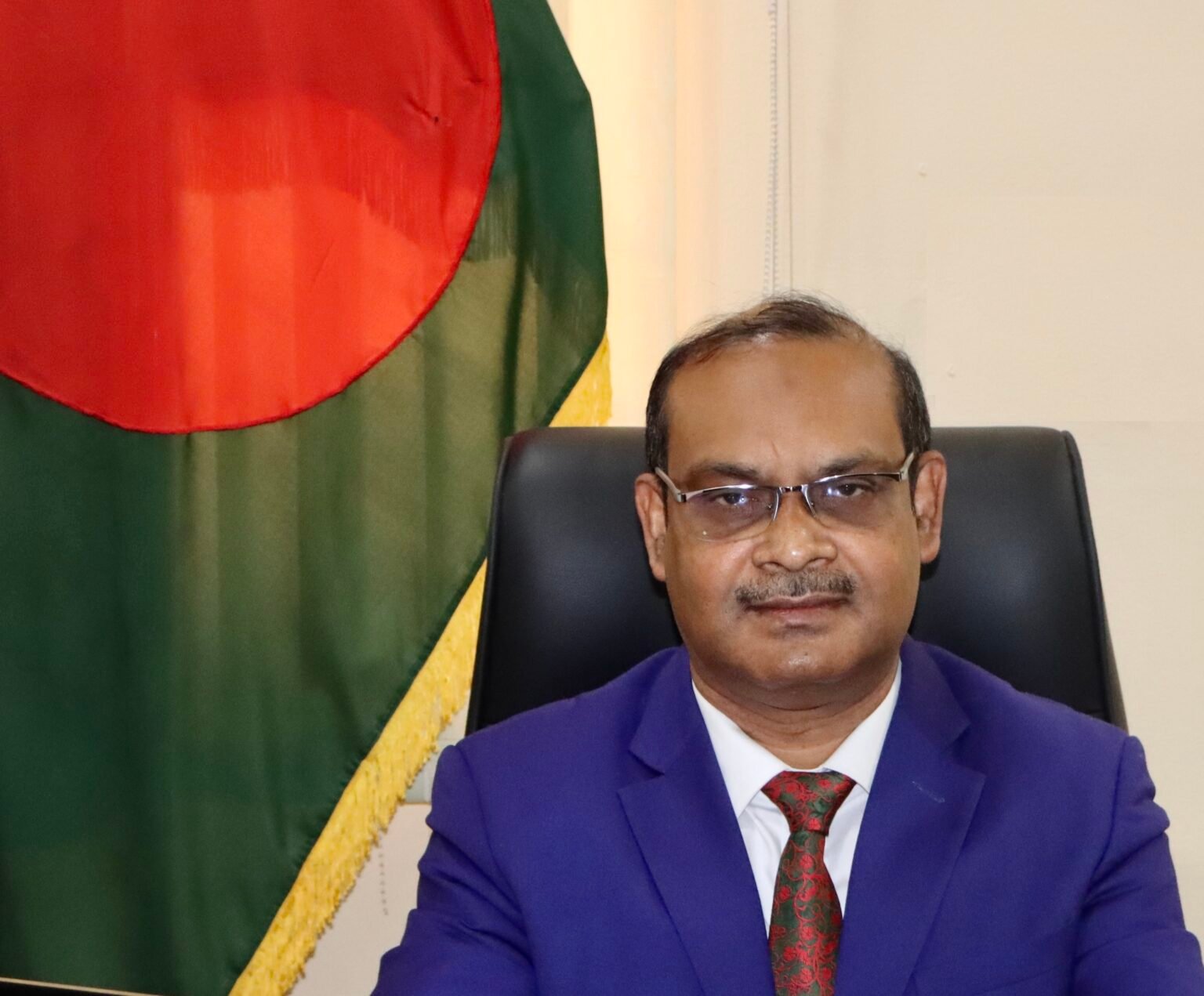
The Bangladesh High Commissioner to Nigeria, Miah Kabir, says the country’s present job quota reforms, youth political participation and institutional changes are all dividends of the country’s July 2024 Uprising.
Kabir said this in an interview with the News Agency of Nigeria (NAN) on Wednesday, in Abuja.
He said one of the immediate outcomes of the movement was the revision of Bangladesh’s government job quota system, which had become a major source of discontent among young people.
The envoy explained that the quota system initially reserved 56 per cent of government jobs under various categories, leaving the remaining positions to competition based on merit.
Kabir said students initially mobilised against what they considered an unfair distribution of opportunities.
The envoy said the movement, which initially centred on students, eventually attracted parents, teachers, women and citizens from different sections of Bangladeshi society.
He said the participation demonstrated that the grievances surrounding the quota system had expanded beyond students, with the wider population becoming involved in demanding change.
Kabir said the reforms that followed the uprising had gradually moved beyond the job quota system, extending to Bangladesh’s political, economic and public institutions, with youth inclusion becoming increasingly visible.
He said young people were now participating in different sectors of national life, including political representation.
The envoy further said that reforms were also being pursued in the electoral system, education, judiciary, civil service and foreign affairs.
He said the uprising also reinforced Bangladeshis’ longstanding aspiration for democratic governance, tracing the country’s democratic struggles to the events preceding its independence in 1971.
He said the experience demonstrated the importance of citizens being united around a cause, describing unity as a significant factor in achieving political and social change.
On political representation, Kabir said youth participation had increased, with six youth now representing each constituency within Bangladesh’s parliamentary system.
He said the development was significant because young people were no longer being viewed only as participants in protests or beneficiaries of government programmes.
According to him, students are now being increasingly seen as contributors to the country’s governance process.
He disclosed that young representatives participated in drafting what he referred to as the July Declaration, adopted following consultations involving political parties and the interim administration.
According to him, the present government participated in and agreed to the declaration, while young people were involved in its drafting process.
Kabir said the reform process had also affected the Bangladesh Election Commission, with changes contributing to what he described as a successful general election after years of challenges surrounding elections since 2008.
He said Nigerian election commissioners participated as observers during the election and witnessed the electoral process, which he described as organised and participatory.
“These are concrete examples of the success of this movement.
“It also shows that the people really believe in democracy, and the government also believes in that,” Kabir said.
He contrasted the recent election with previous elections which, according to him, lacked participation from opposition parties and were not accepted by the international community.
Beyond the electoral process, Kabir said reforms were gradually extending into the judiciary, civil service and education sectors, with the objective of strengthening institutions and improving their responsiveness to citizens.
The envoy added that youth inclusion was gradually extending to foreign affairs, reflecting a wider effort to ensure young people participated in different aspects of national decision-making.
Kabir said Bangladesh’s democratic aspiration was not new, noting that the country’s independence struggle was itself rooted in a demand for democratic representation and equal rights.
He said the 2024 uprising should therefore be understood within the broader historical context of Bangladesh’s recurring struggles for democracy, equal rights and citizen participation.
On youth participation in governance, he said the country had created avenues through which young people could influence policy, including through political parties’ youth and student wings.
He said the process was therefore not only about commemorating the sacrifices of those who participated in the uprising, but also about ensuring that its demands continued to influence governance and national development.
Kabir also said Bangladesh had continued financial support for victims and families affected by the uprising, adding that such assistance would continue for as long as beneficiaries needed it.
“The government is committed to continue this financial support,” he said.
The High Commissioner said the country’s experience offered broader lessons on the relationship between young people and government, particularly the importance of allowing citizens to participate meaningfully in governance.
He said the experience had also strengthened the country’s commitment to democracy and demonstrated that young people could influence national direction when their concerns were not ignored.
The July 2024 Uprising has become a defining chapter in Bangladesh’s recent political history, with its anniversary observed through commemorations focused on democracy, equality, justice and the sacrifices of participants. (NAN)(www.nannews.ng)
Edited by Mark Longyen


Comments