








By Oluwatope Lawanson
Stakeholders in the health and legal sectors have called for improved access to contraception and professional medical care to prevent avoidable maternal deaths.
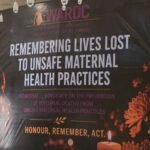
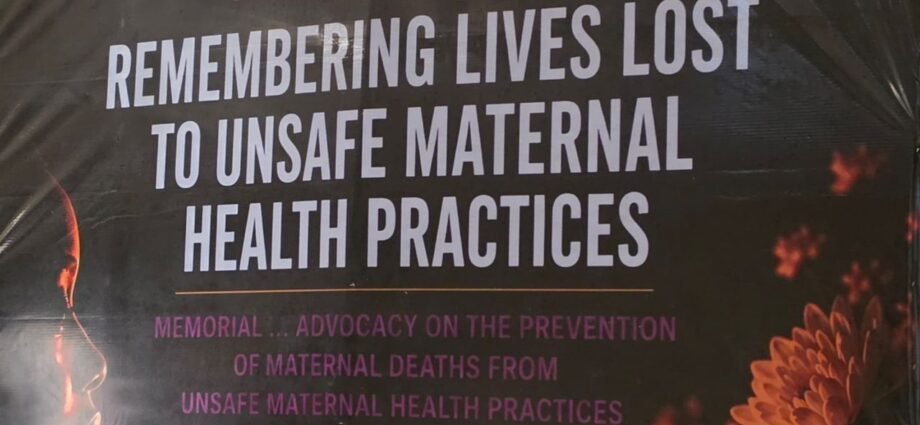
They made the call on Monday during a memorial and advocacy meeting on preventing maternal deaths from unsafe maternal health practices.
The meeting was held in Lagos to honour women and girls who died preventably following unsafe termination of pregnancy.
The News Agency of Nigeria (NAN) reports that Women Advocates Research and Documentation Centre (WARDC) organised the meeting.
It was organised in collaboration with the Society of Gynaecologists and Obstetricians of Nigeria (SOGON) and Nigeria Medical Association (NMA), Lagos Chapter.
Participants stressed the need to shift attention from stigma and restrictive interpretations of the law toward life-saving interventions for women and girls.
Dr Olabisi Olanrewaju, Second Vice-Chairman, NMA, Lagos Chapter, said society had failed to prevent unwanted pregnancies despite growing awareness of the problem.
“Have we been able to stop women from having unwanted pregnancies? The answer is no. So, what are we doing about it?” she asked.
Olanrewaju, an obstetrician and gynaecologist, said expanding contraceptive access and providing professional consultations were critical to reducing complications and deaths.
“If we are not stopping people from having sex, then we should ensure contraceptive options are available and accessible.
“Also, when pregnancy occurs, women should have access to expert care,” she said.
Dr Adaora Ekekwe, SOGO Project Coordinator in Lagos, identified stigma as a major factor delaying women’s access to appropriate healthcare.
She said many women sought medical assistance only after complications had become life-threatening, stressing the importance of timely intervention.
She said: “The distance between life and death is how soon they get to care. Many cases become critical because women are afraid to seek help early.”
Ekekwe also said some healthcare providers hesitated to treat patients because of fears surrounding possible legal consequences.
She noted that such hesitation occurred even in circumstances where the law permits medical intervention to save a mother’s life.
“In conditions such as severe pregnancy complications, some doctors still hesitate, despite legal provisions protecting them,” she said.
Mr Deji Folorunsho, a legal practitioner at WARDC, attributed the problem partly to policy implementation gaps and restrictive interpretations of existing laws.
Folorunsho cited provisions of the 1999 Constitution, including rights to life and dignity, as important considerations.
He said government had a responsibility to ensure women had access to adequate medical and psychological care.
“Many of these deaths could have been avoided if there were clear policies guaranteeing access to care and support,” he said.
Folorunsho called for sustained dialogue and reforms to reduce preventable maternal deaths and ensure timely access to appropriate healthcare.
The stakeholders also called for the reinstatement and enforcement of clinical guidelines to help healthcare providers manage such cases without fear.
They urged government to strengthen public awareness, improve referral systems and review policies to reflect current realities.
The participants said coordinated action across the health and legal sectors remained essential to protecting women and girls from preventable deaths. (NAN)
Edited by Kamal Tayo Oropo