


By Aderogba George
The Endocrine and Metabolism Society of Nigeria (EMSON) has called for more endocrinologists, affordable medicines and better diagnostic services to address rising cases of diabetes, obesity and other metabolic diseases nationwide.
It made the call in a communiqué issued after its 47th Annual General Meeting and Scientific Conference in Abuja on Wednesday.
The communiqué was jointly signed by EMSON President, Prof. Andrew Uloko; Secretary-General, Dr Oluwarotimi Olopade; and Publicity Secretary, Prof. Michael Olamoyegun, who identified seven challenges affecting endocrine healthcare delivery in Nigeria.
The society said specialist shortages, high treatment costs and inadequate access to diagnostic equipment and long-term care were limiting effective management of endocrine disorders across the country.
The society said insulin, blood glucose monitoring devices and newer treatments for diabetes and obesity remained unaffordable or inaccessible to many patients, making disease management increasingly difficult.
It also identified shortages and uneven distribution of endocrinologists and other specialist health professionals, worsened by the migration of trained personnel to other countries, leaving significant gaps in specialist healthcare delivery.
The society expressed concern over inadequate early detection and treatment of childhood and adolescent endocrine disorders, as well as the absence of national registries for rare and congenital conditions.
On women’s health, EMSON identified Polyendocrine metabolic ovarian syndrome (PMOS), menopause and diabetes during pregnancy as conditions requiring improved screening, public awareness and specialist care throughout Nigeria.
It highlighted inadequate local clinical research, limited research funding and weaknesses in primary healthcare screening, referral systems and health insurance coverage for patients with endocrine conditions.
To address these challenges, EMSON resolved to advocate more postgraduate training positions in endocrinology and metabolic medicine, strengthen mentorship and continuing education, and promote equitable specialist distribution across Nigeria’s six zones.
The society also pledged to engage the Federal Government, National Health Insurance Authority (NHIA) and regulatory agencies to improve access to affordable endocrine medicines, insulin, glucose monitoring devices and diagnostic services.
It said diagnostic services should include hormone tests, while improved affordability and availability would help patients obtain timely diagnosis, treatment and continuing care for endocrine disorders.
On diabetes care, EMSON called for integrating services into primary and secondary healthcare facilities, emphasising blood glucose control, cardiovascular risk assessment and screening for complications among patients.
It also advocated improved patient education, support for self-management and multidisciplinary treatment involving relevant health professionals to strengthen diabetes care and improve outcomes for affected people.
The society called for national obesity prevention and management strategies, with lifestyle medicine integrated into routine care, and recommended collaboration among physicians, nutritionists, psychologists and physiotherapists for effective intervention.
The collaboration, it said, would improve prevention and management of obesity and related metabolic conditions through coordinated, patient-centred care in healthcare facilities and communities across Nigeria.
For women, EMSON pledged to promote awareness, screening and treatment of reproductive and other endocrine disorders, while advocating insurance coverage for relevant healthcare services throughout the country.
On childhood endocrine disorders, it proposed improved early detection, referral systems and access to specialist care, alongside national registries for rare and congenital conditions affecting children.
The society also recommended transition clinics for adolescents aged 13 to 15, where paediatric and adult endocrinologists would jointly manage patients moving into adult healthcare services.
It said the arrangement would promote continuity of treatment, reduce loss to follow-up and improve long-term health outcomes for adolescents living with endocrine conditions, particularly those requiring specialist care.
EMSON further called for increased funding for locally relevant research, collaboration among Nigerian and international research institutions, and application of findings in clinical guidelines and public health policies.
The conference, themed “Endocrine Practice in Nigeria: Improving Patient Care and Outcomes Through Advocacy,” brought together endocrinologists, diabetologists, family physicians, surgeons, obstetricians and gynaecologists, pharmacists, nurses, researchers and policymakers.
At the opening ceremony, chaired by FCT Mandate Secretary for Health Services and Environment, Dr Adedolapo Fasawe, keynote speaker Prof. Anas Sabir called for stronger endocrine services.
Sabir, a former Chief Medical Director of Usmanu Danfodiyo University Teaching Hospital, Sokoto, also urged improved access to diagnostics and medicines, alongside increased advocacy for patients.
Fasawe emphasised evidence-based practice, research and collaboration among health institutions as important approaches to improving patient care and strengthening healthcare delivery across the Federal Capital Territory.
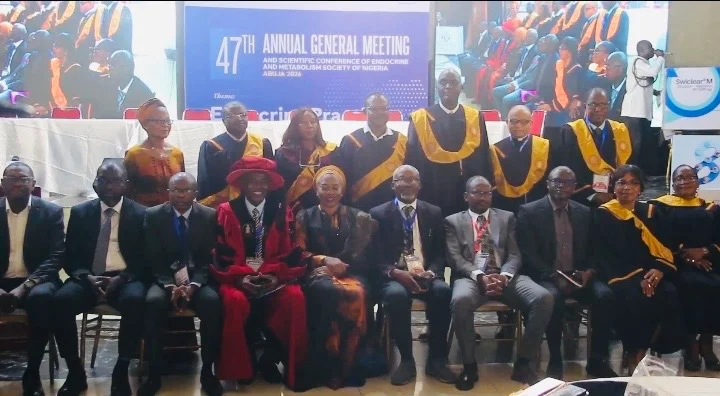
Eight members were inducted as Fellows of the Endocrine and Metabolism Society of Nigeria (FEMSON) during the ceremony, recognising their professional contributions to the specialty and the society’s development.
Prof. Chioma Unachukwu delivered the Dagogo-Jack Memorial Award Lecture, titled “From Bench to Bedside, To Population Health: The Expanding Frontiers of Endocrinology,” at the conference, which featured several scientific sessions.
The scientific programme featured 56 research papers presented through oral and poster sessions, alongside symposia, workshops and expert discussions on endocrine practice and patient care.
At the AGM, 11 full members and seven associate members were inducted into the society, expanding its membership and professional network across the country.
Dr Obiamaka Ede and Dr Oluchukwu Ugwunne received the Prof. Aihanuwa Theresa Eregie Memorial Awards for the best Part Two dissertations in Endocrinology, Diabetes and Metabolism at the conference.
The awards recognised their dissertations at the National Postgraduate Medical College of Nigeria and the West African College of Physicians, respectively.
Dr Ajibade Oluwaseun received the Prof. Thomas Johnson Memorial Award for the best abstract presentation in diabetic foot at the society’s scientific conference in Abuja.
The society also elected a National Executive Council for the 2026–2028 tenure, with Uloko as President, to lead the organisation for the new term and implement its programmes.
Other elected officers are Dr Olubiyi Adesina, Prof. Christian Okafor and Dr Ibitrokoemi Korubo as Vice Presidents; Olopade as Secretary-General; and Dr Beatrice Bello-Ovosi as Treasurer.
Dr Ayoola Ojo was elected Publicity Secretary, while Prof. Andrew Edo became Welfare Secretary, Prof. Aderonke Samuel Curator, and Prof. Michael Olamoyegun Internal Auditor to serve on the executive council.
The society’s 48th Annual General Meeting and Scientific Conference will hold in Enugu in September 2027, bringing members together to review progress and discuss emerging issues.(NAN)
Edited by Abiemwense Moru
Comments