









By Patricia Amogu
The Japan International Cooperation Agency (JICA) Nigeria has unveiled its school-based nutrition promotion programme to strengthen adolescent health in Nigeria.
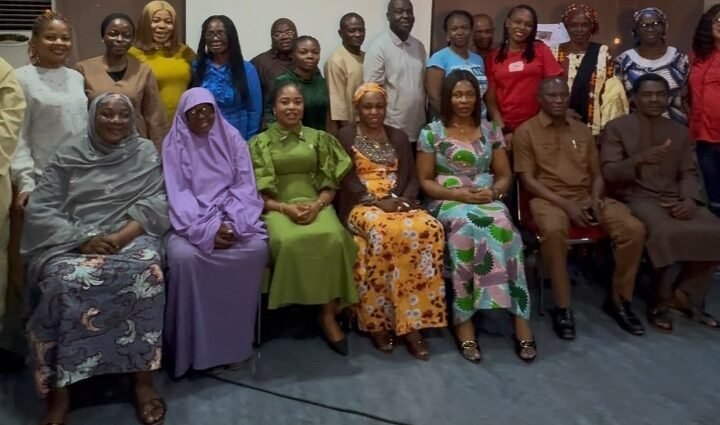
The one -day workshop / teachers training which held on Thursday in Abuja, is aimed at promoting healthier dietary and lifestyle choices among adolescents.
The News Agency of Nigeria (NAN) reports that about 31 per cent, or nearly one in three, Nigerian adolescents aged 10 to 19 are thin or underweight.
NAN also reports that about 55 per cent of adolescent girls suffer from anaemia, with poor dietary diversity and inadequate iron intake identified as major contributing factors.
Mrs Princess Barry-Chukwu, Programme Coordinator, Nutrition, Water, Sanitation and Hygiene, Environment, Climate Change and ODA Loans, JICA Nigeria, said adolescent nutrition was critical to nation-building.
Barry-Chukwu said the period of adolescence represented an important window for physical and mental development that required greater attention from stakeholders.
“Adolescence is the second fastest growth period after the first five years of a child’s life, yet it has received little attention from stakeholders.
“Nutrition is one of the most rewarding investments any government can make, and Nigeria should key into this to have a productive adult population in the near future,” she said.
She said JICA supported nutrition development globally through food-based interventions and the promotion of healthy and diversified diets.
“We believe that food should not be consumed just to fill our bellies but to make us healthier,” she said.
Barry-Chukwu said the agency was focusing on schools because they provided an important platform for learning and behaviour change.
She said the pilot programme would run until January and equip teachers with knowledge to promote healthy eating and lifestyle choices among students.
“This workshop will challenge teachers to pay better attention to what adolescents eat, their snack choices and lifestyle choices.
“Teachers can counsel students when opportunities arise, create nutrition clubs and develop and maintain school gardens,” she said.
Barry-Chukwu also urged teachers to engage parents on their children’s nutrition and incorporate nutrition-related activities into their regular school programmes.
She suggested activities such as nutrition debates, fruit and lunchbox challenges, as well as school gardening.
Earlier, Mrs Simiat Jumoke-Salau, Home Economics Teacher and JICA Desk Officer, Junior Secondary School, Area 10, Garki, said schools had an important role in promoting healthier eating habits among students.
Salau said the school planned to encourage students to consume more fruits and vegetables using behaviour-change approaches.
“Many of them currently consume mostly junk foods, snacks, biscuits, zobo and soft drinks.
“When we return to school, we will advocate increased consumption of fruits and vegetables rather than junk foods,” she said.
She called for greater nutrition education in schools, combining classroom lessons with practical activities.
Salau also raised concerns about changes to the junior secondary school curriculum, saying nutrition-related lessons had received less attention.
She said students spent significant hours in school, making schools an important setting for nutrition education and healthy behaviour.
Also, Mr Ude Ekele, Deputy Director, Agricultural Research and Development Secretariat, FCT Administration, said every school should develop a garden to promote healthy nutrition among students.
Ekele spoke while delivering a lecture on school garden development at the programme.
Also, Mr Johnson-John Edache, representative of the Department of Social Mobilisation, Universal Basic Education Board (UBEB), FCT, urged schools to implement lessons from the pilot programme.
Edache said the board would report the outcomes of the training to relevant directors and sensitise school principals on promoting healthy eating among adolescents.
“The training has done well by bringing adolescent nutrition back to the attention of teachers and schools,” he said. (NAN) www.nannews.ng
Edited by Tosin Kolade