


By Folasade Akpan
Nigeria has inaugurated the Nigeria Health Financing Observatory to harmonise health financing data and strengthen research, accountability and evidence-based decision-making.
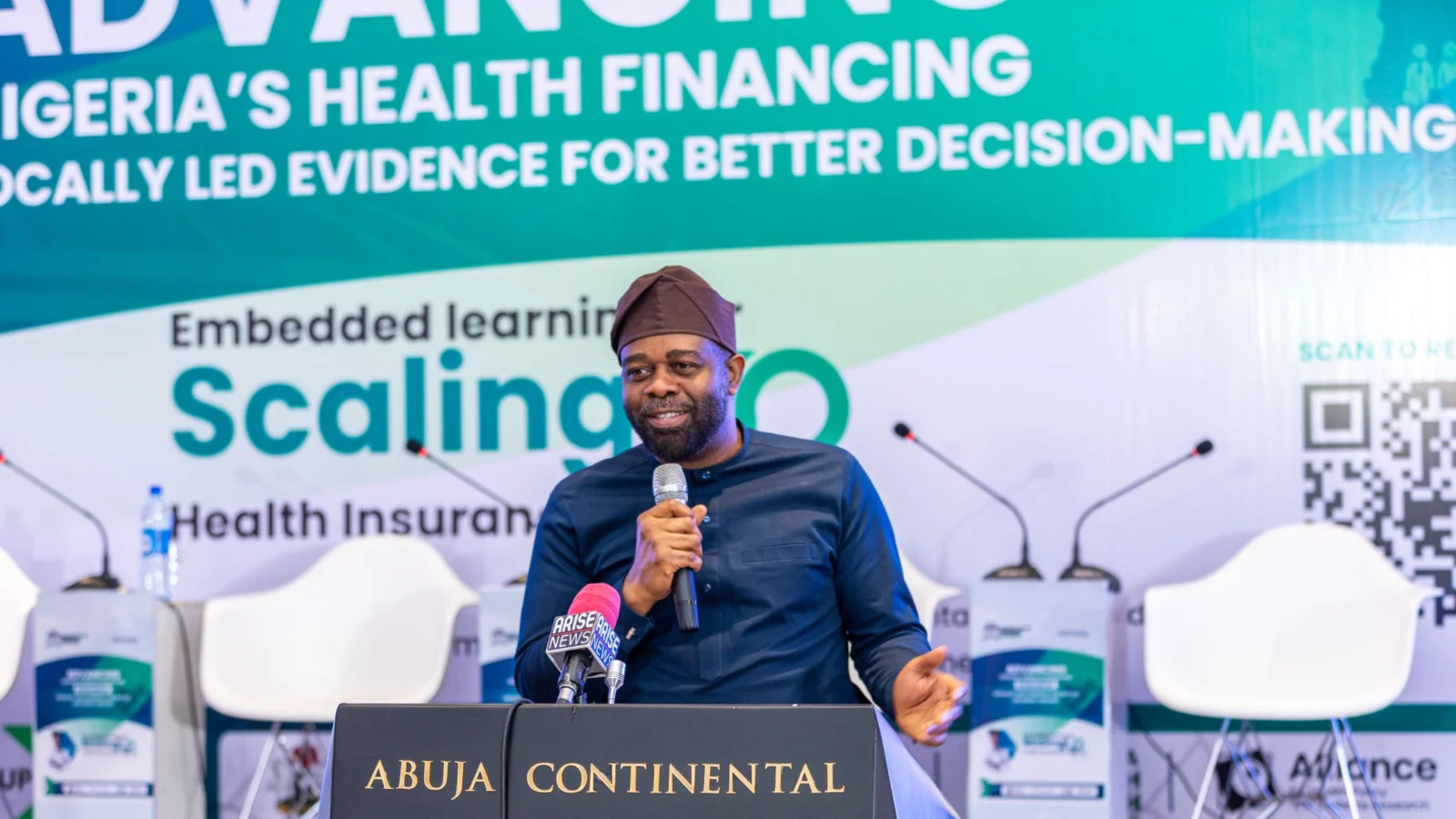
Dr Kelechi Ohiri, Director-General, National Health Insurance Authority (NHIA), inaugurated the observatory on Tuesday in Abuja at the inaugural Nigeria Health Financing Research and Learning Forum, which began on Monday.
The forum has the theme: ‘Evidence and Learning for Nigeria’s Health Financing Future: Building a Locally Led Research and Learning Ecosystem.’
Ohiri said the observatory was conceived to address fragmented health financing data and translate information into evidence and actionable insights.
“We know that Nigeria has increased financing for healthcare significantly over the years.
“Money is still a problem because we still spend way below other countries that we benchmark in terms of health spending per capita,” he said.
He also said Nigeria spent below comparable countries in terms of healthcare spending as a percentage of Gross Domestic Product.
Ohiri, however, said knowing how much was spent was insufficient without determining whether resources were properly channelled.
He said health financing information remained “extremely fragmented”, resulting in “almost starvation of evidence in the midst of plenty data.”
According to him, the observatory will bring existing information together and provide more detailed data, including at sub-national levels.
Ohiri said the platform would serve as a public good by making data available to researchers and other stakeholders.
He said it would also provide an evidence repository documenting what worked, what did not and the outputs of research.
He urged federal and state institutions to contribute reliable, current financial and budget information to the platform.
He also called on researchers and academics to contribute their findings, research and analytical expertise.
“I would always welcome civil society that holds us accountable based on evidence rather than based on perceptions,” he said.
Ohiri said the observatory remained a work in progress, guided by rigorous data stewardship, continuous improvement and collective ownership.
He said the platform was particularly important because primary healthcare financing involved multiple sources, making resource flows difficult to track.
He stressed the need for greater transparency in understanding intergovernmental fiscal transfers and contributions from different government levels.
Earlier, Dr Yewande Ogundeji, Managing Principal, Health Strategy and Delivery Foundation (HSDF), said the observatory would provide a common platform for researchers and policymakers.
“No ownership without control for health financing,” Ogundeji said, explaining that ownership involved setting priorities and understanding available resources.
She said the platform would track domestic and external financing, budgets and releases at national and sub-national levels.
Ogundeji said almost 200 indicators had been identified for the observatory, with validated indicators available in the first phase.
She said subsequent phases would introduce more indicators and test artificial intelligence-assisted search and predictive analysis.
Dr Kumanan Rasanathan, Executive Director, Alliance for Health Policy and Systems Research, World Health Organisation (WHO), said the observatory could strengthen Nigeria’s health sovereignty.
He said it would enable stakeholders to track where health resources were going and what they were achieving.
“How do you make decisions about your policies if you don’t know where the money is flowing?” Rasanathan asked.
He said the observatory’s value would ultimately depend on data quality and usage, rather than the appearance of its dashboards.
“If you can realise this vision for real-time data, it will be a game changer,” he said.
Rasanathan said such information was necessary for progress towards universal health coverage and health sovereignty.
He described the initiative as distinctly Nigerian, stressing that it was neither a WHO nor World Bank initiative. “This is an initiative from Nigeria. That is sovereignty,” he said.
Vivienne Ihekweazu, Managing Director, Nigeria Health Watch, said the forum would help identify research and learning gaps around NHIA’s strategic priorities.
She said these priorities included improving equity, access and coverage.
Ihekweazu commended the NHIA for funding research by five institutions to address critical questions around its priorities.
She described the approach as an expression of research sovereignty and stressed the importance of locally funded research.
The News Agency of Nigeria (NAN) reports that the observatory was developed to harmonise health financing information from different sources.
It will provide a common evidence base for policymakers, researchers, civil society and other stakeholders. (NAN)
Edited by Kamal Tayo Oropo

Comments