


By Jumoke Olaitan
The Universal Basic Education Commission (UBEC) says it has renovated 287 schools and more than 4,000 classrooms across the country as part of efforts to improve basic education infrastructure.
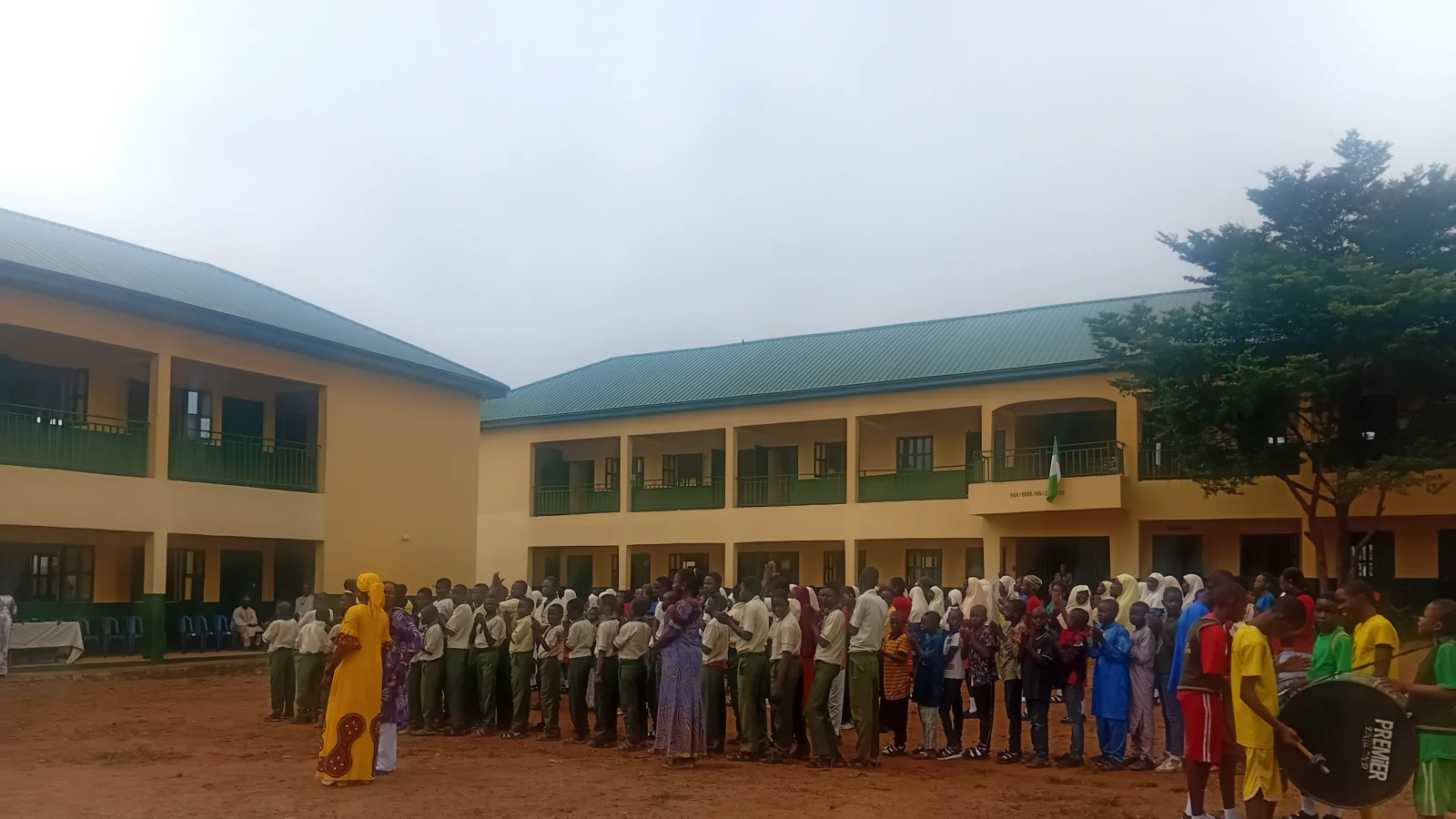
The Executive Secretary of UBEC, Dr Aisha Garba, disclosed this while commissioning renovated classroom blocks and other facilities at the Nyanya-Hausawa Basic and Secondary School on Wednesday in Abuja.
Garba said the interventions were part of efforts to ensure that children across the country had access to conducive learning environments under the Renewed Hope Agenda.
She said the commission had introduced a minimum standard for schools, which required government interventions to adopt a whole-school approach.
According to her, the approach means that renovation projects will address the overall needs of schools rather than fixing individual classrooms or facilities in isolation.
Garba said the approach included classrooms, toilets, boreholes, solar power, administrative blocks and learning materials, among other facilities.
“Under the Renewed Hope agenda, President Bola Tinubu has mandated us that all children, regardless of where they are, should be in school and we should make sure that schools are in conducive environment for learning.
“This has been one of our key mandates, and since the coming of this administration, we have taken that directive seriously.
“We have done different reforms within the education sector under the leadership of our two Ministers,” she said.
Garba said the commission had also developed minimum standards for new school infrastructure to ensure that newly constructed schools had the facilities required for effective teaching and learning.
She said such facilities would include perimeter fencing, security measures, solar power, boreholes, adequate toilets and classrooms, administrative blocks and playgrounds.
The executive secretary added that schools would also be equipped with modern facilities such as computer and Information and Communication Technology (ICT) laboratories and smart boards.
She said the objective was to prepare Nigerian children to compete effectively in the 21st-century education system and the global economy.
Garba said the renovated school in Nyanya was one of the schools benefiting from the intervention, noting that the school had previously been in a dilapidated condition.
She said the school comprised Early Childhood Care and Development (ECCD), primary, junior secondary and senior secondary sections.
According to her, the intervention includes the renovation of three blocks, comprising about 30 classrooms and 48 toilets, as well as the provision of solar-powered boreholes.
She said the toilets were connected to the water system supplied by the boreholes.
Garba said the commission would further intervene in the school to address other outstanding needs, including the provision of an administrative block.
She also commissioned 74 digital learning centres as part of efforts to improve access to technology-driven education across the country.
At the Model Girls’ Junior Secondary School, AMAC, where she commissioned one of the Digital learning centres, Garba said the commission had established more than 2,000 of such centres under the administration of President Tinubu.
According to her, the centres are equipped with computers, smartboards, solar panels, burglar-proofing, printers, scanners and internet connectivity.
Garba said the centres also provided online and offline learning content for students and teachers.
She added that teachers were trained to use the digital learning facilities and content effectively.
Earlier, Ibrahim Nura, Director of Physical Planning, UBEC, said the school was one of the commission’s intervention projects across the country.
Nura said the school had been seriously dilapidated before the intervention, adding that some of its facilities were not suitable for effective teaching and learning.
He said the commission conducted a condition assessment before commencing the renovation to determine the specific needs of the school.
Nura said UBEC’s intervention had transformed the school and provided improved facilities for pupils, students and teachers.
The Principal of the Junior school at Nyanya-Hausawa Basic and Secondary School, Gideon Isah, commended UBEC for renovating the classroom blocks and providing staff and students’ furniture as well as a solar water system.
Isah said the school was previously in a deplorable condition, with some students sitting on bare floors due to inadequate furniture.
He said the renovation had improved the morale of teachers and students and created a better environment for learning.
The principal appealed to UBEC to assist the school with an administrative block, noting that the primary, junior secondary and senior secondary sections currently had no administrative block.
He said the community, in collaboration with the Parent-Teacher Association (PTA), had employed three security personnel to protect the renovated facilities from vandalism.
The principal assured UBEC that the school community would maintain the facilities and use them judiciously.(NAN) www.nannews.ng
Edited by Funmilayo Adeyemi
Comments