


By Edith Tsokar
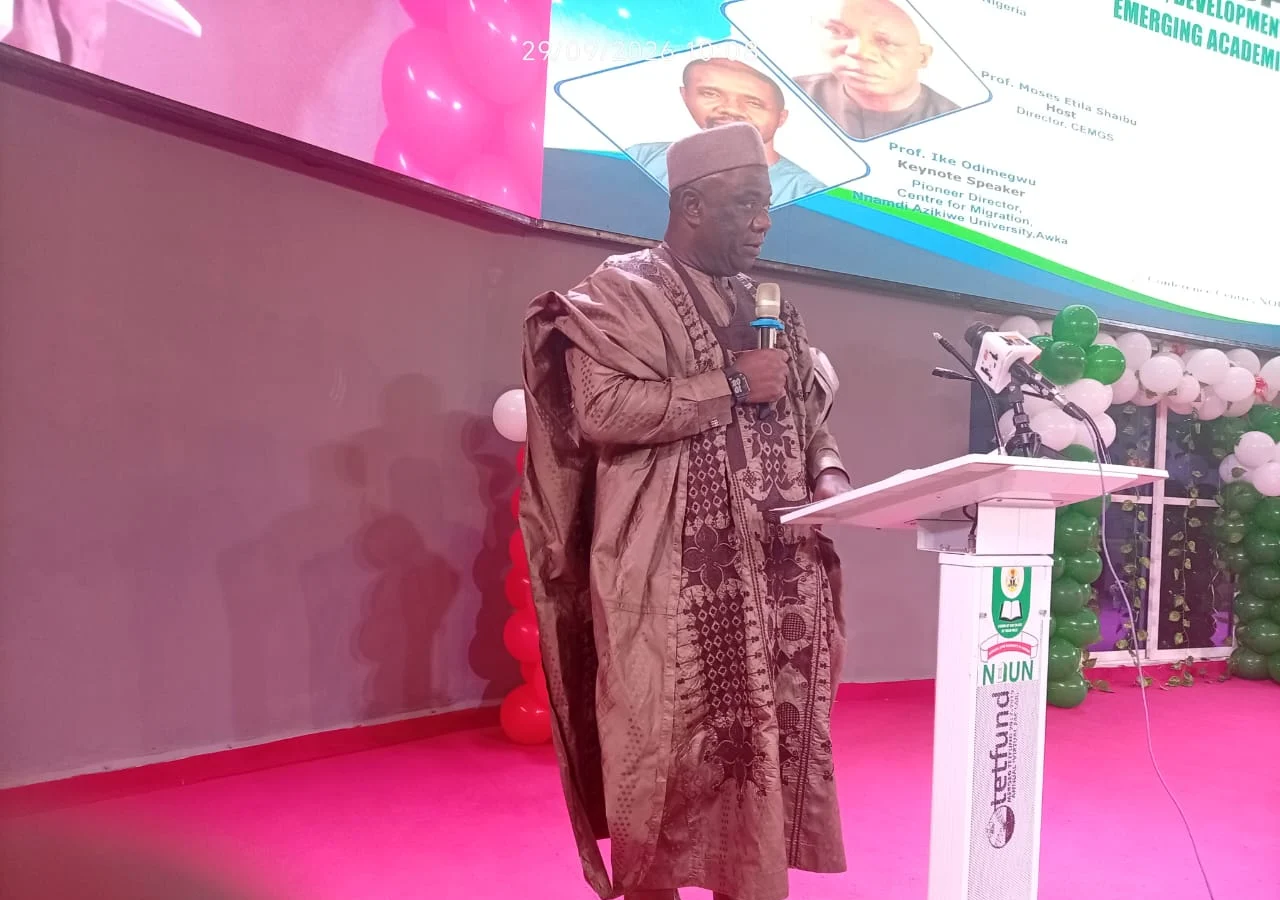
The Vice Chancellor of National Open University of Nigeria (NOUN), Prof. Uduma Uduma has urged African governments to address the underlying social, political and economic challenges driving the youths to other continents such as Europe, America and Asia etc.
He warned that unchecked migration of the youths especially the skilled ones could undermine the continent’s development.
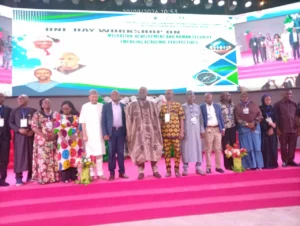
Uduma made the call on Tuesday in Abuja, while delivering a keynote address at an academic workshop entitled “Migration, Development, and Human Security, Emerging Academic Perspectives,” organised by the Centre of Excellence in Migration and Global Studies (CEMGS).
He said the growing “Japa” phenomenon, a Yoruba expression meaning to flee or escape, had evolved from casual slang into a significant social trend reflecting young Nigerians’ aspirations and frustrations.
According to him, the trend goes beyond the pursuit of better economic opportunities, as it also reflects concerns about personal security, career advancement and the structural challenges confronting young people.
Uduma described migration as a fundamental human phenomenon that had shaped civilisations, transformed cultures and influenced the socio-economic development of nations over the centuries.
He, however, warned that the departure of educated and skilled young people represented a significant loss of human capital and investments for their countries of origin.
”When educated, energetic and ambitious youths cross borders, human capital, skills and years of public and private investment cross as well,” he said.
He noted that although migration offered opportunities for individuals, it also presented complex challenges for African countries grappling with the loss of skilled professionals.
The VC of NOUN, acknowledged the contributions of African diaspora communities through financial remittances, knowledge transfer and investments, which continued to support development in their home countries.
Uduma described the situation as a paradox, noting that migrants who contributed to their host countries’ economies often faced discrimination, hostility and xenophobia.
He urged African governments and regional policymakers to incorporate the philosophy of “Ubuntu,” which emphasises shared humanity and mutual responsibility, into immigration and border management policies.
He said such an approach would help protect migrants’ dignity and prevent their dehumanisation, while promoting peaceful coexistence across the continent.
Uduma also highlighted the role of Open and Distance Learning (ODL) institutions, particularly the NOUN in expanding access to higher education and facilitating cross-border knowledge exchange.
According to him, ODL institutions can promote virtual mobility by enabling learners and academics to exchange ideas and access educational opportunities beyond geographical boundaries.
In his opening remarks the Director, Centre of Excellence in Migration and Global Studies (CEMGS), Prof. Moses Shaibu said NOUN was set to commence four postgraduate programmes in Migration Studies in the 2026/2027 academic session following full resource verification by the National Universities Commission (NUC).
The programmes, which cut across postgraduate diploma, professional Master’s, Master of Science (M.Sc.) and Doctor of Philosophy (Ph.D.) degrees, are expected to expand opportunities for advanced learning and research in migration studies.
Shaibu said the NUC’s approval marked a significant milestone in the centre’s efforts to strengthen academic research and develop expertise in migration studies.
”We, therefore, encourage our participants and stakeholders to help spread this information and encourage interested candidates to apply when admissions are formally open,” he said.
The director said the workshop, was organised to advance research, strengthen partnerships and address emerging migration challenges in Nigeria and Africa.
He said the centre remained committed to quality research, human capacity development and evidence-based policy engagement.
Shaibu added that the postgraduate programmes would provide an academic platform for developing professionals and researchers capable of addressing complex migration issues.
Also speaking, the Chairman of the occasion and National Coordinator of the Civil Society Organisations (CSOs) Network, Rev. Fr. Emeka Obiezu, called for sustained collaboration among academia, government and civil society to address migration challenges.
Obiezu said research-based evidence was critical to developing effective policies that protected the rights and dignity of migrants.
He stressed the importance of cooperation among relevant stakeholders in ensuring that migration policies were informed by reliable research and practical realities.
In his goodwill message, the Executive Secretary of the Tertiary Education Trust Fund (TETFund), Dr Suleiman Zangina, commended NOUN for its pioneering contributions to open and distance learning in Nigeria.
Zangina reaffirmed TETFund’s commitment to supporting research initiatives and institutional capacity development across Nigerian tertiary institutions.
He said sustained support for research and academic institutions remained important to strengthening Nigeria’s higher education system.
“The approval of the programmes is expected to expand NOUN’s postgraduate programmes and provide opportunities for specialised academic training in migration studies.”
The workshop brought together stakeholders to examine emerging perspectives on migration, development and human security, with emphasis on research and policy engagement.
Stakeholders also deliberated on human mobility, regional integration and border governance across Africa, as well as examined emerging academic perspectives on migration and its implications for development and human security. (NAN)
Edited by Francis Onyeukwu


Comments