


By Abdullahi Maku
Médecins Sans Frontières (MSF), also known as Doctors Without Borders, has called for stronger collaboration among government, humanitarian organisations and communities to address the growing malnutrition and healthcare challenges in Nigeria.
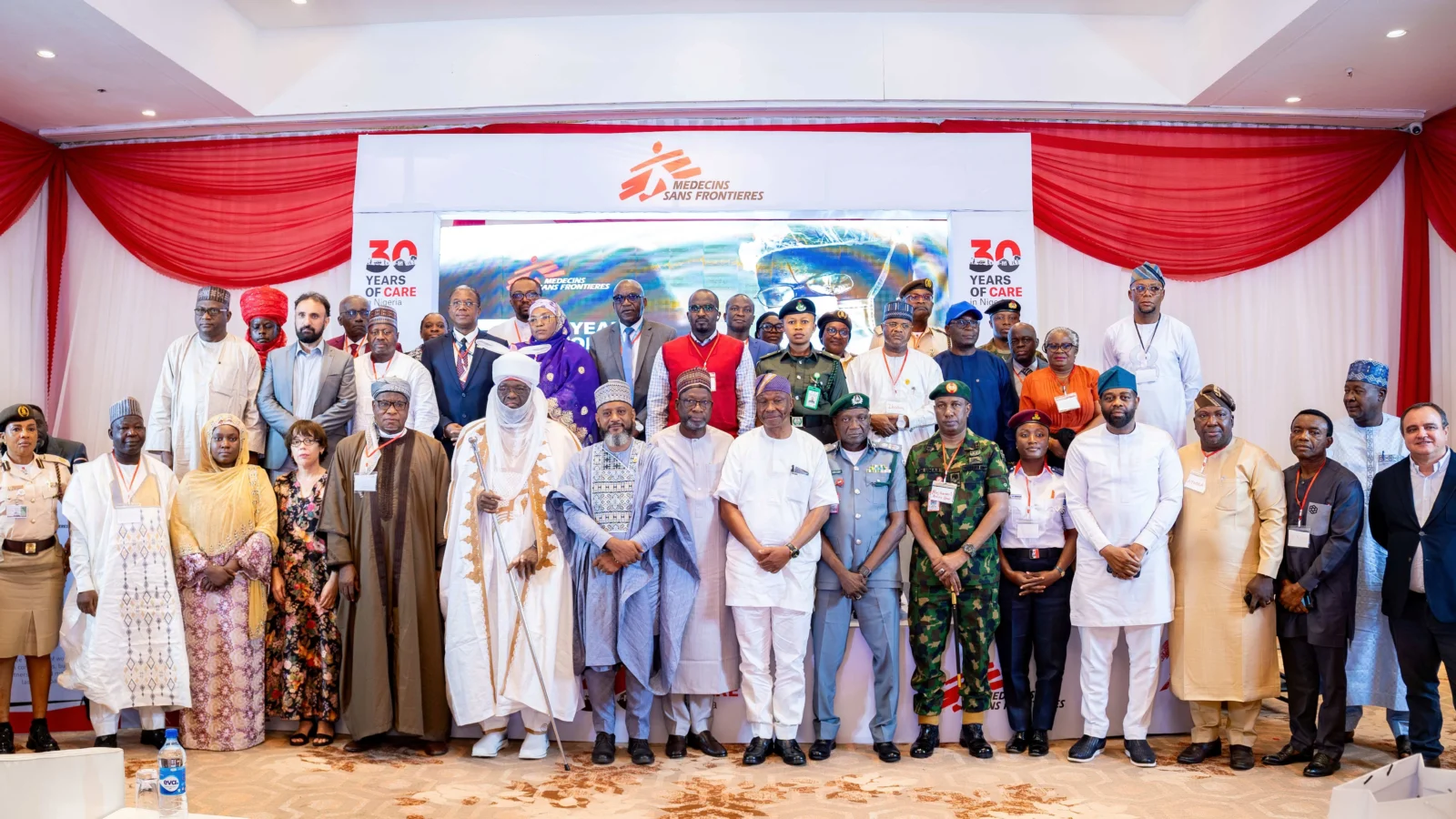
MSF Country Representative in Nigeria, Dr Ahmed Aldikhari, made the call on Wednesday in Abuja at an event marking the organisation’s 30 years of humanitarian and medical service in Nigeria.
While highlighting some of the health interventions the organisation had carried out over the years, he said that malnutrition remained a significant concern.
According to him, in 2025, MSF teams treated 425,634 children for acute malnutrition, a 41.8 per cent increase compared with 2024.
“For the 2026 lean season, the Food and Agriculture Organization estimated that 34.7 million people were projected to face crisis or worse levels of acute food insecurity, while more than 5.4 million children were expected to suffer from acute malnutrition.
“From January to August 2026, MSF teams treated 57,999 children with malnutrition in inpatient facilities and 220,995 children through outpatient programmes,” he said.
Aldikhari, however, said that the needs extend beyond nutrition as recurrent outbreaks of diseases such as cholera and diphtheria, seasonal diseases including malaria, and ongoing maternal and paediatric health needs continue to place pressure on communities and already stretched health services.
“Malnutrition, infectious diseases, maternal health needs, displacement and insecurity are closely connected.
“A child weakened by malnutrition may be more vulnerable to disease, while displacement can make it harder for families to access food, clean water and healthcare,”
Ahmed said that although treating malnutrition remained essential, the scale of the crisis required greater emphasis on prevention and addressing the underlying factors that exposed children and families to poor health.
He identified malaria, cholera, diphtheria, measles and neglected diseases such as noma among the health concerns requiring sustained attention.
Ahmed said MSF’s operations in Nigeria had expanded from its initial response to a meningitis epidemic in 1996 in Kano, Bauchi and Katsina to programmes covering maternal and child health, nutrition, vaccination, surgery, tuberculosis, HIV care and emergency response.
He said the organisation currently operated projects across nine states, working with government health authorities and humanitarian partners.
Also speaking, the Secretary to the Government of the Federation, Sen. George Akume, commended MSF for its three decades of service to Nigerians affected by conflict, displacement, malnutrition, disease outbreaks and other humanitarian challenges.
Represented by Dr Aishatu Gogo, Akume said the Federal Government valued partnerships with credible humanitarian organisations, particularly in reaching vulnerable communities and strengthening healthcare delivery.
He urged MSF to build on lessons from its 30 years of operations to support stronger health systems and capacity development in the country.
The UN Resident Humanitarian Coordinator, Mrs Elsie Atahor, said MSF had treated more than 400,000 children for acute malnutrition across northern Nigeria in 2025.
Atahor said the situation was occurring amid insecurity, rising food costs, disrupted livelihoods and limited access to essential services, stressing the need to address the conditions that continued to drive humanitarian needs.
She commended MSF for providing medical care while also using its independent voice to draw attention to the experiences of patients and communities.
The News Agency of Nigeria (NAN) reports that MSF began operations in Nigeria in 1996 and has since provided humanitarian and medical assistance to communities affected by disease outbreaks, malnutrition, displacement and other emergencies.(NAN)(NAN)
Edited by Folasade Akpan
Comments