


By Edith Tsokar
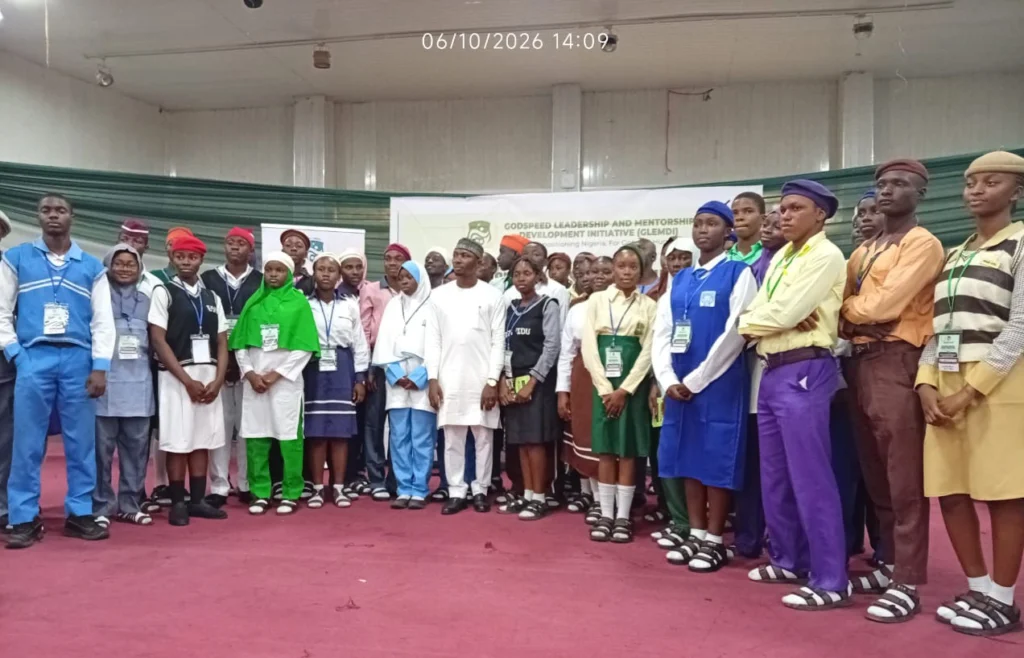
The Godspeed Leadership and Mentorship Initiative (GLEMDI), an NGO, has urged head boys and head girls across schools in the Federal Capital Territory (FCT) to lead by example and become catalysts for positive change in their learning environment.
The Executive Director of GLEMDI, Mr Habila Kayit, made the call in Abuja at the fourth edition of the Basic and Post-Basic Education Head Boys and Head Girls Leadership and Mentorship Retreat.
Kayit urged the student leaders to regard their positions as opportunities to serve, inspire others and promote positive change rather than as titles of authority.
”This retreat was designed to strengthen leadership, accountability, integrity and service among young school leaders.
”The programme will also expose the participants to mentorship and practical leadership experiences that could help them make meaningful contributions to their schools and communities.
”The initiative is structured into three phases: the leadership retreat, monitoring and evaluation of the participants’ progress, and subsequent engagements aimed at preparing them for greater responsibilities in society.”
He said the inclusion of accompanying teachers in the programme was intended to enable them to encourage, mentor and guide the young leaders when they returned to their respective schools.
The executive director urged the participants to put into practice the lessons acquired during the retreat and initiate projects that would leave their schools better than they found them.
He particularly encouraged the students to embrace environmental initiatives, including tree planting, as part of the leadership legacy they would leave behind in their schools.
Kayit said the initiative was being implemented in collaboration with the FCT Education Secretariat, FCT Secondary Education Board and the FCT Science, Technology and Innovation Secretariat.
Also speaking, the Founder of African Youth Leads Initiative, Ms Ololade Ogunmubi, urged the participants to understand that leadership was not defined by wearing a badge or giving instructions to others.
Ogunmubi said true leadership was demonstrated through actions, character, responsibility and the ability to positively influence others.
“Leadership is what you do when the world is watching,” she told the participants.
She reminded the students that young people were not merely leaders of tomorrow but were already important stakeholders in Nigeria’s present, stressing that their decisions and conduct mattered.
According to her, Nigeria’s large youth population placed a significant responsibility on young people to contribute meaningfully to the development of the country.
Ogunmubi challenged the students not to wait until they became presidents, governors, commissioners or other political office holders before making positive changes in their communities.
She encouraged them to begin practising responsible leadership from their schools by demonstrating discipline, service, accountability and concern for others.
Also, the Director-General of the National Agency for the Great Green Wall (NAGGW), Mr Saleh Abubakar, represented by Ms Alice Nkanu, urged emerging student leaders across the country to embrace integrity, inclusive leadership and environmental responsibility.
Abubakar said leadership should be regarded as a responsibility to serve rather than an opportunity to exercise power.
“Being a leader is not about being the most powerful person in the room; it is about being willing to serve the people that you lead,” he said.
He urged the student leaders to promote inclusivity by ensuring that every student, including those who were shy, vulnerable or disadvantaged, was given an opportunity to be heard, respected and valued.
Speaking earlier, Ms Rinsola Abiola, Director, Global Training School, Citizenship and Leadership Training Centre (CLTC), said effective leaders were not simply born but were shaped by knowledge, experience, values and guidance.
Abiola, represented by Mr Alexander Akinnusi, said the theme of the initiative underscored the importance of preparing young people for responsible leadership through mentorship and purposeful engagement.
She described the participants as leaders of today rather than leaders of tomorrow and encouraged them to see leadership not as a privilege reserved for a few but as a responsibility requiring empathy, fairness, courage, accountability and commitment to the welfare of others.(NAN)
Edited by Deji Abdulwahab


Comments