


Sumaila Ogbaje
The National Counter-Terrorism Centre (NCTC) and the United Nations Office on Drugs and Crime (UNODC) have called for improved protection and access to justice for survivors of sexual and gender-based violence linked to terrorism.
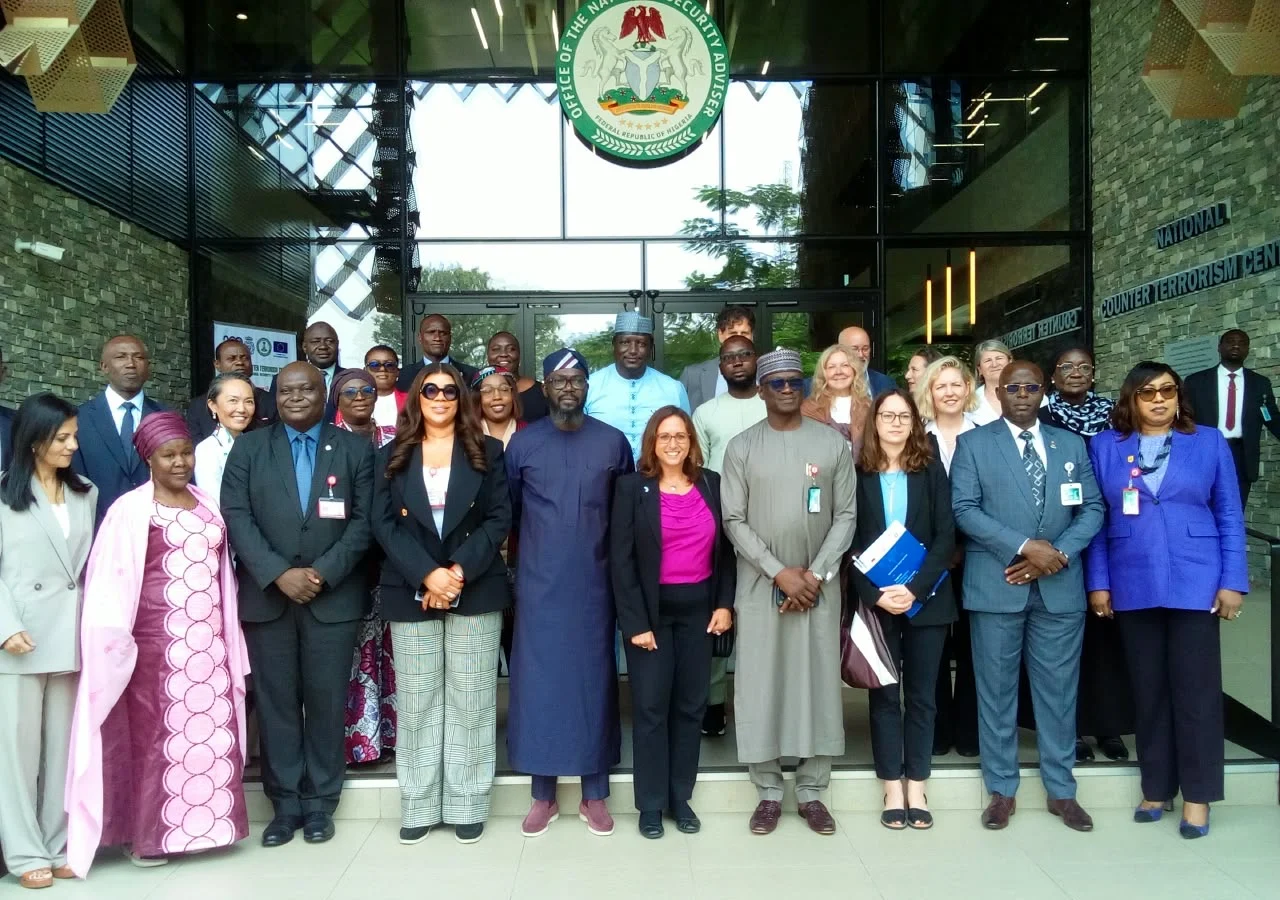
They made the call on Tuesday, at the Second Expert Group Meeting on the Development of a Toolkit for First Emergency Responders in Cases of Sexual and Gender-Based Violence Linked to Terrorism in Abuja.
Maj.-Gen. Adamu Laka, National Coordinator of NCTC, Office of the National Security Adviser (ONSA), said the toolkit would provide practical guidance to help first responders protect survivors, facilitate access to medical care and preserve evidence for investigations.
Laka said Nigeria’s experience with terrorism had shown that its consequences extended beyond attacks, leaving survivors with physical injuries, psychological distress, stigma and difficulties rebuilding their lives.
He said first responders played a critical role in identifying sexual violence, receiving disclosures and connecting survivors with appropriate support services.
He noted that responders often operated under pressure, with limited resources and competing demands.
He also stressed that survivors’ safety, privacy and dignity must remain paramount during initial contact.
Laka urged participants to ensure that the toolkit reflected the realities of emergency response, forensic practice, criminal justice and community engagement.
He said the meeting would review the draft toolkit, assess its practical application and discuss its finalisation and dissemination.
In his remarks, Cheikh Toure, Nigeria Country Representative of UNODC said terrorist groups deliberately used sexual and gender-based violence to terrorise, punish and control individuals and communities.
Toure cited the abduction of 276 schoolgirls from Chibok, Borno, in April 2014, as an example of the devastating consequences of terrorism.
He said abductions, forced marriages and sexual enslavement associated with the insurgency in the North-East demonstrated the deliberate use of such violence.
He said the toolkit should therefore translate international commitments into practical guidance adapted to local conditions.
He also cited UN Security Council Resolutions 2331 of 2016 and 2467 of 2019, which addressed sexual violence linked to terrorism and called for survivor-centred approaches to conflict-related sexual violence.
He emphasised that first responders often worked amid insecurity, mass casualties and scarce resources, making it difficult to identify sexual violence and preserve evidence.
”The survivor’s safety comes first; the case file comes second,” Toure said.
He urged experts to ensure that the toolkit was applicable in both urban and rural settings and clearly defined the roles of police officers, paramedics, civil defence volunteers and community health workers.
He also called for stronger coordination among emergency responders, healthcare providers, specialised support services and justice institutions to prevent survivors from repeatedly recounting traumatic experiences to access assistance.
Sarah Ma’udi, Israel’s Special Envoy for Women, Peace and Security, said international cooperation was essential to developing a toolkit applicable across different countries and conflict situations.
Ma’udi condemned terrorist attacks by Boko Haram and other groups, including sexual and gender-based violence, and expressed solidarity with survivors and their families.
She said the initiative drew on lessons from the Oct. 7, 2023, attacks in Israel and highlighted the need to share experiences and best practices.
She stressed that the toolkit was designed to support, rather than criticise, first responders who often faced difficult decisions under pressure.
Anne Mosimann-Girardet, Senior Legal Adviser in the Directorate of International Law of Switzerland’s Federal Department of Foreign Affairs, said decisions taken during initial responses could have lasting consequences for survivors and the pursuit of justice.
She said practical, human rights-based guidance would help responders balance urgent assistance, survivor protection and evidence preservation.
Mosimann-Girardet urged participants to ensure that the toolkit was accessible and applicable across different operational settings.
Lorena Mohr, Political Counsellor at the German Embassy in Nigeria, said the toolkit would provide practical guidance for military personnel, police officers, medical teams, civil defence personnel, local authorities and community responders.
Mohr said it would help preserve critical information and strengthen accountability for crimes committed against survivors.
She recalled a visit to Gwoza in North-East Nigeria, where she witnessed the effects of the Boko Haram insurgency, including abductions, loss of family members and destruction of homes.
The initiative is supported by Germany, Israel and Switzerland, while Canada supported the meeting.
The meeting brings together national and international experts to review the draft toolkit and make recommendations for its finalisation and dissemination.(NAN)
Edited by Deborah Coker
Comments