


Dishi Agaga-Akpati
Sports administrators and industry experts have called for increased investment in grassroots sports, improved talent identification and stronger partnerships to create sustainable career pathways for African athletes.
The call was made during a conversation session titled: “Creating Sustainable Pathways to Success for Global African Sporting Talent”.
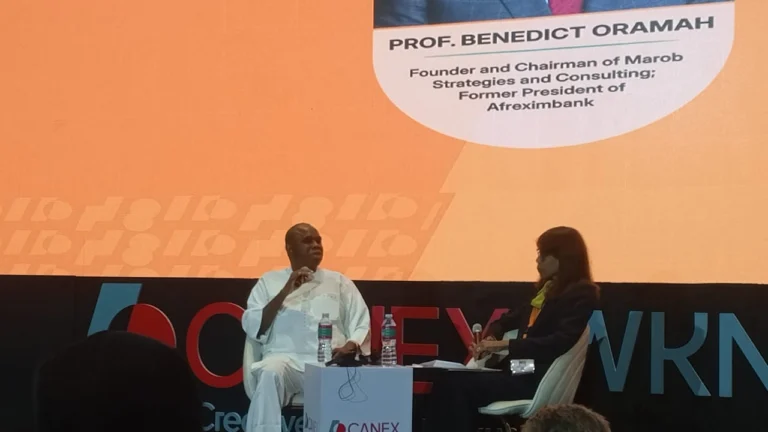
The conversation was held during the Creative Africa Nexus Weekend (CANEX WKND) 2026, held at the Wole Soyinka Centre for Culture and Creative Arts, Lagos.
CANEX WKND 2026 is being held under the theme, “One People, United in Culture, Creating for the World”.
Amadou Gallo Fall, President, Basketball Africa League (BAL), said Africa needed to establish clear pathways for young athletes to progress from grassroots participation to professional sports.
Fall said the BAL initially focused on making basketball more accessible by developing courts and creating opportunities for more young people to participate.
He said the league was also working to strengthen the structures needed to identify and develop talent, noting that sports development required more than organising professional competitions.
Fall said the BAL adopted a broad approach to development, including opportunities for players, coaches and referees, as well as mentorship programmes to prepare young people for careers across the sports industry.
He said the league’s activities were designed to build an ecosystem that would create opportunities for young people while strengthening basketball across the continent.
Also, Dino Ballotti, Namibia’s Deputy Minister of Education, Innovation, Youth, Sport, Arts and Culture, said African countries needed better systems for identifying sporting talent at an early age.
Ballotti said talent identification should be supported by quality coaching at junior levels, adding that experienced coaches should be deployed to grassroots and youth development programmes.
He also stressed the importance of balancing sporting ambitions with education, saying young athletes should be encouraged to pursue both.
The minister cited Namibia’s efforts to professionalise its senior cricket team through government and partner support, explaining that players were given contracts and fair remuneration to enable the country to retain local talent.
He said investment in sports infrastructure and professional structures could help African countries develop and retain athletes instead of losing them to opportunities abroad.
Ballotti said governments, corporate organisations and other stakeholders had important roles to play in supporting sports development.
He said Namibia had used government funding to sustain football leagues in the absence of sufficient corporate sponsorship, adding that sports could create jobs and contribute to the economy.
The minister called for more private-sector participation in developing sports infrastructure, supporting clubs and leagues, noting that the government remained responsible for providing basic facilities.
Deolu Lamikanra, Managing Director, Integral, Nigeria, highlighted the need to create an economic structure that would give stakeholders clear incentives to identify, develop and commercialise sporting talent.
He said talent development should be linked to the creation of value, with clubs, investors and other stakeholders having a role in building systems that could generate sustainable returns.
CANEX WKND 2026 is taking place from Nov. 5 to Nov. 8.
It brings together creatives, investors, policymakers and industry leaders from Africa, the Caribbean and the diaspora to explore opportunities for collaboration, investment and growth across the creative economy.
Organised by the African Export-Import Bank (Afreximbank) through its Creative Africa Nexus programme, CANEX.
It provides a platform for business discussions, exhibitions, performances and networking across sectors including film, music, fashion, sports, literature, gastronomy and visual arts.
It aims to connect African talent and businesses with financing, partnerships and wider markets. (NAN)
Edited by Vivian Ihechu/Oluwafunke Ishola
Comments