


By Franca Ofili
The Federal Government has reaffirmed its commitment to strengthening health workforce development through improved training institutions, accreditation and reliable data to guide investments across West Africa.
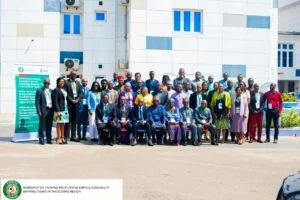
Prof. Muhammad Pate, Coordinating Minister of Health and Social Welfare made this known in Abuja on Thursday, during a three-day workshop on Training Institution Services Availability Mapping (TISAM) in the ECOWAS region.
Pate was represented by Dr Dakum Benji, Nigeria’s Liaison Officer to the West African Health Organisation (WAHO).
According to him, the workshop focused on Training Institution Service Availability Mapping (TISAM) in the Economic Community of West African States (ECOWAS) sub-region.
Pate said the initiative aligned with President Bola Tinubu’s Renewed Hope Agenda and ongoing health sector reforms aimed at strengthening training institutions, expanding accreditation, improving regulation and investing in health workforce data.
“The government recognises the importance of reliable regional information in identifying existing training institutions, their programmes, capacities and gaps to support effective planning and investment.
“The mapping exercise will provide evidence to guide decisions on where to establish institutions, expand programmes, deploy faculty and allocate resources across the sub-region,” he said.
He urged participating countries to develop a comprehensive regional database, adopt common mapping standards and establish clear responsibilities and timelines for completing the exercise.
Pate said the initiative would also support regional harmonisation of curricula, mutual recognition of qualifications and mobility of health professionals across ECOWAS member states.
He said the ultimate objective was to ensure that West Africa trained the right health professionals, in appropriate numbers and locations, to meet the healthcare needs of its population.
The minister commended WAHO, the ECOWAS Commission, regulatory bodies, training institutions and development partners for supporting the initiative.
Earlier, Prof. Cyrisque Degbey, Head of the Department of Environmental Health, representing the Dean of Faculties, said the mapping exercise would provide a reliable picture of health training capacities across the region.
Degbey said updated information was essential for addressing human resource challenges and ensuring that health professionals acquired competencies relevant to the needs of their populations.
He commended WAHO for its technical coordination and the Nigerian Government for supporting regional integration and facilitating the workshop.
Also, Prof. Yao Tettey, representing the Postgraduate Colleges in the West African region, said the mapping exercise would improve access to postgraduate training opportunities and encourage professional development.
Tettey said health professionals sometimes travelled outside the sub-region to acquire specialised skills because they lacked information about available training opportunities within West Africa.
“Publishing information on recognised institutions will enable professionals to identify suitable postgraduate programmes in other member states,” he said.
Tettey urged recognised training institutions to obtain national accreditation and regional accreditation from WAHO to strengthen confidence in their qualifications and facilitate professional recognition.
“Inadequate information about institutional accreditation sometimes makes employers uncertain about the validity of certificates presented by health professionals,” he said.
Tettey urged regulators, academic institutions and country representatives to ensure comprehensive mapping that would promote both professional mobility and access to further training across the sub-region.(NAN)
Edited by Yakubu Uba


Comments