


By Franca Ofili
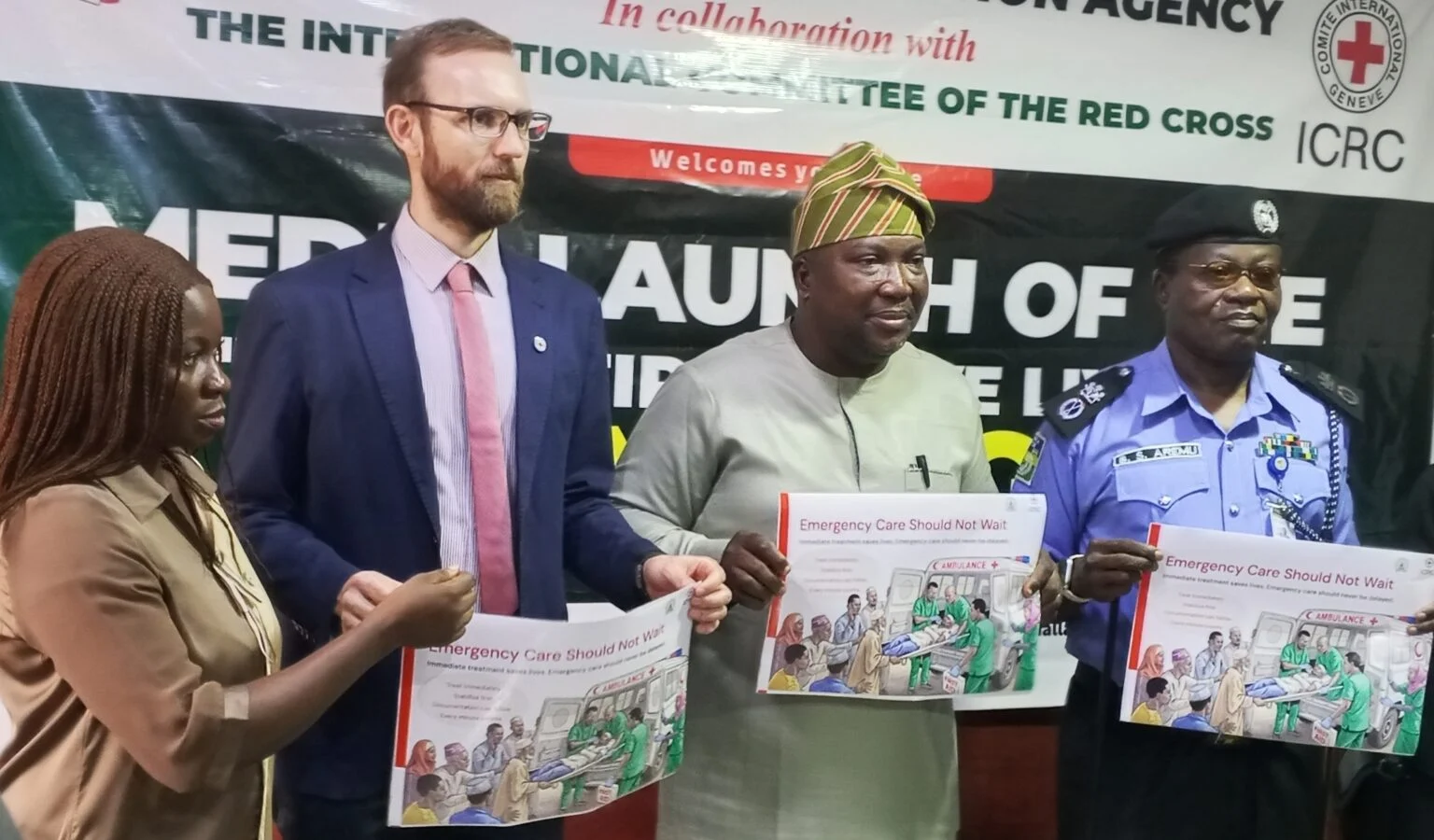
The National Orientation Agency (NOA), in collaboration with the International Committee of the Red Cross (ICRC), on Thursday inaugurated a campaign to promote immediate treatment of gunshot victims nationwide.
The campaign tagged “Treat First. Save Lives.”, seeks to promote awareness of the Compulsory Treatment and Care for Victims of Gunshot Wounds Act, 2017, and address misconceptions that delay emergency medical treatment.
Speaking at the inauguration in Abuja, NOA Director-General, Malam Lanre Issa-Onilu, said the initiative aimed to remove barriers preventing gunshot victims from accessing timely medical attention.
Issa-Onilu, represented by Dr Ayoola Olufemi, Director of Health and Social Care in the agency, said misconceptions, fear of police procedures and uncertainty about hospital responsibilities had continued to obstruct prompt treatment of gunshot victims.
“The 2017 Act requires hospitals to provide immediate and adequate treatment to gunshot victims, irrespective of police reports, emphasising that saving lives must remain the priority.
“Hospitals, security agencies, healthcare professionals and members of the public have shared responsibilities in ensuring that injured persons receive immediate medical attention,” he said.
He urged members of the public to assist gunshot victims in accessing medical facilities rather than allowing fear or misinformation to prevent them from providing necessary assistance.
“The agency will deploy radio jingles, audiovisual materials, digital platforms and other public enlightenment channels to disseminate the campaign messages nationwide,” Issa-Onilu said.
He explained that campaign materials had been produced in English, Hausa, Yoruba, Igbo and Nigerian Pidgin English to promote wider accessibility and understanding across the country.
Issa-Onilu commended the ICRC for its partnership and technical support, describing the collaboration as evidence of the importance of institutional cooperation in addressing issues affecting public welfare.
He also appreciated the Inspector-General of Police and the Coordinating Minister of Health and Social Welfare for supporting the initiative and reinforcing the shared responsibility of protecting human life.
The director-general urged media organisations to sustain public conversations about the Act, challenge misinformation and amplify messages discouraging denial or unnecessary delays in emergency treatment.
He also called on healthcare institutions, security agencies, traditional and religious leaders, civil society organisations and Nigerians to embrace the campaign and translate awareness into responsible action.
Issa-Onilu formally declared the “Treat First. Save Lives.” campaign inaugurated, urging Nigerians to make immediate medical attention the standard response whenever gunshot emergencies occurred.
Representing the Inspector-General of Police, IGP Olatunji Disu, Commissioner of Police Aremu Silas, Director of Legal Services, commended NOA and ICRC for initiating the campaign, describing it as timely and important for national sensitisation.
He said treating gunshot injuries was not merely a medical issue but a fundamental human rights and public safety concern requiring institutions to prioritise the preservation of human life.
Silas said Section 33 of the 1999 Constitution, as amended, guaranteed the right to life and imposed responsibilities on state institutions to protect lives.
He said the Compulsory Treatment and Care for Victims of Gunshot Wounds Act, 2017, mandated medical facilities to provide immediate treatment, with or without police reports.
Silas said the Nigeria Police Force had consistently directed officers against harassing, delaying or denying gunshot victims medical attention because of police procedures.
He said the Force remained committed to implementing the law and collaborating with healthcare professionals, civil society organisations and other stakeholders to prevent avoidable deaths.
Silas said the campaign aligned with the Force’s commitment to professionalism, community partnership and respect for human rights under Section 4 of the Police Act, 2020.
In his remarks, the Deputy Head of Delegation of the ICRC commended NOA for leading the initiative, describing it as an important effort to strengthen understanding of the 2017 Act.
He said protecting access to healthcare and ensuring people received life-saving treatment without unnecessary delays remained important humanitarian priorities of the organisation.
“Gunshot injuries are medical emergencies requiring immediate attention. Uncertainty, fear and inadequate awareness can sometimes prevent victims from receiving timely assistance.
“Although Nigeria has an important legal framework, its provisions need to be understood and translated into practical action by members of the public and relevant institutions,” he said.
He said the partnership with NOA would help take life-saving messages closer to Nigerians through accessible communication materials and established nationwide public enlightenment structures.
The representative emphasised that citizens, healthcare providers and security personnel must work together to ensure injured persons reached medical facilities promptly without unnecessary procedural obstacles.
He called for sustained institutional cooperation to address practical challenges affecting implementation of the law, urging the media and other partners to amplify the campaign’s message.
Also speaking, Ms Juliet Unubi, ICRC Humanitarian Affairs Adviser on Protection of Healthcare, said the campaign was designed to explain the Act and clarify the responsibilities of relevant stakeholders.
Unubi said a 2021 study conducted by ICRC and the Nigerian Association of Resident Doctors Research Collaboration Network identified gaps in awareness among healthcare workers and police officers.
She said the findings highlighted the need for stronger public enlightenment and clearer understanding of the responsibilities of different stakeholders involved in managing gunshot injuries.
She explained that NOA provided nationwide public orientation structures, while ICRC contributed humanitarian expertise and technical support in developing campaign messages and communication materials.
She said the campaign sought to discourage delays caused by uncertainty, fear of police procedures or demands for initial monetary deposits before emergency medical attention.
“The communication package includes posters, flyers, radio jingles, an audio drama, animation and institutional endorsement videos from the Inspector-General of Police and NOA director-general,” she said.
She explained that the materials were designed to reach different audiences through accessible formats, reinforce the campaign’s central message and sustain public awareness beyond the inauguration.
Unubi said the 2021 baseline study involved approximately 900 healthcare workers and 1,200 police officers across Borno, Plateau, Kaduna, Abia, Rivers and Oyo states.
She said the research also involved interviews with 24 hospital chief executives and 24 divisional police officers, examining awareness, training and understanding of stakeholders’ responsibilities.
“The 2017 Act requires public and private hospitals to receive gunshot victims and provide immediate and adequate treatment, irrespective of police clearance.
“The Act also requires individuals, including security personnel, to assist victims and ensure their transportation to the nearest hospital for immediate medical attention.
“It further provides that treatment must commence without an initial monetary deposit, while hospitals are required to notify the nearest police station within two hours.
“The law also requires police to investigate reported cases and prohibits inviting victims for questioning unless the Chief Medical Director certifies that they are medically fit,” she said.
According to her, the notification requirement does not make police clearance a precondition for commencing emergency medical treatment.
“It also does not introduce a new law or make all subsequent medical treatment free, but seeks to promote compliance with existing legal provisions.
“The initiative is expected to improve public awareness, encourage assistance to injured persons, strengthen institutional cooperation and reduce avoidable delays in accessing emergency medical care,” she said.(NAN)
Edited by Abiemwense Moru
Comments