


By Kennedy Sheyin
The Africa Institute of Resilience Studies (AIRS) has called for a broader national security framework, warning that economic hardship and weak social structures deepen insecurity.
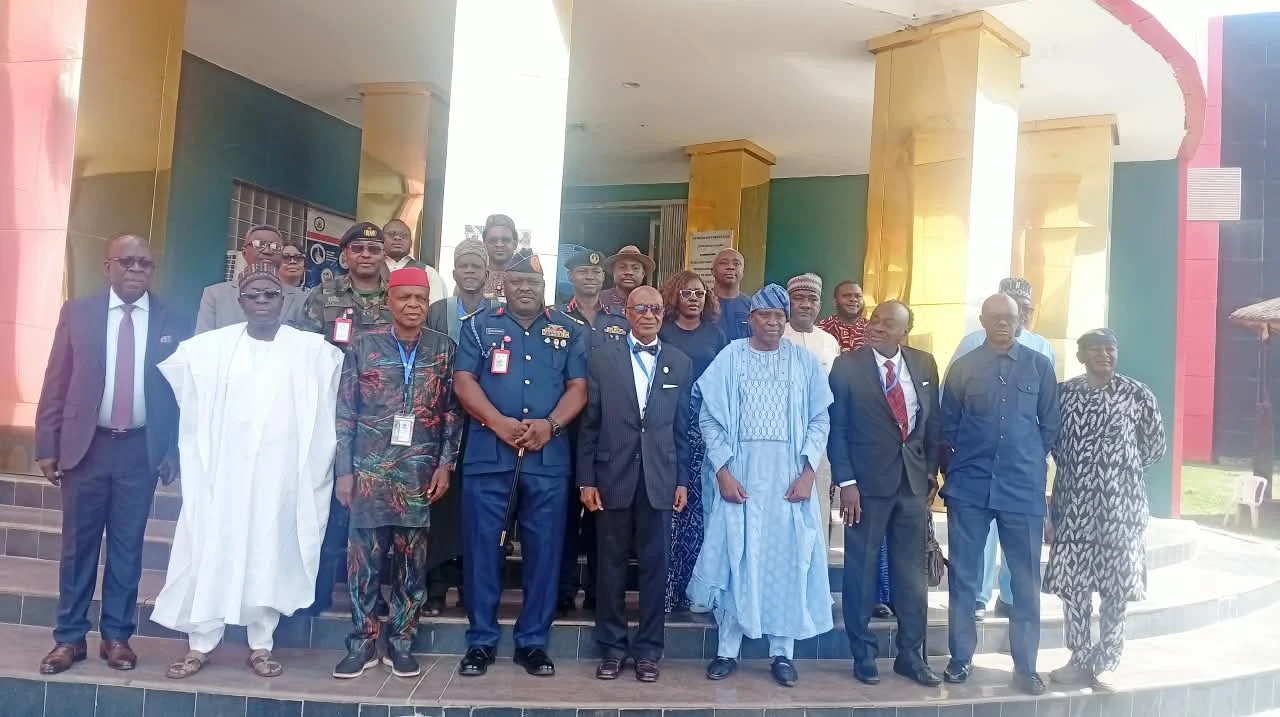
Chairman of the AIRS Board of Directors, Prof. Rowland Ndoma-Egba made the call on Friday at the inauguration of the Africa Institute of Resilience Studies (AIRS) and the unveiling of a book by the Institute held in Abuja.
Ndoma-Egba urged the Federal Government to rename the National Security Strategy, the National Security and Resilience Strategy.
He said the proposed change went beyond semantics because strategy language influenced how government understood threats, allocated resources, designed institutions and measured performance nationwide.
Ndoma-Egba said security focused on preventing, deterring and defeating threats, while resilience ensured the country continued functioning when threats materialised and recovered afterwards during national emergencies.
“Preventing a terrorist attack is a security task. Keeping hospitals open, markets trading and schools teaching after an attack is a resilience task,” he said.
He said a country could possess strong armed forces and intelligence services but still lack the institutional, economic and social capacity to survive a major crisis.
According to him, the 2019 National Security Strategy contained commitments to community resilience but failed to translate them into concrete objectives, institutions and measurable indicators nationwide.
He said threats were not adequately ranked by likelihood and impact, while government agencies often responded separately to shared threats without effective coordination mechanisms.
Ndoma-Egba proposed seven reforms, including making resilience a distinct security pillar, conducting regular national risk assessments, establishing a risk register and strengthening inter-agency coordination mechanisms nationwide.
Other recommendations included wider participation by state and local governments, traditional institutions, civil society and private organisations, alongside legal backing, annual progress reports and regular strategy reviews.
He said AIRS was ready to support the Federal Government committee reviewing the 2019 strategy, including by providing technical recommendations on its resilience component and implementation nationwide.
Chief of Defence Intelligence, Lt.-Gen. Emmanuel Undiandeye, warned that economic hardship and weak social structures were making communities vulnerable to criminal infiltration and exploitation nationwide.
Undiandeye was represented by Deputy Chief of Defence Intelligence, AVM Rimi Mamman.
He said Nigeria and other African countries faced interconnected threats, including terrorism, banditry, cybercrime, organised crime and communal conflicts, compounded by climate change, displacement and weak institutions across the continent.
According to him, communities, economies and institutions needed to withstand shocks, adapt to changing circumstances and recover from crises, alongside the capacity to respond to threats effectively.
“Criminals and extremists find it far harder to infiltrate or exploit a community that is economically stable, socially cohesive and well informed,” he said.
Undiandeye said defence intelligence involved anticipating threats, detecting them early and providing information for informed decisions, while early warning required institutions capable of acting promptly.
He said security agencies could not build national resilience alone, stressing the need for sound research, reliable data and evidence-based policies across the country.
Undiandeye welcomed AIRS programmes on community policing research, community vigilante systems, economic resilience, green livelihoods and a community resilience index nationwide.
He cautioned that community-based security initiatives must operate within the law, respect human rights and coordinate with established agencies, complementing rather than replacing formal security structures.
In his keynote address, Prof. Toba Alabi of the Nigerian Defence Academy (NDA) said interconnected security challenges could no longer be addressed through fragmented institutional responses nationwide.
Alabi identified poverty, unemployment, drug abuse, climate change, cybercrime and weakening local economies as factors that could combine to create conditions for insecurity.
He said banditry, rural poverty, competition over land and water, unemployment and declining local economies could expose vulnerable young people to recruitment by criminal networks.
Citing the National Drug Use Survey, Alabi said about 14.3 million Nigerians aged 15 to 64 had used drugs in the preceding year, highlighting the scale of the challenge.
He warned that drug abuse could deplete household savings, weaken family relationships, undermine productivity and expose vulnerable individuals to criminal activities nationwide.
Alabi said flooding, desertification and changing rainfall patterns could undermine agriculture, intensify competition over natural resources and contribute to farmer-herder conflicts across affected communities.
He added that misinformation and disinformation could escalate local disagreements into wider communal tensions and security crises, requiring stronger institutional responses and public awareness.
The don said community-level early warnings did not always reach authorities promptly, while mistrust, poor information sharing and inadequate documentation weakened prevention efforts nationwide.
“The fundamental problem in such circumstances is not necessarily the absence of committed personnel or capable institutions. It is often the absence of effective institutional connections,” he said.
Alabi, who said he had served at the NDA for 35 years and as a professor for 16 years, called for stronger collaboration between academics and security practitioners.(NAN)
KKS/YMU
Edited by Yakubu Uba



Comments