


By Joy Oyerinde
The Managing Director and Chief Executive Officer of FirstBank Group, Mr Olusegun Alebiosu, says technological advancement will create more employment opportunities rather than displace workers.
Alebiosu said this on Tuesday in Lagos, while addressing concerns about the impact of increasing automation on employment, particularly in the banking industry.
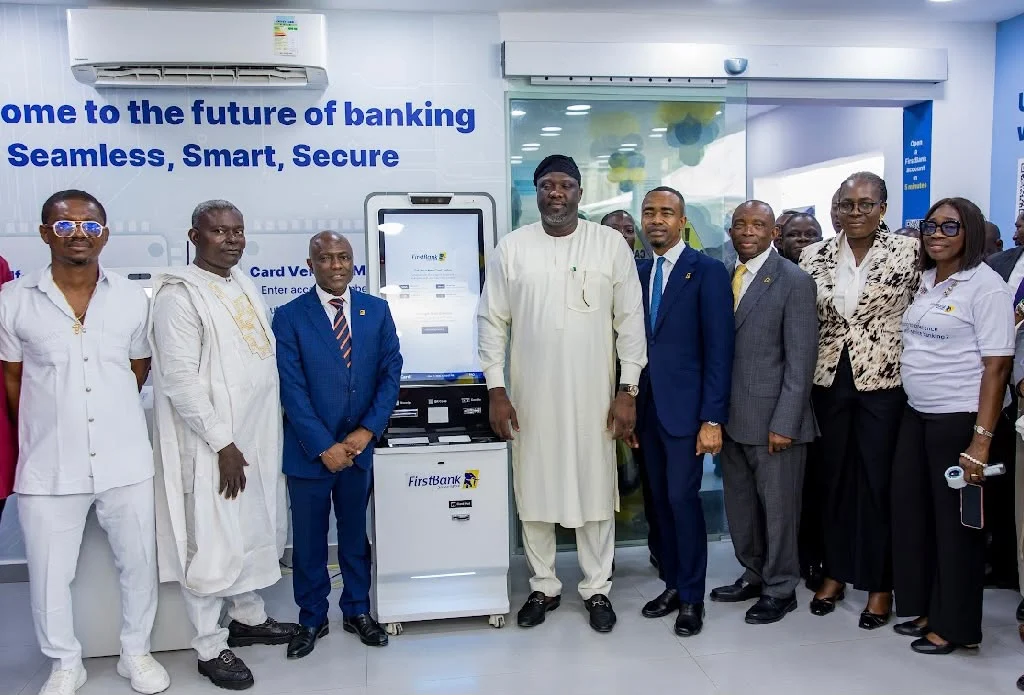
He spoke at the inauguration of the bank’s Digital Xperience Centre (DXC) in Festac, where he said technology should be viewed as an opportunity for economic growth, skills development and the emergence of new occupations.
“Technology will not take out jobs. Technology will create more jobs,” he said.
The FirstBank chief executive maintained that the bank had never dismissed any employee because of its deployment of technology.
He added that workers whose existing roles were affected by automation could be redeployed to other departments where their skills were required.
He explained that technological advancement often changed the nature of work while creating new opportunities that might not have existed before the introduction of such innovations.
Using the evolution of mobile phones as an example, Alebiosu said the emergence of mobile technology had created employment opportunities in phone sales, repairs and other related services.
He noted that while technological innovations might render some traditional occupations less relevant, they also created demand for new skills and services.
According to him, the transformation of everyday activities through technology should encourage individuals to identify emerging opportunities rather than perceive innovation solely as a threat to existing jobs.
Alebiosu also challenged the perception that obtaining a university degree should automatically translate into conventional office employment, urging graduates to apply their knowledge toward developing practical skills and establishing businesses.
He said university education should equip graduates with knowledge and the ability to identify opportunities, rather than limit their career aspirations to securing salaried employment.
The FirstBank chief executive cited the example of a former employee who resigned from the bank to pursue tailoring in Italy, saying the individual had since developed the skill into a business.
He said the experience demonstrated how vocational training and entrepreneurship could provide alternative sources of income and economic independence.
Alebiosu also identified opportunities in skilled trades, including plumbing, painting and masonry, noting that the demand for such services remained significant in Nigeria.
He observed that the country continued to depend on skilled artisans for construction and other essential services, while many graduates remained focused on securing conventional salaried employment.
According to him, Nigerians must begin to place greater value on vocational skills and entrepreneurship, particularly as the economy continues to evolve.
“We must encourage our people to learn and work because that is the only way we are going to survive,” he said.
He added that individuals should also prepare for life after retirement by developing business interests and practical skills capable of providing sustainable income.
The comments come as FirstBank intensifies its investment in digital banking infrastructure through the expansion of its DXCs, which enable customers to undertake banking transactions with minimal human intervention.
The bank launched its first DXC in Lagos in 2021 as part of its efforts to transform conventional banking operations through automated and self-service facilities.
Since then, it has expanded the initiative across different locations, with the number of centres reaching 11 nationwide as at November.
He said the bank was targeting more than 30 centres across the country as part of its broader digital transformation strategy.
Alebiosu said the Festac centre was established to serve the area’s large population and provide residents and businesses with convenient access to banking services beyond conventional banking hours.
He explained that the facility would enable customers to carry out transactions on weekends and outside regular banking hours without having to visit traditional banking halls.
The expansion reflects the bank’s growing reliance on automated service delivery to improve customer experience, reduce transaction delays and make banking services more accessible. (NAN)
Edited by Folasade Adeniran

Comments