For many Nigerians who grew up watching NTA in the 1980s, the opening theme song of Things Fall Apart instantly triggers memories of evening television, family gatherings, and classic literary storytelling.
Across Nigerian homes, many families would gather in front of glowing television screens to watch the drama, adaptation of Chinua Achebe’s Things Fall Apart , produced by the Nigerian Television Authority in partnership with the BBC , in 1987.
Children sat cross-legged on woven mats or sofas while parents leaned forward on chairs in hushed expectation and delight, watching Umuofia come alive with fierce pride, ancestral rituals, and raw human drama.
Awe filled every living room whenever Okonkwo (EBUBEDIKE) strode across the screen, his broad chest, stiff posture, and thunderous voice commanding instant silence like a crowned traditional warrior that he was in the story.
Ebubedike is a word symbolising the aura of a warrior and nobility.
That unforgettable warrior character was Pete Edochie, whose fearless artistry turned literary history into a living legend and crowned him an enduring titan of African storytelling.
After decades of holding the movie industry spellbound, Edochie took a final bow from earth.
“The Iroko has fallen,” wrote actress Omoni Oboli, expressing a nation’s sorrow as Nigerian cinema and movie industry bids farewell to its towering cultural patriarch, Chief Pete Edochie.
Edochie, popularly known as Ebubedike (the“hail” name of his Okonkwo character stuck with him), the legendary actor, broadcaster, and custodian of Igbo heritage passed on at 79 in Enugu on Wednesday, Nov. 25, 2026.
His first son, Leo Pete Edochie, announced the demise at 12:30 a.m. following a protracted battle with prostate cancer, ending a glorious era in African storytelling.
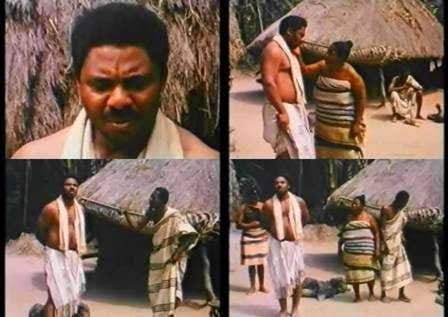
Scenes of the TV drama adaptation of Things Fall Apart
Born Peter Uwadiegwu Ogugua Edochie on March 7, 1947, in Zaria, Kaduna State, he hailed from Ifite Nteje in Anambra , carrying Igbo pride everywhere.
Growing up in northern Nigeria, he attended St. Patrick’s and St. James Primary Schools in Zaria before proceeding to St. John’s College, Kaduna.
His love for the stage bloomed early at St. John’s College in 1962, where a 15-year-old Edochie dramatised William Shakespeare’s The Merchant of Venice.
He later studied at the School of Journalism and Television in England, sharpening the broadcast discipline that defined his lifelong excellence across media platforms.
He began his broadcasting career in 1967 with the Eastern Nigerian Broadcasting Corporation, where he rose to senior management positions, including Director of Programmes and Deputy Managing Director.
He occasionally acted as Managing Director at the Anambra Broadcasting Service before government interference in the FM station forced management to exit.
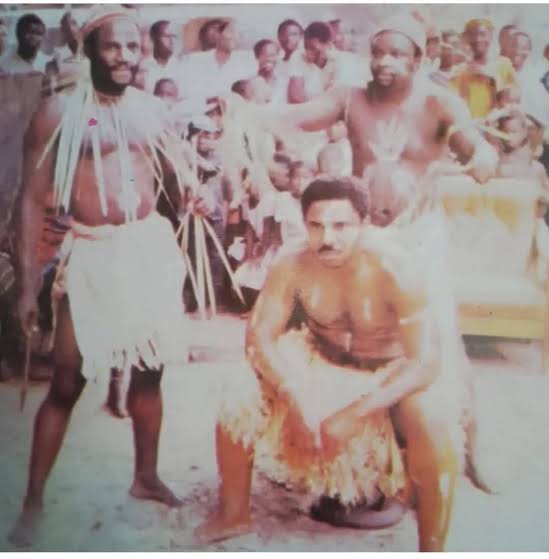
Obi Okoli (35), Pete Edochie(40) sitting in the middle and Justus Esiri (45) in the 1987 adaptation of Chinua Achebe’s Things Fall Apart
Destiny turned that political exit into artistic gold as Edochie stepped fully into acting, transforming from a radio/tv administrator into Africa’s most recognisable screen presence.
Across stage, radio, television, and cinema, his impact reshaped Nigerian drama by setting high standards of diction, cultural authenticity, and disciplined theatrical performance.
On stage and television, he bridged classical English drama with indigenous storytelling, proving that African narratives deserved the grandeur of global literary masterpieces.
His deep, resonant voice rolled like distant thunder across airwaves and screens, silencing noisy rooms like a monarch addressing his royal court with effortless authority.
His upright carriage and unhurried gait moved with quiet majesty, turning every entrance into a royal procession across palace courtyards and modern boardrooms.
His crisp command of spoken English flowed like clear spring water, blending classic broadcast polish with sharp diction and unmistakable weight in every word.
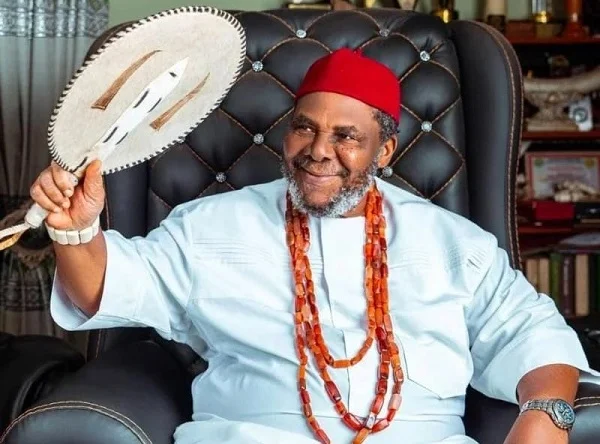
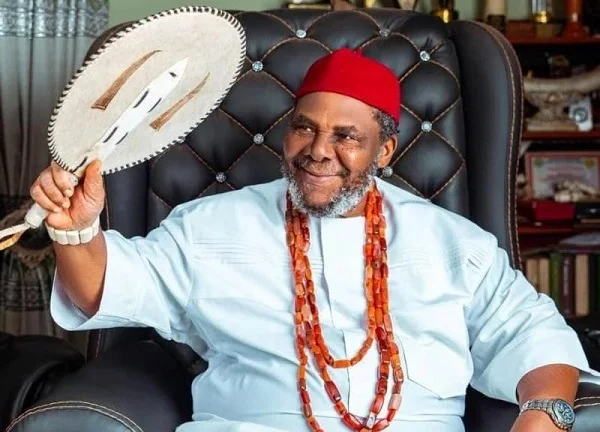
His dressing shone like woven ceremonial cloth, pairing regal Igbo wrappers, red caps, coral beads, and walking sticks with tailored suits that framed an icon.
Proverbs bloomed on his lips like ripe palm fruit, seasoning dialogue with ancestral wisdom and turning everyday speech into golden lessons for young and old.
Even viral social media clips carried his timeless proverbs to younger generations, proving that true cultural wisdom travelled swiftly without losing its golden weight.
His legendary screen journey shone brightest through 15 unforgettable dramas and films that defined his peerless range across decades of African storytelling:
In Things Fall Apart (1987), he portrayed Okonkwo with fierce pride, stiff posture, and deep inner pain, bringing Chinua Achebe’s tragic Umuofia warrior to global acclaim.
Acting in In Rituals (1997), he played Don Pedro, a chilling, calculating secret society member whose pursuit of occult power exposed greed, ambition, and moral decay.
In Igodo (1999), he embodied an authoritative elder guiding seven brave warriors on a perilous quest to retrieve a mystical sword and lift a village curse, while in Lost Kingdom (1999), he anchored a riveting royal epic exploring throne tussles, ancestral heritage, leadership duties, and the heavy weight of traditional authority.
Also, in Chain Reaction (1999), he stood out in an early home-video classic examining human choices, moral consequences, and gripping domestic tension across Nigerian households.
In Narrow Escape (1999), he starred as Odumodu, delivering a gripping dramatic performance rooted in family tension, traditional duty, and early Nollywood storytelling.
In Last Ofalla (2002), he anchored a rich royal drama exploring kingship, ancestral obligations, burial rites, and the heavy crown of Igbo traditional leadership, whereas in Billionaire’s Club (2003), he played Billion, a wealthy businessman entangled in a sinister brotherhood, capturing the dark allure and bitter price of ill-gotten fortune.
In Egg of Life (2003), he ruled as a revered Igwe whose kingdom fought spiritual forces to save a dying prince, blending royalty with mystical suspense and in Idemili (2014), he stood as a wise traditional ruler guiding younger generations through spiritual warfare, sacred heritage, and ancestral reverence in Igbo land.
In John and John (2017), he stepped outside serious royal parts into lively comedy, proving his effortless versatility in modern, lighthearted African cinema, whereas in Lionheart (2018), he played Chief Ernest Obiagu, a dignified transport company patriarch balancing family legacy, ill health, and modern female leadership on Netflix.
In Foreigner’s God (2022), he appeared as the Storyteller, weaving colonial history, mystery, and indigenous Igbo perspective into a haunting period narrative and in King Mabutu (2023), he portrayed Kasanga, crowning decades of majestic performances built around African kingship, wisdom, and traditional authority.
Beyond acting, Edochie watched Nigerian governance closely, engaging presidents and governors like a fatherly elder urging leaders to serve citizens with fairness and compassion.
He stood as an outspoken social critic who used his respected public voice to advocate welfare support for ailing veterans and accountable national leadership.
Though never chasing partisan office, he held that true leadership required moral courage, integrity, and practical action rather than empty political promises.
Reflecting on Nollywood, he proudly noted that his deep Shakespearean stage roots in 1962 placed him in a peerless class built on merit.
He maintained that true greatness in film came from audience assessment rather than self-praise, insisting he never competed with colleagues but focused on excellence.
He urged younger Nigerian filmmakers to preserve indigenous languages and authentic African stories instead of copying foreign names or western lifestyles blindly.
While applauding Nollywood’s global expansion onto streaming platforms, he warned against poor scripting, rushed productions, and indiscipline that weakened artistic standards.
In the course of his life, Edochie witnessed some industry and personal storms but still shone.
In 2005, the Actors Guild of Nigeria placed him and some other actors (including Genevieve Nnaji, Omotola Jalade Ekeinde, Nkem Owoh, Ramsey Nouah, Stella Damasus Aboderin, and Richard Mofe-Damijo) on a year’s ban from filming after “they were said to have been collecting huge fees from producers due to their perceived A-list celebrity status.”
In 2009, he was kidnapped and later released unharmed by his abductors.
His passing comes barely two months after veteran international actor Olu Jacobs died at 84 on Sept. 16, , deepening a heavy season of grief across Nollywood.
Earlier in 2026, Nollywood lost Ajara Lasisi on Feb. 5, Bamidele Oluwatope on Feb. 24, Davis Offor on April 6, Solomon Akiyesi on April 26, and Oby Kechere on April 27.
Late in the year, Francis Duru also passed away on Oct. 23, 2026, joining other departed screen talents such as Alexx Ekubo, Patrick Okoye, and Okiki Adeshina in 2026.
Together, these losses read like a solemn drumbeat across Nollywood, yet their timeless roles, voices, and artistry remain etched in the memory of grateful audiences everywhere.
In 2003, President Olusegun Obasanjo conferred on him the national honour of Member of the Order of the Niger (MON) for his cultural contributions.
He also won the Industry Merit Award from Africa Magic and a Lifetime Achievement Award from the Africa Film Academy, cementing his peerless stature.
In September 2017, Edochie endorsed the Wikimedia movement in Nigeria, appearing in a campaign video to promote digital knowledge among older generations.
Deeply rooted in his Catholic faith, he openly professed his belief in Jesus Christ while preaching religious harmony, love, and peace among all Nigerians.
Away from the cameras, he lived a devoted family life, married to his beloved wife, Josephine Edochie, with whom he raised six accomplished children.
His children—Leo, Uche, Lincoln (Linc), Gene, Eva, and Yul—carried forward his legacy across engineering, visual arts, architecture, business, and Nollywood acting.
Though hailing from Ifite Nteje in Anambra, he embraced Enugu as his lifelong home, calling it his birthplace and first port of call.
President Bola Tinubu mourned the passing of legendary actor, describing him as an exceptional thespian and cultural icon whose legacy transcends generations.
Tinubu said Edochie was one of Africa’s most recognisable actors and a pioneer of Nigeria’s vibrant film industry, Nollywood.
“Chief Edochie was an exceptional actor, one of the progenitors of our vibrant film industry, Nollywood. He was graceful and larger than life, both on the screen and in person,” he said.
Tinubu said Edochie spent decades perfecting his craft, bringing joy, laughter and charm to countless homes through his memorable performances.
“I recall his unforgettable portrayal of Okonkwo in the Nigerian Television Authority adaptation of Chinua Achebe’s evergreen novel, Things Fall Apart, in the 1980s, and his many brilliant performances afterwards.”
The President said Edochie’s performances in productions such as Igodo, Rituals and Lionheart helped shape Nollywood’s evolution and international visibility.
He said the actor’s portrayal of traditional institutions, family structures, African values and human relationships projected Nigeria’s cultural heritage and storytelling traditions to audiences worldwide.
Tinubu described Edochie as more than an actor, noting that he was also an administrator, broadcaster and journalist.
“His place in the pantheon of those who shaped the film industry, our common norms, and popular culture remains indisputable.”
Reflecting on the actor’s life and legacy, Tinubu said Edochie had lived well, fulfilled his role and left an enduring mark on the arts.
“In his works, he lives forever. Many generations will talk about the life and work of Chief Edochie in the arts industry and academia, in barbershops and marketplaces, and indeed wherever people gather.”
Also, the Minister of Art, Culture, Tourism and the Creative Economy, Hannatu Musawa, expressed shock and sadness over the death of veteran actor, Pete Edochie.
Musawa described Edochie as an iroko, a national treasure and one of the finest custodians of Nigeria’s culture, language and storytelling tradition.
She said Edochie was an outstanding actor, who would not be replaced easily, adding that he was a broadcaster, cultural ambassador, teacher and father figure to generations of artists.
“This is a painful loss, not only for his family and the creative industry, but for the entire nation. An iroko has fallen,” she said.
Musawa said Edochie was a lover of tradition and culture, and the epitome of an African man.
She said his unforgettable interpretation of Okonkwo in the movie ‘Things Fall Apart’ remained one of the greatest performances in African storytelling.
The minister said the role brought Chinua Achebe’s iconic character to life for the world.
“From his commanding roles as a traditional ruler, father and elder, he gave voice to our proverbs, wisdom, dignity and identity.
“He carried Nigeria with pride on screens across Africa and the world at large,” she said.
The minister noted that Edochie’s death came at a poignant moment, as the nation gathered in Enugu for NAFEST Enugu 2026, a festival celebrating the culture he spent a lifetime projecting.
“That he departed in Enugu, in the heart of the land he loved and served, while Nigeria celebrates its culture, is a solemn reminder of his enduring connection to our heritage.
“His legacy will continue to live in our films, our language, our theatre and in the countless young creative he inspired,” she said.
Dr Ali Nuhu, the Nigerian Film Corporation (NFC) Managing Director and Chief Executive, expressed the corporation’s grief over Edochie’s passing.
Nuhu described Edochie’s passing as deeply painful, noting that the deceased was a retired broadcaster, veteran actor, and one of the founding pillars of Nigeria’s film industry.
He said Edochie was more than an actor, describing him as an institution, custodian of African culture, moral voice, and a towering figure in the entertainment industry.
According to him, Edochie’s commanding presence, rich proverbs, and exceptional mastery of acting gave Nigeria and Africa dignity and recognition on the global screen.
Nuhu recalled Edochie’s unforgettable portrayal of Okonkwo in the television adaptation of Chinua Achebe’s novel Things Fall Apart, alongside his numerous roles as kings, fathers, elders, and custodians of culture.
He said the late actor represented an era of excellence, discipline, and professionalism, adding that his death was a monumental loss to his family, Nollywood, Nigeria, Africa, and the global arts community.
He described Edochie’s death as the fall of an iroko tree, expressing confidence that his contributions would remain evergreen.
“Indeed, an Iroko has indeed fallen, but his legacies will live forever in our films, our stories and our hearts. Adieu, Legend,” the NFC boss added.
Anambra governor, Chukwuma Soludo, hailed Edochie as an institution, sage, and custodian of culture who taught generations the value of dignity, courage, and wisdom.
Soludo pledged a befitting state honour for the late icon, extending condolences to Mrs Josephine Edochie, his children, and the people of Ifite Nteje.
Also, Nigeria Democratic Congress Presidential Candidate, Peter Obi, mourned the profound loss, praising Edochie’s command of English and Igbo and his belief in a New Nigeria.
Enugu governor, Peter Mbah, mourned him as a “giant, icon, and patriot,” noting the painful coincidence of his passing during the National Festival of Arts and Culture.
“Your voice may have gone silent, but your legacy will speak for generations,” Mbah said, praying for eternal rest for the gentle soul.
Similarly, Actors Guild of Nigeria President Abubakar Yakubu Sanusi described his demise as an immeasurable loss, hailing him as an institution who gave cinema global recognition.
Actress Uche Jombo called him one of Nollywood’s greatest pillars and a cultural custodian whose voice and standards would outlive generations of storytellers.
Actor Charles Inojie hailed him with traditional praise names—“Ebube Dike,” “Ntu mara igwe,” and “Okala mmadu, okala mmuo”—praying for his peaceful eternal rest.
Actress Adeola Fayehun thanked him for inspiring people to dream big, while actor Artus Frank and director Glory Robinson mourned a cherished father figure.
Like a great river meeting the ocean, Edochie left behind timeless ripples of voice, grace, and Igbo pride that would echo forever. (NAN)www.nannews.ng
By Muhyideen Jimoh President Bola Tinubu has mourned the passing of legendary actor, Chief Pete Edochie, describing him as an exceptional thespian and cultural…
By Glory Akpan CANEX Creations Inc., a subsidiary of the African Export-Import Bank’s (Afreximbank) Fund for Export Development in Africa (FEDA), has completed…
By Joan Odafe The Federal Government and the National Film and Video Censors Board (NFVCB) have outlined plans to strengthen Nigeria’s film and digital…





Comments