


By Felicia Imohimi
The International Fund for Agricultural Development (IFAD) has urged the Federal Government and other stakeholders to accelerate the implementation of the Special Agro-Industrial Processing Zones (SAPZ) programme to translate investments into jobs and economic opportunities.
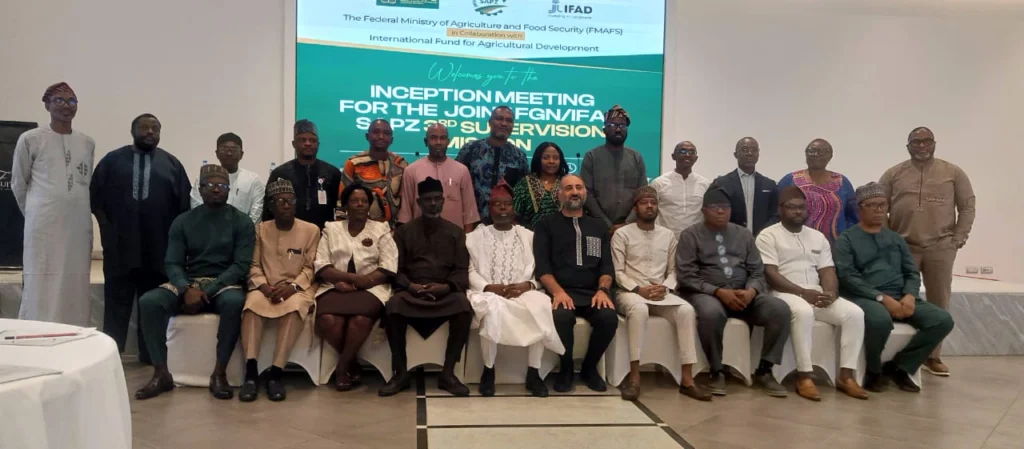
Mohamed El-Ghazaly, IFAD Country Director, made the call at the Inception Workshop of the Third Joint Federal Government/IFAD Supervision Mission for SAPZ in Abuja.
El-Ghazaly said progress had been made in establishing institutional arrangements, strengthening partnerships, supporting value-chain development and expanding engagement with beneficiaries.
He, however, said outstanding and partially implemented actions from the previous supervision mission underscored the need for stronger implementation discipline.
“We must move beyond identifying implementation challenges to resolving them and translating agreed actions into tangible results on the ground,” he said.
El-Ghazaly said SAPZ was an important investment in Nigeria’s agricultural transformation agenda, which sought to strengthen links between production, processing, infrastructure, markets and private-sector investment.
He said the investments would create sustainable economic opportunities for smallholder farmers, women, young people and rural enterprises.
“Our focus at this stage must increasingly shift from implementation processes to implementation outcomes.
“Investments must translate into functional infrastructure, stronger agricultural value chains, commercially viable enterprises, improved market access and measurable benefits for beneficiaries.
“The objective is not simply to complete activities or expend resources, but to build systems and opportunities that will continue delivering benefits beyond the life of the programme,” he said.
The IFAD country director stressed the need for stronger partnerships among the Federal Government, IFAD and co-financing partners, particularly the African Development Bank and the Islamic Development Bank.
He said effective coordination, complementary investments and timely resolution of institutional challenges were essential, given the scale and complexity of SAPZ.
El-Ghazaly said the mission provided an opportunity to assess performance, address persistent bottlenecks and strengthen the programme ahead of its first Additional Financing and eventual Mid-Term Review.
He said decisions taken at the current stage would determine the programme’s capacity to accelerate delivery, maximise additional resources and achieve its development objectives.
He urged stakeholders to identify successes and shortcomings, while ensuring that recommendations were practical, prioritised and supported by clear responsibilities and realistic timelines.
He also urged the mission team to prioritise beneficiaries’ experiences during field engagements, saying their feedback should inform assessments and necessary programme adjustments.
El-Ghazaly reaffirmed IFAD’s commitment to working with the Federal Government, participating state governments, co-financing partners and other stakeholders to accelerate implementation.
He said the mission was expected to produce a common understanding of the programme’s status, identify constraints requiring urgent attention and establish agreed actions to improve delivery.
Earlier, the National Programme Coordinator of SAPZ, Dr Kabir Yusuf, said the mission was a critical milestone in the programme’s implementation.
Yusuf said the exercise would assess progress, review achievements, identify challenges and strengthen accountability ahead of the programme’s first Additional Financing and forthcoming Mid-Term Review.
He said the mission would assess performance across programme components, including agreed outputs and outcome indicators, implementation of previous recommendations, procurement, financial management, disbursement, risk management and sustainability arrangements.
According to him, It will also document achievements, best practices, lessons learnt and the programme’s impact on farmers, agro-processors, investors and other stakeholders across participating states, he said. (NAN)
FUA/TAK
Edited by Tosin Kolade


Comments