


By Martha Agas
The Ministry of Solid Minerals Development has unveiled a Quick Response (QR) code to enable mining operators and host communities to communicate directly with its leadership and report challenges affecting their operations.
The Minister of Solid Minerals Development, Dr Dele Alake, unveiled the code shortly after declaring open the ministry’s Stakeholders’ Engagement Session with Mining Operators and Host Communities in the North-Central geopolitical zone.
The move is part of the 2026 Ministry’s Customers Service Week.
This is made known in a statement by Mrs Kania Andeyaba, the Head of Press and Public Relations unit of the ministry on Thursday in Abuja.
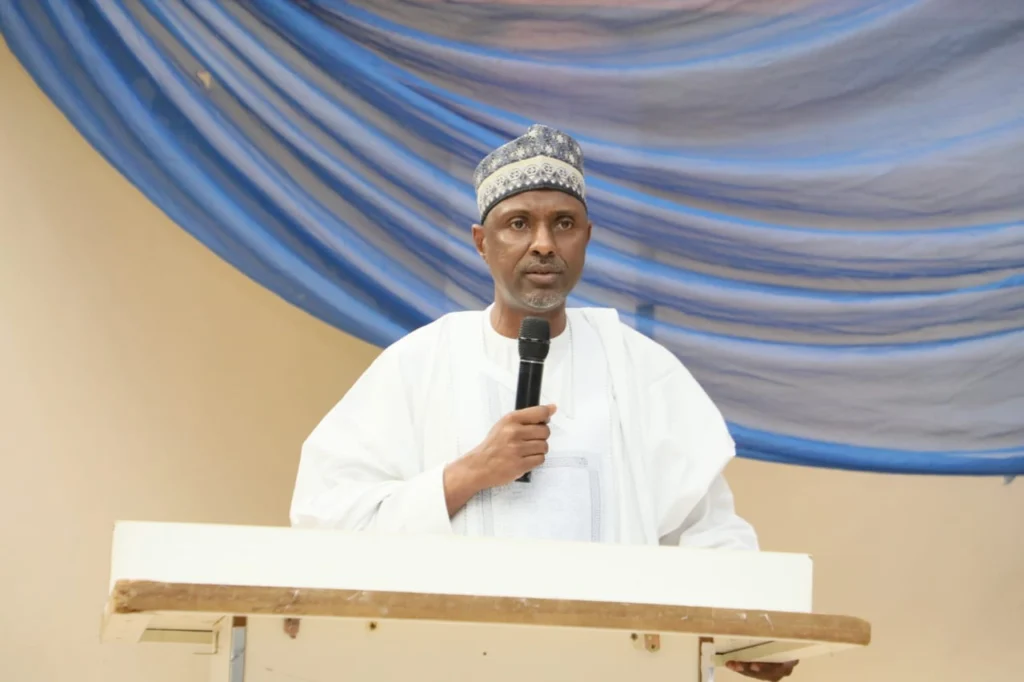
Alake, represented by the Permanent Secretary, Mr Faruk Yabo, said the initiative was part of efforts to improve service delivery, strengthen transparency and make the ministry more accessible and responsive to stakeholders.
He explained that the QR code would provide direct access to the minister, permanent secretary and directors, enabling stakeholders to submit complaints, observations and other concerns without visiting the ministry’s offices.
“The idea of service is to give access. If we are providing service and you can’t access us, then we are not really delivering service,” he said.
The minister said the initiative aligned with the ministry’s ongoing digitisation of its processes, noting that several licensing procedures had been moved online to reduce physical visits and improve administrative efficiency.
He cited the electronic processing of permits, including those for the purchase of explosives, as an example of efforts to simplify regulatory procedures and improve access to the ministry’s services.
Alake said the engagement would also enable the ministry to obtain feedback on areas requiring improvement, stressing that effective service delivery depended on continuous interaction with stakeholders.
He reaffirmed the Federal Government’s commitment to repositioning the solid minerals sector as a major contributor to economic diversification, industrial development, employment generation and national prosperity.
According to him, achieving these objectives requires sustained collaboration among government institutions, investors, mining operators, community leaders and other relevant stakeholders.
He said the theme of the 2026 Customer Service Week, “The Extra Mile”, underscored the need for government institutions to go beyond routine administrative responsibilities by listening to stakeholders, addressing legitimate concerns and creating an enabling environment for investment and sustainable development.
The ministry’s seven-point agenda, he said, provided strategic direction for developing the sector, but its successful implementation required effective regulation, responsible mining practices, increased investment, regulatory compliance, value addition, community participation and institutional coordination.
He urged mining operators to comply with relevant laws and regulations, conduct their activities responsibly and maintain constructive relationships with their host communities.
He also described host communities as critical partners in the development of the sector, stressing the need to address their concerns, particularly those relating to environmental protection, community benefits, local participation and the social impact of mining activities.
Alake acknowledged the need to address administrative bottlenecks, improve regulatory processes, strengthen transparency and ensure timely responses to legitimate concerns raised by stakeholders.
He urged participants to openly share their experiences and recommendations, saying the engagement was intended to identify practical solutions, strengthen accountability and establish clear areas of collaboration and follow-up.(NAN)
Edited by Gabriel Yough



Comments