


By Olasunkanmi Onifade
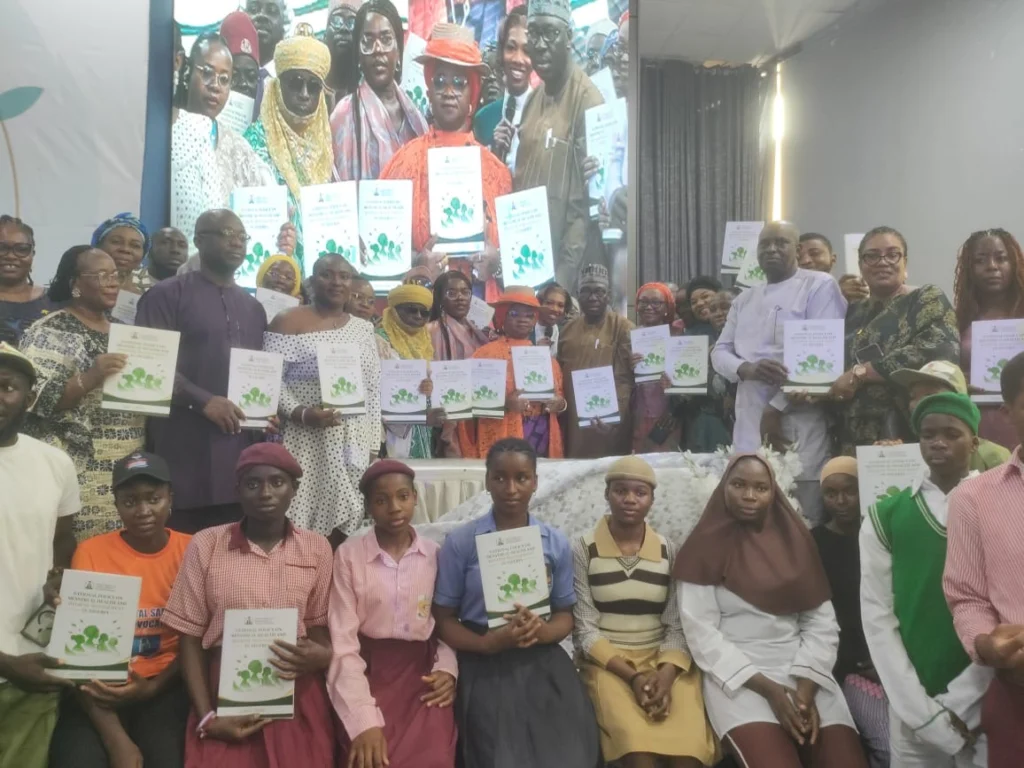
The Federal Government has unveiled the National Policy on Menstrual Health and Hygiene Management 2026–2030 to address period poverty, stigma and barriers to menstrual hygiene among women and girls.
The Minister of Women Affairs and Social Development, Hajiya Imaan Sulaiman-Ibrahim, unveiled the policy on Thursday in Abuja at the 2nd National Summit on Menstrual Health and Hygiene Management.
The News Agency of Nigeria (NAN) reports that the Federal Executive Council (FEC) approved the policy on Oct. 28.
Sulaiman-Ibrahim said the policy was developed in partnership with Population Services International (PSI), WaterAid Nigeria and the Technical Working Group on Menstrual Health and Hygiene Management.
She said its development involved technical reviews, consultations across the six geopolitical zones and national validation before FEC approval.
The minister said the policy was approved alongside the National Care Policy and Implementation Plan (2026–2030) and the National Costed Action Plan on Ending Violence Against Children.
She said its success would be measured by improvements in the daily lives of women and girls, especially access to clean water, private toilets, affordable sanitary products and accurate health information.
“For the rural schoolgirl in Gusau, Gboko, or Yenagoa, it must deliver clean running water, private lockable toilets, affordable pads, and accurate health education.
“For the female smallholder farmer, who represents roughly 70 per cent of Nigeria’s agricultural workforce, it must mean accessible healthcare and affordable hygiene supplies,” she said.
Sulaiman-Ibrahim urged state governments to domesticate the policy and provide dedicated budgetary allocations for menstrual health in their annual fiscal plans.
She also called on the 774 local government areas to channel resources to public schools, primary healthcare centres and displacement settlements.
The minister urged development partners to sustain technical and financial support, while the private sector should expand affordable, quality sanitary product supply chains.
She also called on traditional and religious leaders, parents, men and boys to challenge cultural myths and stigma surrounding menstruation.
Sulaiman-Ibrahim said the menstrual health value chain offered significant economic opportunities, with an estimated annual domestic market of N184 billion, currently dominated by imported products.
“No girl should surrender her education to her menstrual cycle. No woman should be forced to choose between feeding her children and managing her period with dignity,” she said.
Earlier, the Country Director of WaterAid Nigeria, Ms Evelyn Mere, said the policy’s approval marked a significant step towards ending period poverty and ensuring menstruation did not limit girls’ access to education, healthcare and opportunities.
Mere, represented by the organisation’s Head of Strategy, Programme Effectiveness and Learning, Mr Abdulmalik Abubakar, said WaterAid supported consultations across the six geopolitical zones and provided technical expertise during the policy development.
She said menstrual health was fundamentally a Water, Sanitation and Hygiene (WASH) issue, requiring access to clean water, safe toilets, soap, privacy and appropriate hygiene facilities.
According to her, inadequate WASH services in schools, healthcare facilities, workplaces and public spaces undermine menstrual health and contribute to absenteeism, exclusion and stigma.
Mere identified government leadership, partnerships, institutional continuity and inclusive consultations as critical factors that supported the policy development process.
She commended PSI for collaborating with WaterAid, noting that the policy process benefited from sustained engagement rather than competition for recognition.
She called for a costed implementation strategy, clear targets, adequate institutional funding, effective monitoring and deliberate resource mobilisation to ensure successful implementation.
Also speaking, a representative of the Federal Ministry of Health and Social Welfare, Ms Amina Garba, said menstrual health was not merely a women’s issue but also a public health, human rights, education and development priority.
Garba, the ministry’s focal person on menstrual health and hygiene under the Climate Change Division, said every girl deserved accurate information, affordable products and a supportive environment to manage menstruation.
Similarly, a representative of the Federal Ministry of Justice, Ms Adesakin Wemimo, said menstrual health was a matter of dignity, equality, education and justice.
Wemimo, a Principal Data Processing Officer and Pad Manager, said poverty, stigma and inadequate sanitation facilities could expose girls to coercion, transactional sex, school dropout and sexual violence.
She pledged the ministry’s support for legal frameworks that protect menstrual health rights.
The Country Director of PSI Nigeria, Mr Effiom Effiom, said millions of women and girls continued to face stigma, misinformation, unaffordable sanitary products and inadequate WASH facilities despite menstruation being a natural process.
Effiom said PSI supported zonal and national policy reviews, validation and stakeholder engagements in Akwa Ibom, Bauchi, Kano, Lagos, Nasarawa and Sokoto under its Menstrual Health-NoW (MH-NoW) Project.
He said the organisation also trained school, primary healthcare and community champions, engaged boys, men, traditional and religious leaders, and supported local producers and distributors of menstrual hygiene products. (NAN)
Edited by Tosin Kolade


Comments