


By Mercy Omoike and Nefishetu Yakubu
International Organisation for Migration (IOM) has urged journalists to prioritise accuracy, context and verification in reporting migration issues amid rising misinformation and disinformation online.
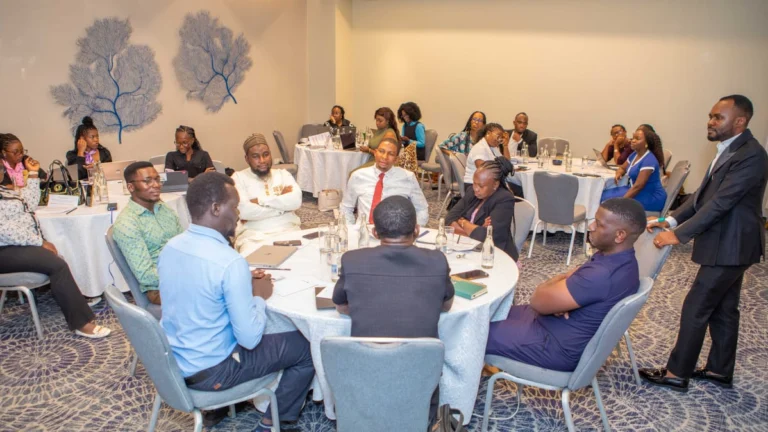
The IOM Senior Media and Communication Officer, Mr Ada-Affana Xavier stated this during a three-day training programme on Ethical and Data-Driven Reporting on Migration in Nigeria, organised by the organisation in Lagos.
Xavier said that the media had a responsibility to challenge false narratives and ensure that accurate, balanced and factual information reached the public consistently.
According to him, the rise of the internet and social media has transformed individuals into publishers and content creators, accelerating information dissemination beyond traditional verification processes.
He noted that unlike in the past when editors and journalists served as gatekeepers of information, virtually everyone with internet access can now publish news contents.
According to him, rumours and misleading narratives spread rapidly online, thus making fact-checking, verification and contextual reporting more important now for media practitioners.
He described public trust as journalism’s most valuable asset, urging media professionals to maintain credibility through accurate, balanced and responsible reporting practices.
The communication expert said social media algorithms increasingly shaped public perception, often giving greater visibility to emotionally-charged contents than factual information.
He warned that pressure to publish quickly on digital platforms should never outweigh the need for accuracy, verification and adherence to professional standards.
Xavier explained that migration reporting required nuance and context because issues pertaining to migration were complex and often distorted through over-simplified narratives and stereotypes.
He added that content designed to provoke fear, anger or outrage often attracted more engagements online, in spite of the fact that they lacked context or factual accuracy.
“Journalists must, therefore, explain complexities, provide context and avoid amplifying harmful stereotypes while promoting media literacy, to help audiences identify misinformation.(NAN)(www.nannews.ng)
DMO/NY/WAS
Edited by ‘Wale Sadeeq


Comments